
Landlords in the UK must understand that EPC improvements are key to legal compliance, lower running costs and stronger tenant demand. Energy efficiency upgrades such as better insulation, modern heating systems and effective controls can greatly raise EPC ratings and asset value. Poor insulation, outdated boilers, and single glazing often drag scores down. Planning works during voids and keeping good records helps manage disruption and cost. The essentials summarised here are only the starting point for informed decisions.
Key Takeaways
- EPC ratings (A–G) are legally required for most rentals; very low bands (F–G) can restrict letting under Minimum Energy Efficiency Standards (MEES).
- Improving insulation, heating systems, and glazing typically offers the best EPC gains, cutting tenant energy bills and reducing arrears risk.
- Upgrades such as loft and cavity wall insulation, modern condensing boilers, heat pumps, and smart heating controls significantly improve scores and comfort.
- Plan works around void periods or refurbishments, prioritising high-impact, low-disruption measures, and investigate grants or green finance to spread costs.
- Keep thorough records of all energy upgrades and invoices to support future EPC assessments, demonstrate compliance, and protect asset value.
Table of Contents
What EPC Improvements Mean for Landlords
Understanding EPC enhancements is essential for landlords because they directly influence legal compliance, operating expenses, and property marketability. In the UK, an EPC (Energy Performance Certificate) rates a property from A to G and is required when renting out most homes. “Enhancements” in this instance means practical changes that increase the rating, such as better insulation, more efficient heating systems, or upgraded windows.
For landlords, EPC enhancements are not just technical adjustments; they shape how easily a property can be let and on what terms. Regulations increasingly restrict the letting of the lowest-rated properties, so understanding which enhancements are needed, and when, becomes a core management task. EPC recommendations provide a structured list of possible measures, often with indicative costs and projected rating gains, allowing landlords to prioritise. In practice, EPC enhancements become a planning tool, guiding budget decisions, refurbishment timing, and long-term asset strategy.

Why Energy Efficiency Matters in Rental Homes
While EPC ratings often appear as a compliance box to tick, the underlying issue of energy efficiency in rental homes has far wider implications for landlords, tenants, and policymakers alike. Energy-efficient homes reduce running costs, increase comfort, and help stabilise tenancies, as occupants are less likely to fall into arrears due to high energy bills. For landlords, improved efficiency supports asset value, strengthens marketability, and reduces void periods.
Energy performance is also central to the UK’s net-zero strategy. Rental properties form a large share of the housing stock, so even modest improvements across portfolios can notably cut national emissions. Policymakers thus view landlords as critical partners in achieving climate goals.
| Core Aspect | Why It Matters in Rentals |
| Tenant affordability | Lower bills, reduced arrears risk |
| Property marketability | More attractive listings, faster lets |
| Asset protection | Less condensation, damp, and fabric deterioration |
| Regulatory alignment | Preparedness for tightening standards |
| Environmental impact | Contribution to national decarbonisation objectives |
Key Areas That Lower an EPC Score
Given the financial, regulatory, and environmental stakes, landlords benefit from knowing exactly what drags an EPC score down. The assessment looks at how a property uses and loses energy, so weaknesses in the building fabric and lighting quickly show up. Poor insulation in lofts, walls, and floors is a major factor. Heat escapes faster, so the property needs more energy to stay comfortable. Single-glazed or poorly fitted windows also reduce scores, as do draughty doors and uninsulated roofs.
Old or inefficient lighting is another common problem. Halogen or traditional incandescent bulbs consume more electricity than modern alternatives and are flagged in EPC calculations. Air leakage is often underestimated. Gaps around pipes, loft hatches, chimneys, and floorboards allow warm air to escape and cold air to enter, increasing energy demand. Finally, outdated construction methods or materials, especially in older properties, can limit thermal performance across the entire building.
Heating Improvements That Help EPC Ratings
Heating systems sit at the centre of an EPC assessment, so targeted upgrades here can move a property up one or even several bands. Assessors examine the boiler type, fuel source, efficiency rating, age, and how well heat is controlled within the property. Switching from an old non‑condensing boiler to a modern condensing gas boiler typically delivers a noticeable EPC boost. Where feasible, low‑carbon options such as air‑source or ground‑source heat pumps can raise ratings further, especially in properties with suitable emitters and controls.
Heating controls are equally important. Programmable timers, room thermostats, and thermostatic radiator valves (TRVs) enable zoned heating and prevent unnecessary energy use. Installing smart controls that learn occupancy patterns or allow remote adjustments can also improve EPC outcomes. Regular servicing to maintain efficiency, bleeding radiators, and balancing the system help guarantee that theoretical efficiency translates into real‑world performance reflected in the EPC score.
Insulation Upgrades Landlords Should Consider
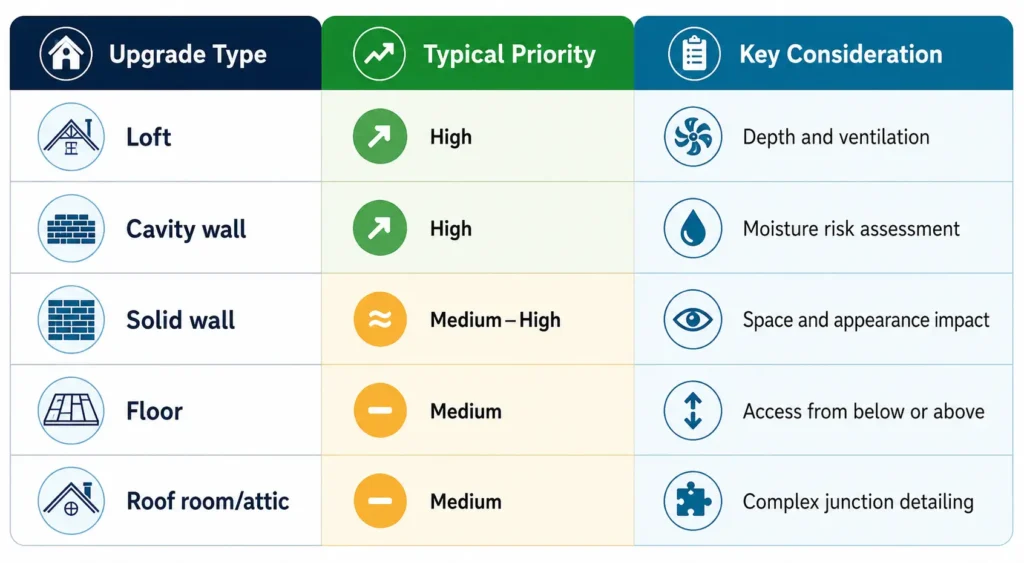
Insulation forms the backbone of cost‑effective EPC improvements, often delivering larger gains per pound spent than many heating upgrades. Landlords typically see the best first step in loft insulation, ensuring at least 270 mm of mineral wool or equivalent. This is relatively low‑disruption and can sharply cut heat loss through the roof. Check out how loft insulation works.
Next, cavity wall insulation is usually recommended where suitable construction exists. A professional survey should confirm cavity condition, exposure risk, and ventilation needs before any injection work proceeds. Find the benefits of cavity wall insulation for energy efficiency, comfort and savings.
For solid‑walled homes, internal or external wall insulation can transform EPC scores, though costs and planning implications are higher. Floor insulation, especially to suspended timber floors, further reduces draughts and improves comfort.
Better Controls for Lower Energy Use
Many landlords find that modest improvements to heating controls can yield surprisingly large reductions in energy use without major capital works. Careful use of programmers, room thermostats, and thermostatic radiator valves (TRVs) allows heat to be delivered only where and when it is needed. Zoning larger or multi‑storey properties, so living areas are warmer than bedrooms, can reduce waste while maintaining comfort.
Smart thermostats and smart TRVs provide more precision. They learn occupancy patterns, allow remote adjustments, and can prevent tenants from overheating the property unintentionally. Clear schedules lower temperatures at night and when the home is empty—often cut consumption without noticeable discomfort.
Cylinder thermostats on hot‑water tanks, where present, stop unnecessary reheating. Weather and load compensation controls, commonly integrated in modern boilers, fine‑tune flow temperatures, improving efficiency and boiler longevity. For most landlords, these relatively low‑cost measures offer quick wins on EPC ratings, lower bills for tenants, and reduced risk of condensation and damp.
When Major Energy Upgrades Are Needed
While improved controls can deliver useful savings, some properties simply cannot reach acceptable EPC ratings or comfortable running costs without substantial upgrades. This situation often arises in older, poorly insulated buildings, homes with electric storage heaters, or properties off the gas grid relying on outdated boilers. In these cases, incremental tweaks rarely shift the EPC band enough to satisfy regulation or tenant expectations.
Major upgrades generally focus on fabric and heating systems. Fabric improvements include solid-wall insulation, high-performance windows, and extensive roof or floor insulation. Heating upgrades may involve low-carbon systems such as air-source heat pumps or highly efficient gas boilers where appropriate. Electrical systems and ventilation may also need attention.
Landlords often judge the need for major work by considering payback, tenant comfort, and regulatory risk:
| Trigger for Upgrade | Typical Issue | Likely Response |
| Very low EPC rating (F–G) | High bills, letting restrictions | Whole-house upgrade |
| Damp/condensation | Cold surfaces, poor insulation | Insulation and ventilation |
| Old heating system | Frequent faults, high running cost | System replacement |
| Market expectations | Tenants want warmer, greener homes | Strategic energy improvements |

How to Plan EPC Improvements Properly
Effective planning for EPC improvements starts with understanding the property’s current performance and constraints before spending on upgrades. A landlord should begin by reviewing the existing EPC report, paying attention to recommended measures, current rating, and key weaknesses such as poor insulation or inefficient heating. Next, it is sensible to commission a qualified assessor or energy consultant if the existing EPC is outdated or unclear. This helps prioritise measures by cost, impact on the EPC band, and disruption to tenants.
Landlords then benefit from creating a simple improvement plan: list each measure, estimated cost, expected rating gain, and likely payback period. Aligning works with natural breakpoints, void periods, planned refurbishments, or boiler replacements limits disruption and costs. Finally, they should confirm compliance with current MEES regulations, explore grants or green finance, and keep records of all works and invoices for future EPC assessments and potential audits.
Frequently Asked Questions
How Do EPC Rules Differ for HMOS Compared With Single-Let Properties?
EPC rules are broadly similar, but HMOs can trigger multiple assessments. Individual bedsits may need separate EPCs if self-contained; otherwise, one EPC covers the whole dwelling. Licensing conditions often demand higher standards and closer enforcement for HMOs.
Can I Increase Rent After Making Significant Epc-Related Improvements?
Yes, but only within legal limits. The landlord may seek a rent increase after EPC-related improvements if market evidence supports it, tenancy terms are followed, required notice is given, and any local rent controls are respected.
What EPC Responsibilities Apply When Selling Rather Than Renting a Property?
EPC responsibilities when selling require the owner to commission, possess, and show a valid EPC before marketing, include its rating in adverts, and provide the certificate to the buyer; non‑compliance risks enforcement action and financial penalties.
Are Heritage or Listed Buildings Exempt From Certain EPC Upgrade Requirements?
Yes. In the UK, many listed or heritage buildings can be exempt from certain EPC upgrade requirements where works would unacceptably alter their character. However, owners must still seek advice, document exemptions, and consider sympathetic, reversible efficiency measures.
How Do I Challenge an EPC Rating I Believe Is Incorrectly Calculated?
They should first request a formal re‑assessment from the original assessor, citing specific errors. If unresolved, they can escalate through the accreditation scheme’s complaints process, providing evidence (plans, invoices, photos) to support a corrected EPC rating.
Conclusion
For UK landlords, understanding EPC improvements is central to protecting asset value, complying with regulation, and meeting tenant expectations. By targeting weak areas such as heating, insulation, and controls, they can lift EPC ratings while reducing running costs and improving comfort. Planning upgrades strategically—prioritising cost‑effective measures and scheduling major works over time helps guarantee legal compliance, supports future marketability, and positions rental properties more competitively in an increasingly efficiency‑focused housing market.