h4 shape 1
h4 shape 2
ELECTRICAL FAULT FINDING SERVICES

Electrical Fault Finding Services .

Electrical fault finding is a structured inspection and testing process used to identify the cause of electrical problems such as power loss, tripping circuits, overheating, damaged accessories, faulty wiring, earth faults or intermittent faults. HSSE Solutions provides electrical fault finding booking support for residential, rental and commercial properties, with the final diagnosis and repair requirements depending on access, circuit condition, test results and the fault identified.

Banner 7
h1 sub title ELECTRICAL DIAGNOSTICS

Electrical Diagnostics & Fault Finding

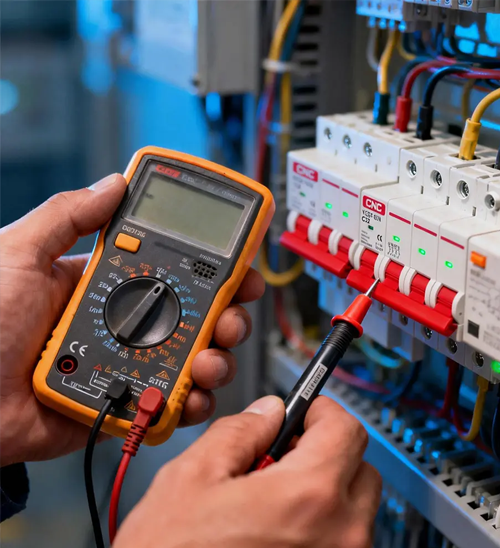
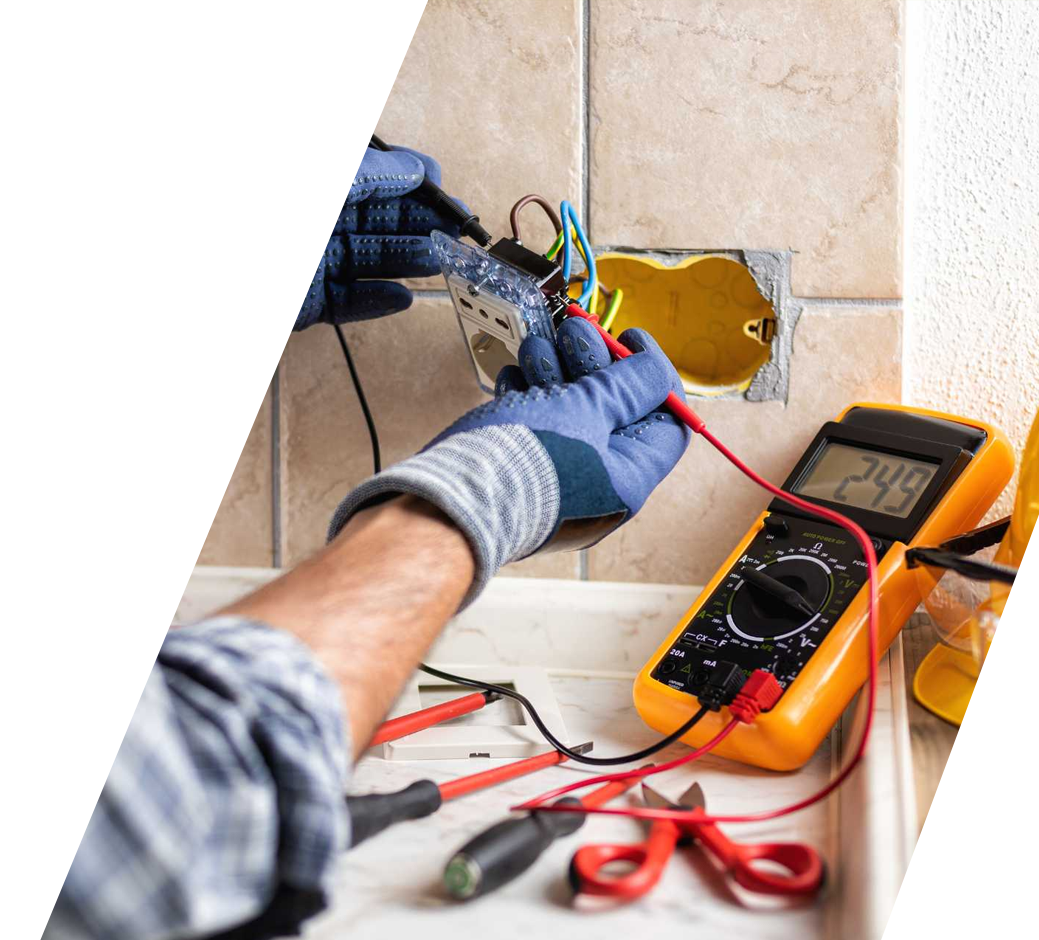
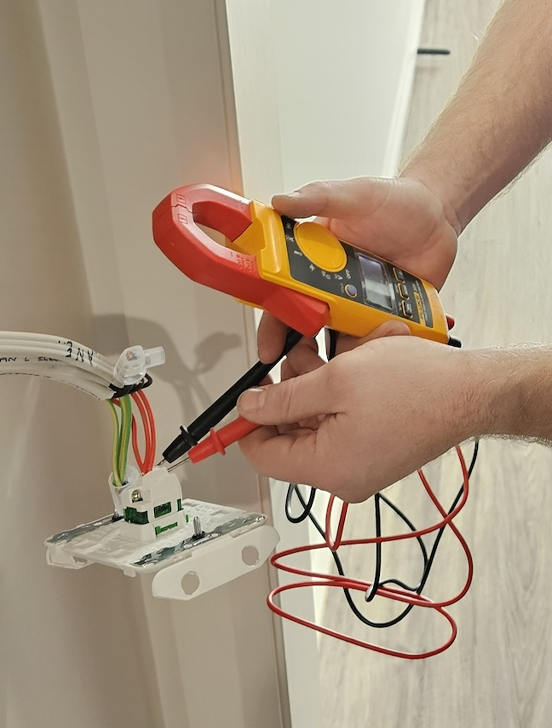
Electrical diagnostics and fault finding involve testing and inspecting electrical circuits, protective devices and connected equipment to locate the likely cause of a fault. This may include checking circuit continuity, insulation resistance, polarity, voltage, load conditions, RCD operation, protective devices and signs of heat damage where applicable.

The aim is to identify the fault safely and reduce unnecessary guesswork. Some faults can be resolved during the visit, while others may require replacement parts, further investigation, access work, remedial repairs or a separate quotation.

Electrical Diagnostics

£ 98
99
/Per hour
  • Electrical fault diagnosis by a suitable electrical professional
  • Testing and inspection carried out according to the agreed scope
  • Repair advice or quotation provided where required
What Electrical Fault Finding its Fault Types
h1 sub title Fault Finding Overview

What Is Electrical Fault Finding and What Fault Types Can It Identify?

Electrical fault finding is the process of identifying, isolating and confirming the cause of an electrical problem. Common symptoms include RCD tripping, loss of power, flickering lights, overheating accessories, burning smells, repeated fuse failure, intermittent faults or equipment not working correctly.

Fault types may include open circuits, short circuits, earth faults, overloads, high-resistance connections, damaged accessories, loose terminations, moisture-related faults or faulty equipment connected to the circuit.
The correct next step depends on the fault type, circuit condition, accessibility, safety risk and test findings.

For electrical fault finding bookings, call 02081785892

Overload faults arise when demand exceeds the circuit’s rating over time. High-resistance faults, such as loose terminations or corrosion, cause voltage drop and localised heating.

COMPLIANCE & SAFETY PROTOCOL

Safe Isolation: The Essential Pre-Fault Finding Step

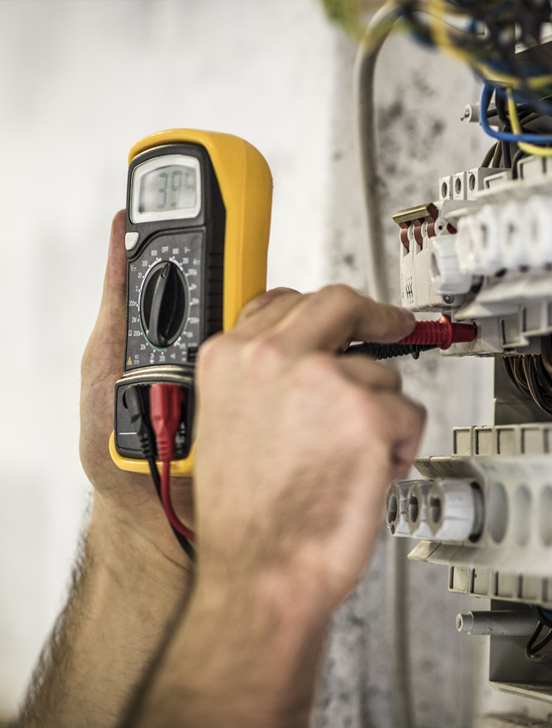
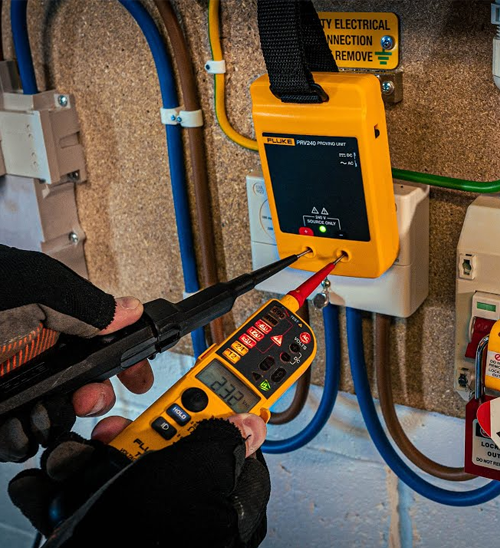
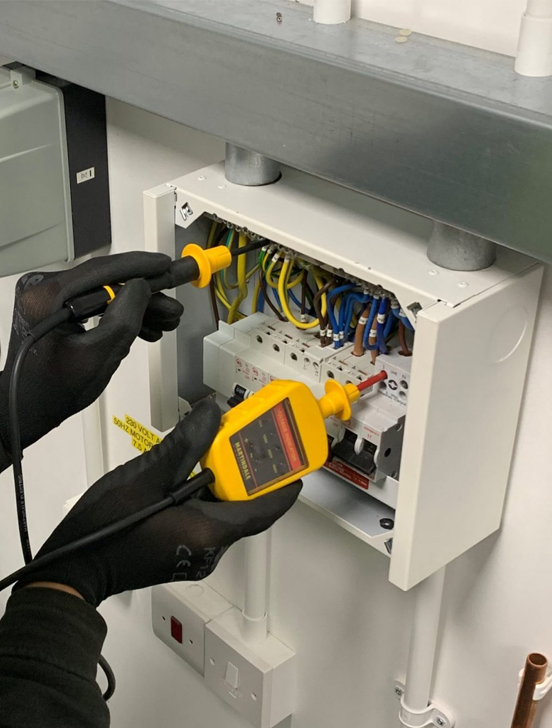
Safe isolation is a key safety step before electrical testing or repair work begins. The electrical professional should identify the correct circuit, isolate the supply where required, prevent accidental re-energisation and prove dead using suitable equipment before work is carried out.

Some diagnostic checks may involve live testing where it is justified and controlled, but this should only be done by a competent person using suitable procedures and equipment. HSE guidance covers safe working practices for people who carry out work on or near electrical equipment.

Our Safe Isolation Process Includes:

A disciplined isolation approach helps reduce electrical risk during diagnosis. The exact isolation and testing method depends on the circuit, fault symptoms and work being carried out.

Safe Isolation The Essential Pre Fault Finding Step 02
Safe Isolation The Essential Pre Fault Finding Step 01
Product Image 6
ELECTRICAL FAULT FINDING BENEFITS

Possible Benefits of Electrical Fault Finding

Electrical fault finding can help identify the cause of electrical issues and support safer decision-making before repair work is agreed. Benefits depend on the fault type, access, circuit condition, test findings and whether remedial work is completed.

70
Fault Diagnosis Support

Helps identify the likely cause of tripping circuits, power loss, overheating or intermittent electrical issues.

71
Safety Risk Identification

Can help identify warning signs such as loose connections, overheating, damaged accessories, arcing or overloaded circuits.

72
Repair Planning

Supports clearer decisions about repairs, replacement parts, further investigation or remedial work.

73
Targeted Next Steps

Helps reduce unnecessary guesswork by using test findings to guide the next action. Cost savings are not guaranteed.

STEP-BY-STEP

How Our Electrical Fault Finding Process Works

Electrical fault finding follows a structured process. The exact steps depend on the symptoms, property type, circuit layout, access, documentation, test results and safety considerations.

Initial Eligibility Review

Symptom Review

We review the reported problem, affected areas, recent changes, tripping patterns, damaged accessories, previous work and any urgent safety concerns.

01
Property Assessment

Visual and Access Checks

Accessible consumer units, circuits, switches, sockets, fittings and connected equipment may be checked for visible damage, overheating, moisture or loose connections.

02 1
Application Approval

Safe Isolation and Test Planning

Where required, circuits are isolated and the test sequence is planned according to the fault symptoms and safety requirements.

03
Technical Review 1

Electrical Testing and Fault Isolation

Suitable tests may be carried out to narrow down the likely cause, such as a cable fault, accessory fault, appliance fault, earth leakage issue, overload or protective device issue.

04 2
Installation Where Approved 1

Findings and Repair Options

Some issues may be resolved during the visit if safe, accessible and agreed. Other repairs may need parts, further investigation, access work or a separate quotation.

05
Handover Documentation 1

Testing, Notes and Next Steps

Where repair work is completed, relevant checks may be carried out and findings recorded according to the agreed scope.

02 1 1
01
Initial Eligibility Review

Symptom Review

We review the reported problem, affected areas, recent changes, tripping patterns, damaged accessories, previous work and any urgent safety concerns.

Property Assessment

Visual and Access Checks

Accessible consumer units, circuits, switches, sockets, fittings and connected equipment may be checked for visible damage, overheating, moisture or loose connections.

02
03
Application Approval

Safe Isolation and Test Planning

Where required, circuits are isolated and the test sequence is planned according to the fault symptoms and safety requirements.

Technical Review 1

Electrical Testing and Fault Isolation

Suitable tests may be carried out to narrow down the likely cause, such as a cable fault, accessory fault, appliance fault, earth leakage issue, overload or protective device issue.

04 1
05
Installation Where Approved 1

Findings and Repair Options

Some issues may be resolved during the visit if safe, accessible and agreed. Other repairs may need parts, further investigation, access work or a separate quotation.

Handover Documentation 1

Testing, Notes and Next Steps

Where repair work is completed, relevant checks may be carried out and findings recorded according to the agreed scope.

02 1 1

Any confirmation after repair should be limited to the work completed and the test results obtained. Fault finding does not guarantee that the entire installation is free from all defects unless a wider inspection, such as an EICR, is carried out.

DIAGNOSE & RESOLVE

Common Electrical Faults and Their Symptoms

Identifying electrical faults early depends less on guesswork and more on interpreting the specific physical and functional warning signs your installation provides.

HSSE Solutions can support electrical fault finding bookings for homes, rental properties and commercial premises. The diagnosis and repair route depends on the fault symptoms, test results, circuit condition and access available.

Common Electrical Faults and Their Symptoms 02
Common Electrical Faults and Their Symptoms 01
Product Image 6
How to Test Circuits and Components 02
How to Test Circuits and Components 01
Product Image 6
TESTING AND DIAGNOSTIC CHECKS

Electrical Tests Used During Fault Diagnosis

Electrical fault diagnosis may involve different tests depending on the circuit and symptoms. These tests should only be carried out by a competent person using suitable equipment and safe working procedures.

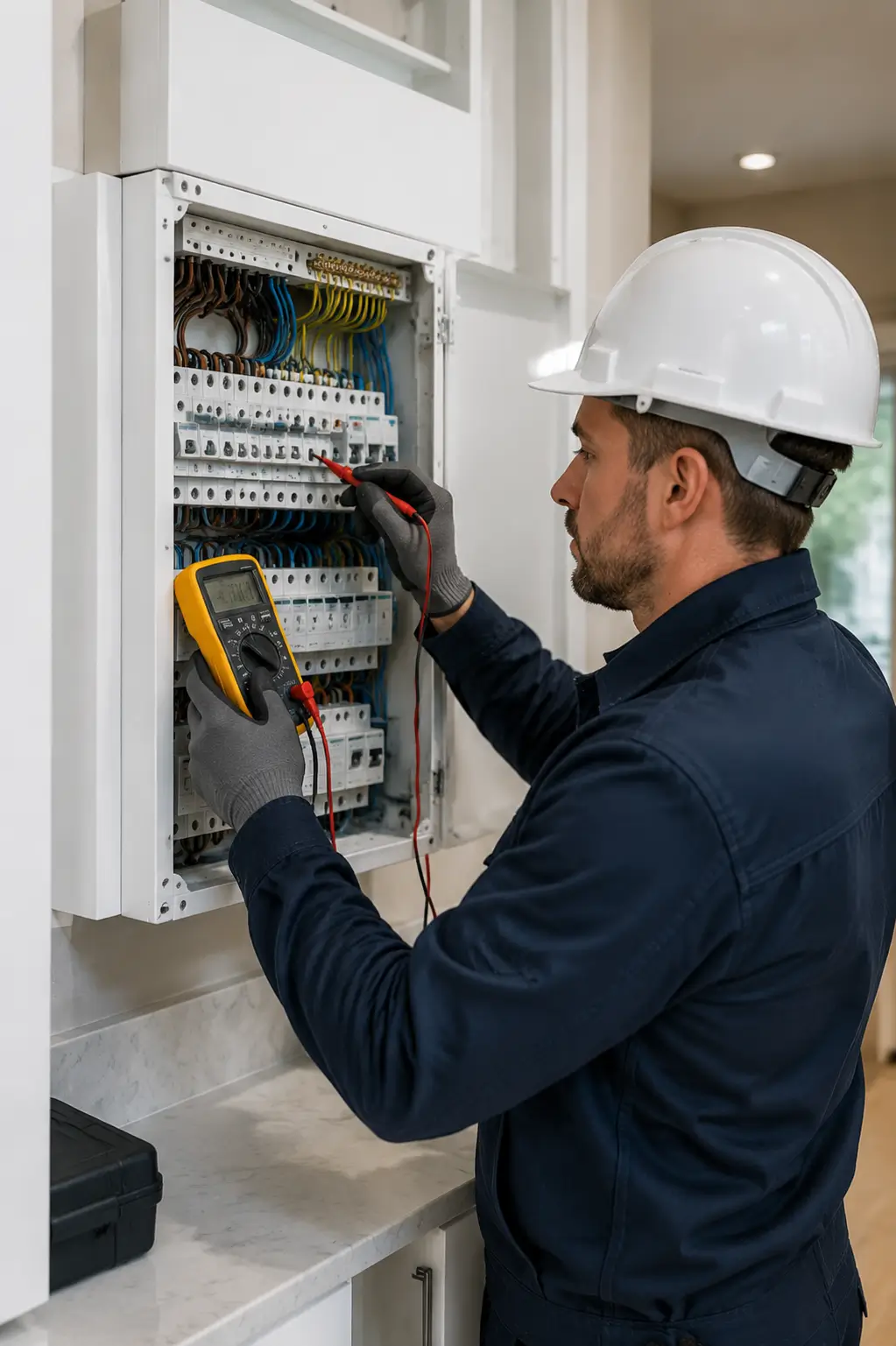
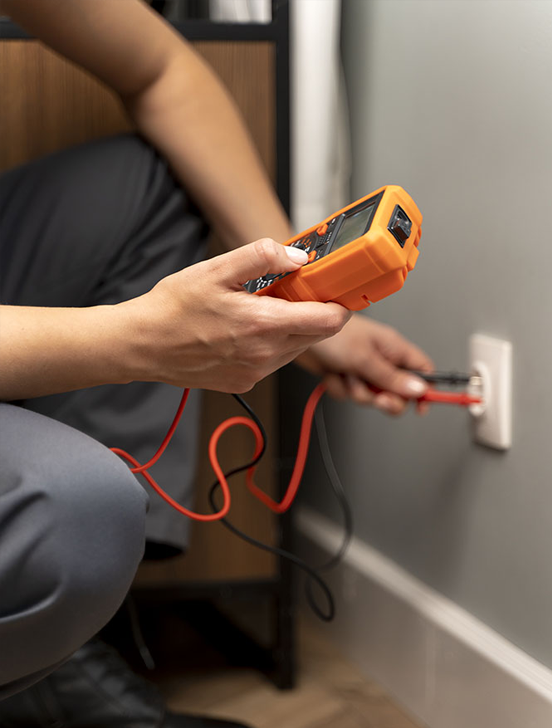
Common checks may include continuity testing, insulation resistance testing, polarity checks, voltage checks, earth fault loop impedance testing, RCD testing and visual inspection of accessories, consumer units and wiring condition.

Electrical fault finding should be carried out by a suitable electrical professional with the competence, equipment and experience required for the task.

Repeated Circuit Failure

Repeated tripping or blown fuses may indicate a short circuit, insulation fault, earth leakage, overload or defective equipment. Further testing is needed before repair work is agreed.

BOOK NOW
Thermal & Acoustic Warnings

Heat, discolouration, burning smells, buzzing or visible sparking should be treated seriously. Switch off the affected circuit if safe to do so and arrange electrical fault finding.

BOOK NOW
Systemic & Fixed Wiring Issues

Faults involving consumer units, switchboards, fixed wiring or damp areas should be assessed by a suitable electrical professional.

BOOK NOW
Inconsistent Diagnostic Results

Where symptoms are intermittent or documentation is missing, further investigation may be needed to confirm the fault source.

BOOK NOW
h1 sub title WHEN TO BOOK FAULT FINDING

When Should You Book Electrical Fault Finding?

Electrical fault finding should be booked when there are repeated trips, burning smells, overheating accessories, buzzing sounds, visible damage, flickering lights, power loss, electric shocks, water damage near electrics or faults involving consumer units and fixed wiring.

When Should You Book Electrical Fault Finding

From the first call to the final sign-off, HSSE Solutions manages every stage with professionalism and care.

Essential Fault Finding Tools and What Each Does 01
h1 sub title FAULT FINDING EQUIPMENT

Essential Fault-Finding Tools (and What Each Does)

Electrical fault finding may use different tools depending on the fault type, circuit condition and agreed scope. Testing should be carried out by a competent person using suitable equipment and safe working procedures.

Voltage indicators and proving units may be used to confirm safe isolation where required.
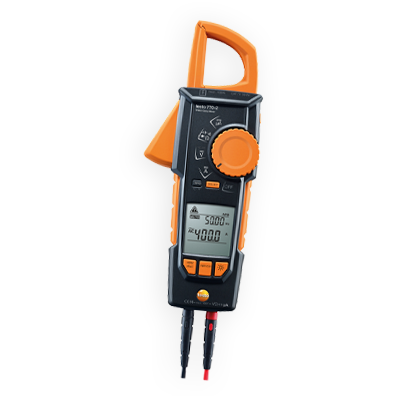
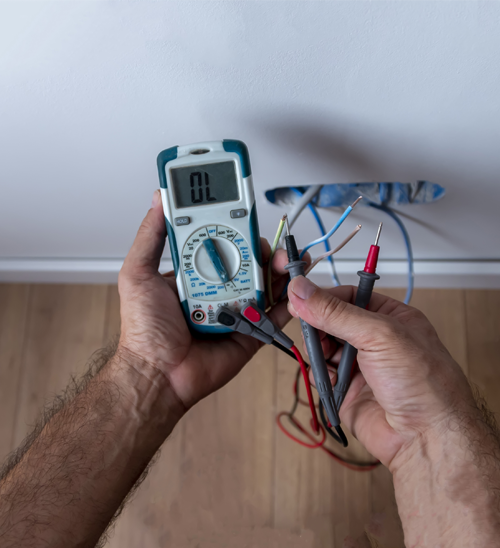
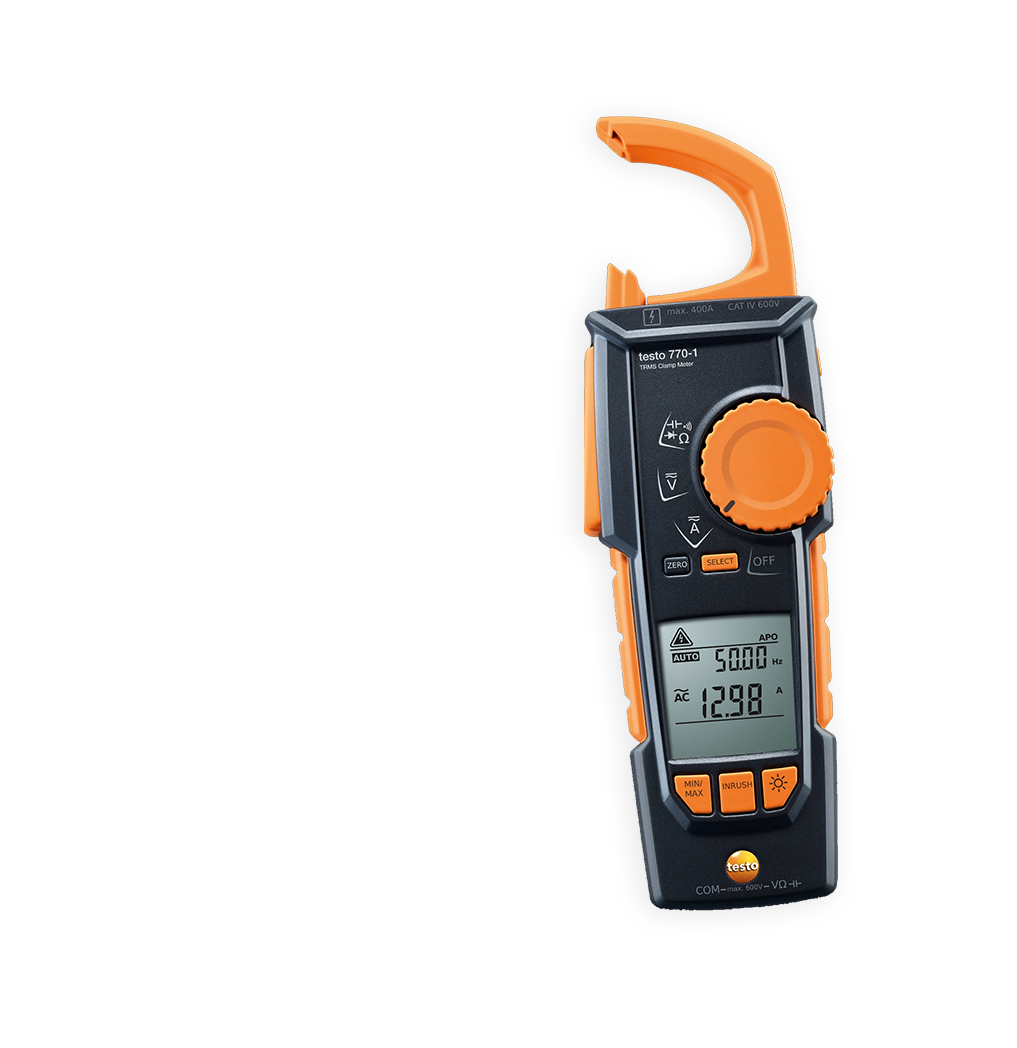
Multimeters, insulation resistance testers, continuity testers, RCD testers and other equipment may be used depending on the fault symptoms and circuit type.
Dedicated testers provide precise pass/fail results on protective conductors and bonding, ensuring earth safety.
Non-contact voltage detectors should not be relied on as the main proof of safe isolation.

The exact tools and test methods depend on the fault type, property access, circuit condition and agreed diagnostic scope.

Frequently Asked Questions Picture 1
h1 sub title Electrical Fault Finding

Frequently Asked Questions

HSSE Solutions currently lists electrical diagnostics from £98.99 per hour, subject to property type, access, fault complexity, location, parts, parking, out-of-hours requirements and whether additional repairs or certification are needed. Final costs should be confirmed before work proceeds.

A straightforward fault-finding visit may take around 1–3 hours, but complex, intermittent or hidden faults can take longer. Duration depends on access, circuit layout, test results, documentation, number of affected circuits and whether parts or further investigation are needed.

Fault finding usually starts with non-invasive checks and electrical testing. If concealed wiring, junction boxes or hidden damage need investigation, access work may be required. Any intrusive work should be discussed before proceeding.

A written fault-finding summary or report may be available where agreed. It can record symptoms, checks carried out, findings and recommended next steps. An EICR or electrical certificate is separate and should be requested where formal inspection or certification is required.

Electrical fault finding should be carried out by a suitable electrical professional with appropriate training, experience and competence for the task. Where inspection, testing or notifiable work is involved, relevant electrical qualifications, scheme registration, insurance and current wiring regulation knowledge may be required.

No. Electrical fault finding investigates a specific fault or symptom. An EICR is a wider inspection and test of the fixed electrical installation and records the overall condition of the installation at the time of inspection.

Some minor issues may be resolved during the visit if safe, accessible and agreed. Other repairs may need parts, further investigation, additional labour or a separate quotation.

icon 1

Important Service Information

Please note: Electrical fault finding services are quoted based on time, property type, access, fault complexity, number of affected circuits, location, urgency, parking, out-of-hours requirements and agreed scope.

Fault finding aims to identify the likely cause of a specific electrical problem. It does not guarantee that every defect in the installation will be found unless a wider inspection and test, such as an EICR, is instructed separately.

Repairs, replacement parts, access work, certification, further investigation, EICR testing, consumer unit work, additional circuits, parking or congestion charges should be confirmed separately where required.

Our Accreditations

Accreditations & Memberships

HSSE Solutions only displays memberships, registrations or accreditations that are active, relevant and verifiable for the services shown. Where a service involves funding, energy efficiency or environmental claims, we aim to present information clearly and responsibly in line with UK advertising and consumer protection guidance.

©2024-2026 HSSE Solutions | Registered in England & Wales | VAT Number: 491324492  | Company Number: 15749518

Get a Free Quote → 📞 02081785892
TrustMark Endorsed