h4 shape 1
h4 shape 2
FIRE DOOR CERTIFICATE SERVICES

Fire Door Certificate Services.

A fire door certificate service can support landlords, managing agents and duty holders with fire door inspection records, condition checks and recommended actions where applicable. HSSE Solutions can support fire door certificate bookings for flat entrance doors, communal fire doors, commercial premises and managed buildings, with the final report depending on door type, access, condition, available evidence, inspection findings and agreed scope.

Banner 12
h1 sub title Pricing List

Fire Door Certificate Pricing List

1-3 Fire Doors Inspection

Inspection arranged through suitable fire safety professionals where required.
£ 149
99
excl. VAT
  • Scope confirmed before booking

5 Fire Door Inspections

Inspection arranged through suitable fire safety professionals where required.
£ 219
99
excl. VAT
  • Scope confirmed before booking

6 Fire Door Inspections

Inspection arranged through suitable fire safety professionals where required.
£ 249
99
excl. VAT
  • Scope confirmed before booking

Fire Door Inspections - Above 6 Doors

Inspection arranged through suitable fire safety professionals where required.
Get Quote excl. VAT
  • Scope confirmed before booking

Pricing depends on the number of doors, property type, door location, access, reporting requirements, available certification evidence, inspection complexity, location, parking and whether re-attendance or additional investigation is required.

What Is a Fire Door Certificate
h1 sub title ABOUT FIRE DOOR CERTIFICATES

What Is a Fire Door Certificate?

A fire door certificate or inspection record should document the fire doors checked, the visible condition at the time of inspection, any available certification evidence, limitations and recommended actions. It should not be presented as a guarantee that every door set is fully compliant, correctly installed, fire-rated or risk-free.


For fire door certificate bookings, call 02081785892

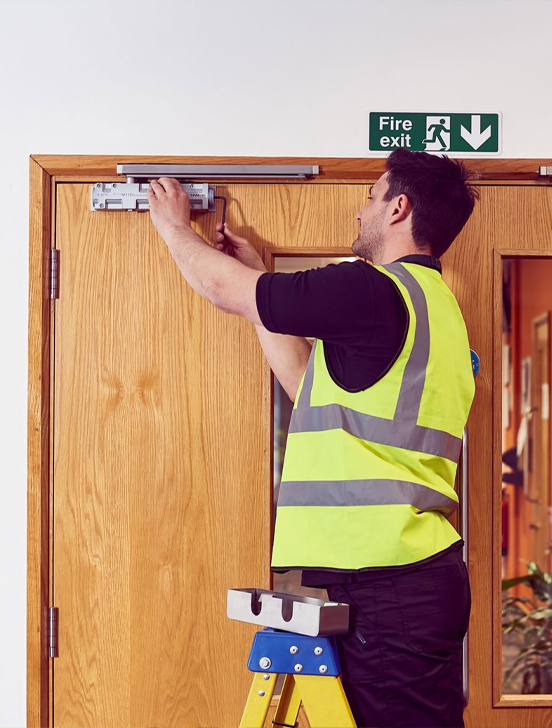
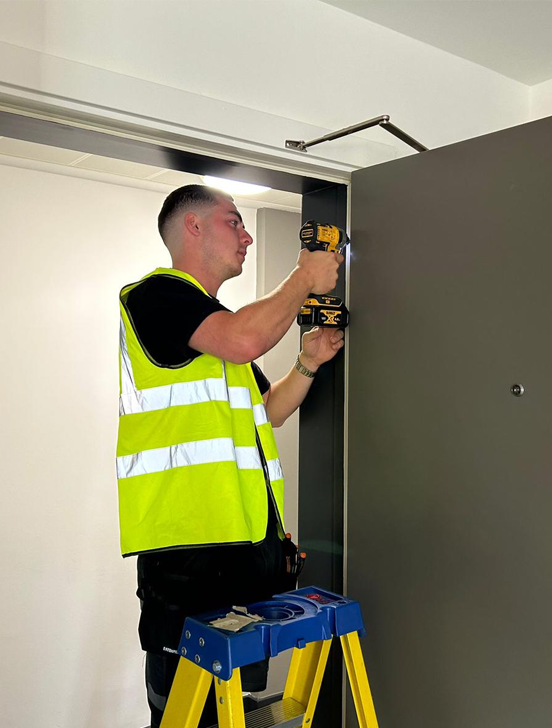
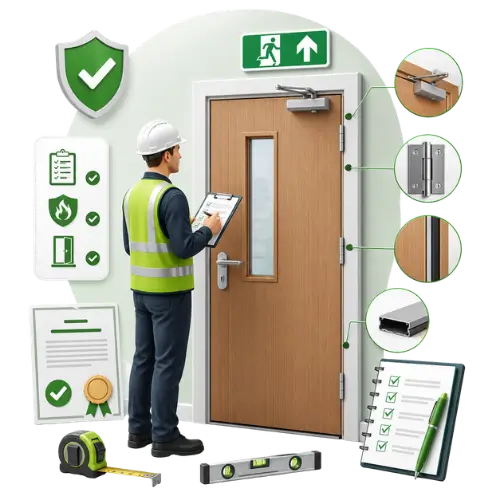
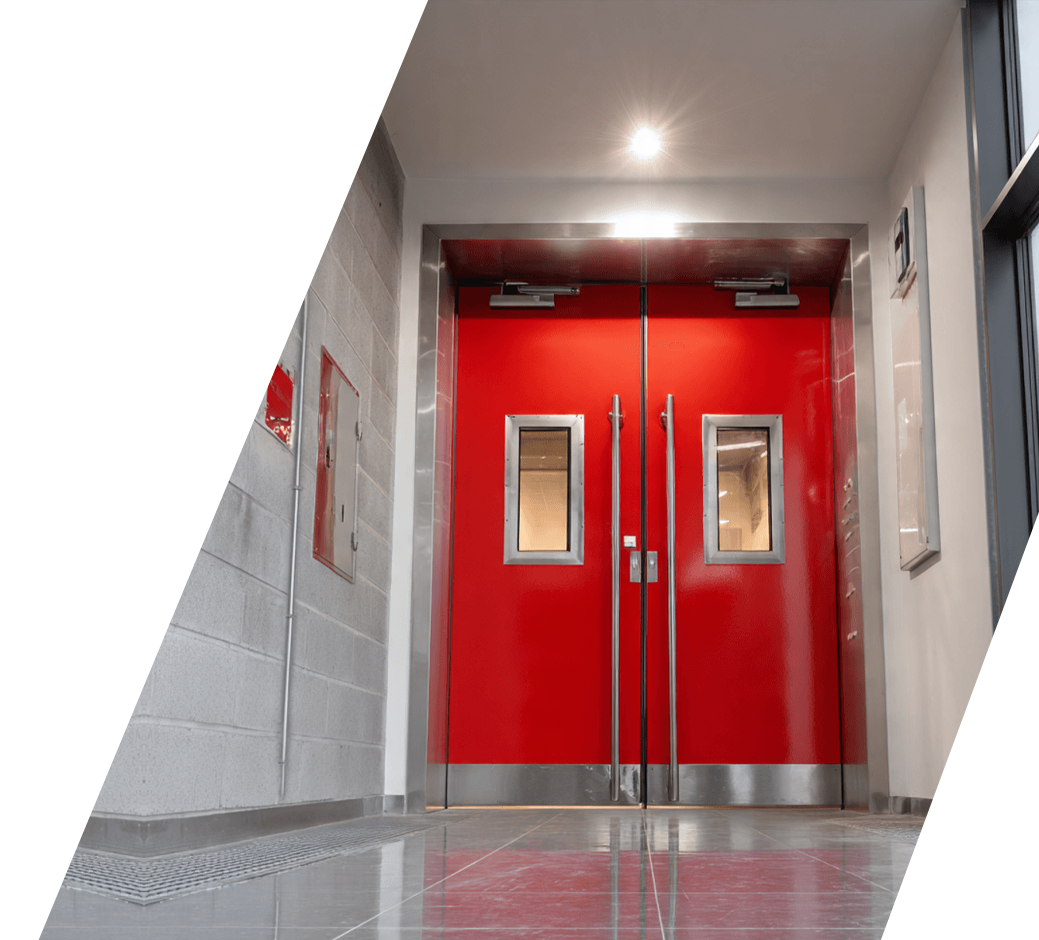
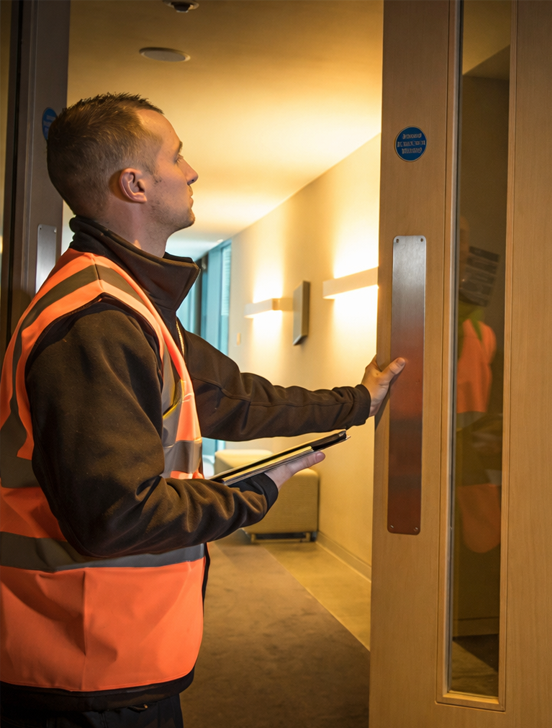
A fire door inspection may review the door leaf, frame, gaps, hinges, closer, seals, glazing, signage, damage, ironmongery, threshold and whether the door closes correctly. The scope depends on the door type, access, property use and agreed inspection requirements.

The certificate or inspection record reflects the doors and checks included in the agreed scope at the time of inspection. Further fire door repairs, replacement, installation evidence, product certification review or fire risk assessment work may be needed depending on the findings.

REGULATION 10 FIRE DOOR CHECKS

Fire Door Checks and Regulation 10

Under the Fire Safety (England) Regulations 2022, Regulation 10 introduced specific fire door duties for responsible persons in multi-occupied residential buildings in England. For buildings above 11 metres, responsible persons must use best endeavours to carry out annual checks of flat entrance doors and quarterly checks of communal fire doors.

These checks help confirm that fire doors are in efficient working order and in good repair at the time of inspection. They can support fire safety management records, but they do not automatically prove that every fire door is fully compliant, correctly installed, fire-rated or free from hidden defects.

List

Buildings Above
11 Metres

In multi-occupied residential buildings above 11 metres, responsible persons must use best endeavours to check flat entrance doors at least every 12 months and check communal fire doors at least every 3 months.

List

Flat Entrance Door
Checks

Flat entrance door checks usually require access to the flat so the door can be checked from both sides. Where access is not granted, the responsible person should keep a record of the steps taken to try to arrange access.

List

Communal Fire Door Checks

Communal fire doors should be checked regularly where Regulation 10 applies. This may include doors in corridors, lobbies, staircases, riser cupboards, plant rooms and other common parts.

List

Resident Fire Door Information

Responsible persons in multi-occupied residential buildings must also provide residents with fire safety information about the importance of fire doors, including keeping fire doors shut and reporting damage or faults.

Important Service Information

Important Note:

GOV.UK confirms that responsible persons must undertake best endeavour annual checks of flat entrance doors and quarterly checks of communal doors in multi-occupied residential buildings above 11 metres.

FIRE DOOR RESPONSIBILITIES

What Should a Regulation 10 Fire Door Check Look For?

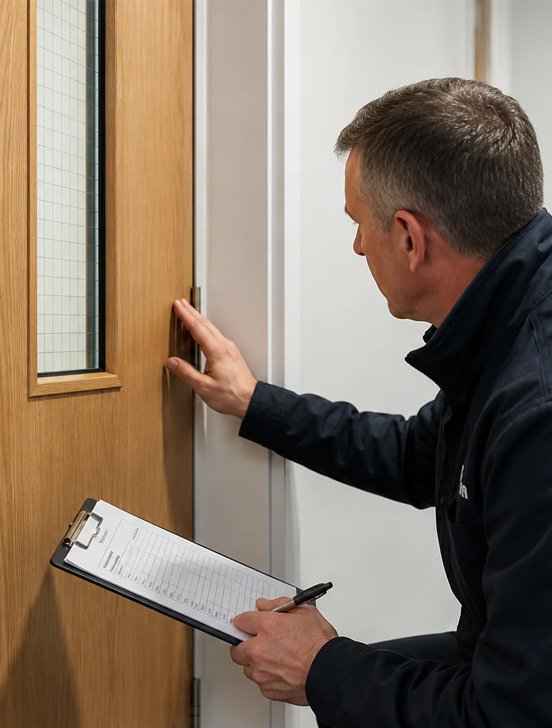
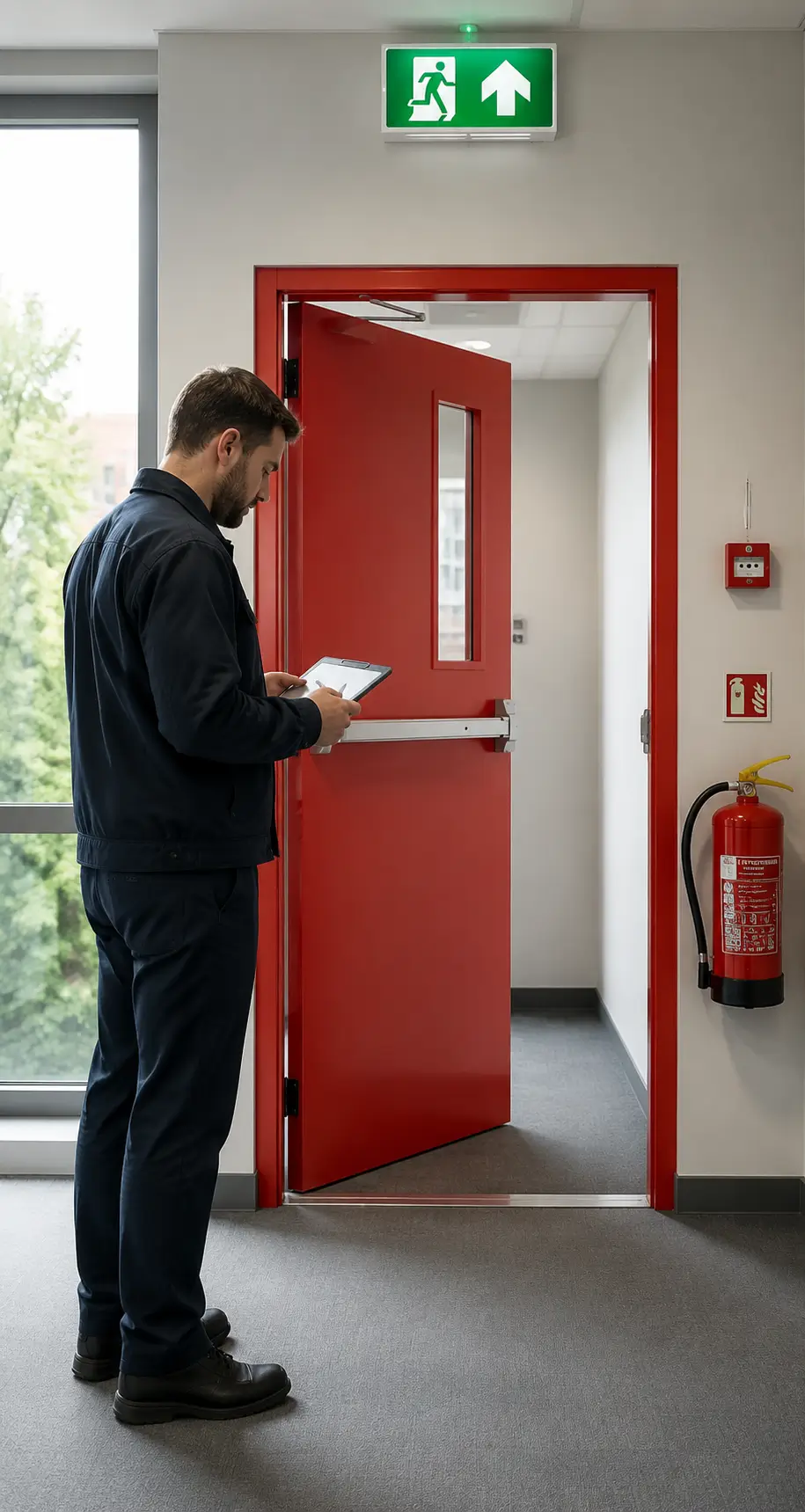
A Regulation 10 fire door check is normally a simple visual check. It may review whether the door closes correctly, whether the self-closing device works, whether the door or frame is damaged, whether smoke or intumescent seals are missing or damaged, whether gaps appear excessive, and whether residents or occupants have altered or damaged the door.
The check should be recorded clearly, including the door location, date, visible condition, access limitations and any recommended action. Where a defect is found, repair, adjustment, replacement or further specialist review may be required.

What Should a Regulation 10 Fire Door Check Look For 02
What Should a Regulation 10 Fire Door Check Look For
Product Image 11
Important Service Information

Important Limitation

A Regulation 10 fire door check is not the same as full fire door certification, product certification or destructive investigation. A visual check may identify obvious defects, but it may not confirm hidden construction details, original fire resistance, manufacturer certification, installation quality or full compliance unless suitable evidence is available.

When Is a Fire Door Certificate Required 02
When Is a Fire Door Certificate Required 01
Product Image 11
FIRE DOOR RESPONSIBILITIES

When Is Fire Door Certificate Support Needed?

Fire door certificate support may be needed where landlords, managing agents, responsible persons, insurers, buyers, tenants or fire risk assessment findings require evidence of fire door condition, inspection records or available certification evidence.

A fire door certificate or inspection record can help document visible condition, available evidence and recommended next steps. It does not guarantee that the whole building is safe, fully compliant or free from future fire safety issues.

FIRE DOOR INSPECTION BENEFITS

Possible Benefits of Fire Door Certificate Support

Fire door certificate support can help document door condition, visible defects, available evidence and recommended next steps. Benefits depend on door condition, access, inspection scope, available certification evidence and whether recommended actions are completed.

97
Door Condition Review

Helps identify visible damage, missing seals, poor closing, excessive gaps or hardware issues where included in the inspection scope.

94
Record-Keeping Support

Provides a record of doors checked, findings, limitations and recommended actions to support fire safety management.

95
Responsible Person Support

Can support landlords, managing agents and duty holders with fire door management records where required.

96
Remedial Action Guidance

Helps identify doors that may need repair, adjustment, replacement, further evidence review or specialist assessment.

CERTIFICATE AND REPORT CONTENT

What a Fire Door Inspection Record Should Include

A fire door certificate or inspection record should clearly explain what was checked, what evidence was available, what limitations applied and what actions were recommended. The exact contents depend on whether the document is a visual inspection record, installation certificate or product certification evidence.

Initial Eligibility Review

Door Identification

Each inspected door should be identified by location, floor, door reference or description where applicable.

01
Property Assessment

Available Rating Evidence

Any available evidence of fire rating, labels, plugs, manufacturer details or certification should be recorded where visible or provided. The rating should not be confirmed unless suitable evidence is available.

02 1
Application Approval

Visible Components Checked

The record may note visible condition of the door leaf, frame, hinges, closer, seals, glazing, signage, threshold and ironmongery where included in scope.

03
Technical Review 1

Scope and Limitations

The report should explain what was included, what was not accessible and whether any assumptions or limitations affected the findings.

04 2
Installation Where Approved 1

Available Installation Evidence

Installation records, previous reports, maintenance logs or product certification may be reviewed where provided.

05
Handover Documentation 1

Findings and Recommended Actions

The final report should record observations, limitations, recommended actions and whether repairs, replacement or further specialist review may be needed.

02 1 1
01
Initial Eligibility Review

Identify Fire Hazards

The assessment reviews possible ignition sources, combustible materials, oxygen sources, housekeeping, electrical equipment, heating, cooking and other hazards where relevant.

Property Assessment

Identify People at Risk

The assessment considers who may be at risk, including staff, residents, visitors, contractors, lone workers, disabled people, elderly people or sleeping occupants where applicable.

02
03
Application Approval

Evaluate and Prioritise Risk

Risks are reviewed based on likelihood, potential consequences and existing fire precautions. Recommended actions may be prioritised according to risk level and the assessor’s findings.

Technical Review 1

Record Significant Findings

Significant findings, existing precautions, recommended actions and priorities are recorded in the report where required. The responsible person should review the findings and decide how actions will be managed.

04 1
05
Installation Where Approved 1

Recommend Fire Safety Actions

The report may recommend actions relating to detection, alarms, escape routes, fire doors, emergency lighting, signage, extinguishers, housekeeping, procedures, maintenance or management arrangements.

Handover Documentation 1

Review & Update Routinely

The fire risk assessment should be reviewed regularly and when significant changes occur, such as layout changes, refurbishment, new hazards, occupancy changes or fire incidents.

02 1 1
COMPLIANCE & RESPONSIBILITY

Who Can Issue a Fire Door Certificate?

Who can issue a fire door certificate depends on the type of document required. A manufacturer may provide product certification evidence, an installer may provide installation records, and a competent inspector may provide a condition inspection report based on visible checks and available evidence.

Who Can Issue a Fire Door Certificate 02
Who Can Issue a Fire Door Certificate 01
Product Image 11
Fire Door Certificate Schemes Certifier vs BWF CERTIFIRE 02
Understanding Fire Door Certification Evidence
Product Image 11
FIRE DOOR CERTIFICATION EVIDENCE

Understanding Fire Door Certification Evidence

Fire door certification evidence may come from different sources, including manufacturer certification, third-party product certification, installation records, labels, plugs and inspection reports. These should not be treated as the same document.

CERTIFIRE is an independent third-party passive fire product certification scheme operated by Warringtonfire, while the BWF Fire Door Alliance champions third-party certification of fire doors and doorsets. BM TRADA Q-Mark is also a recognised third-party fire door certification route.

Confirm the document needed

check whether the requester needs a visual inspection report, installation certificate, product certification evidence or fire risk assessment action support.

BOOK NOW
Confirm the door list

provide the number of doors, locations, access details and any previous fire door records.

BOOK NOW
Arrange inspection

make sure doors, common parts and flat entrance doors are accessible where included.

BOOK NOW
Review findings

act on recommended repairs, replacement, evidence gaps or further specialist review where required.

BOOK NOW
h1 sub title BOOKING AND DOCUMENTATION

How to Get a Fire Door Certificate

The process depends on whether you need a visual fire door inspection record, installation evidence, product certification review or a report for landlord, managing agent, insurer or fire risk assessment purposes.

How to Get a Fire Door Certificate

HSSE Solutions can support fire door certificate bookings, visual inspection records and recommended action guidance according to the agreed scope.

Why Fire Doors Fail Certification Checks 01 1
h1 sub title DISTINCT SAFETY PROTOCOLS

Common Issues Found During Fire Door Checks

Fire door checks often identify repeat issues that may affect door performance or require further review. Some issues relate to visible condition, while others relate to missing evidence or unapproved alterations.

A failed inspection is typically traced to:

Excessive Gaps: gaps around the door may appear too large or uneven and may require adjustment or specialist review.
Hardware Concerns: locks, hinges, closers, letter plates or other ironmongery may be damaged, missing, unsuitable or unsupported by available evidence.
Damage or Alterations: impact damage, warping, holes, poor repairs, paint build-up on seals or unapproved alterations may require remedial action.
Missing Evidence: missing labels, plugs, product data or installation records may limit what can be confirmed in the report.
Door does not close fully into the frame.
Self-closing device missing, disconnected or weak.
Smoke or intumescent seals missing or damaged.
Fire door signage missing where required.
Door wedged open or blocked.
Frame damaged or poorly fitted.
Glazing or vision panel concerns
Threshold or floor covering preventing closure
Frequently Asked Questions 9
h1 sub title Fire Door Certificate (FDC)

Frequently Asked Questions

HSSE Solutions displays guide pricing on this page. The final cost depends on the number of doors, property type, door location, access, reporting requirements, available evidence and whether re-attendance or further investigation is required. Doors outside the listed scope may require a tailored quotation.

Validity depends on the document type, property requirements, fire risk assessment findings, insurer or managing agent requirements and door condition. A fire door inspection record reflects the condition at the time of inspection and should be reviewed if doors are damaged, altered, repaired or if the fire risk assessment is updated.

Fire door records should normally identify each door checked by location, reference number or description. A single report may cover multiple doors if the scope is clear, but each door’s findings should be recorded separately where required.

Enforcement depends on the premises, legal duty, risk level and circumstances. Responsible persons should keep accurate fire safety records and should not misrepresent a visual inspection record as full product certification or proof of complete compliance.

Insurance requirements vary. Some insurers may request fire door inspection records, maintenance evidence, fire risk assessments or proof that recommended actions have been completed. Customers should check their policy or speak to their insurer.

No. It records the doors and checks included in the agreed scope at the time of inspection. It does not guarantee full legal compliance, original fire rating, correct installation, insurer acceptance or future performance.

No. Installation certification usually relates to a door set as installed, with evidence of product certification, installation details and fire rating. A fire door inspection record usually checks visible condition and evidence available at the time of inspection.

For multi-occupied residential buildings above 11 metres, responsible persons must use best endeavours to check flat entrance doors annually and communal fire doors quarterly. Other premises should set inspection frequency based on risk, use, condition and fire risk assessment findings.

h1 sub title DISTINCT SAFETY DOCUMENTS

Fire Door Certificate vs Fire Risk Assessment

Fire Door Certificate

Fire Door Certificate

A fire door certificate or inspection record focuses on selected fire doors, visible condition, available evidence and recommended actions at the time of inspection.

Fire Risk Assessment

Fire Risk Assessment

A fire risk assessment is wider. It reviews fire hazards, people at risk, escape routes, fire precautions and management arrangements across the premises.

2 2

Fire door checks can support a fire risk assessment action plan, but they do not replace the wider fire risk assessment where one is required.

The Fire Safety Act 2021 clarified that the Fire Safety Order applies to the structure, external walls and flat entrance doors in buildings containing two or more sets of domestic premises.

icon 1

Important Service Information

Please note: Fire door certificate services are quoted based on number of doors, property type, door location, access, reporting requirements, available certification evidence, inspection complexity, location and agreed scope.

A fire door certificate or inspection record only covers the doors and checks included in the agreed scope at the time of inspection. It does not guarantee that all fire doors are fully compliant, correctly installed, fire-rated, accepted by insurers or free from hidden defects.

Fire door repairs, replacement doors, hardware replacement, closer adjustment, glazing work, fire stopping, further investigation, fire risk assessment, re-attendance, access limitations, parking or congestion charges should be confirmed separately where required.

Our Accreditations

Accreditations & Memberships

HSSE Solutions only displays memberships, registrations or accreditations that are active, relevant and verifiable for the services shown. Where a service involves funding, energy efficiency or environmental claims, we aim to present information clearly and responsibly in line with UK advertising and consumer protection guidance.

©2024-2026 HSSE Solutions | Registered in England & Wales | VAT Number: 491324492  | Company Number: 15749518

TrustMark Endorsed