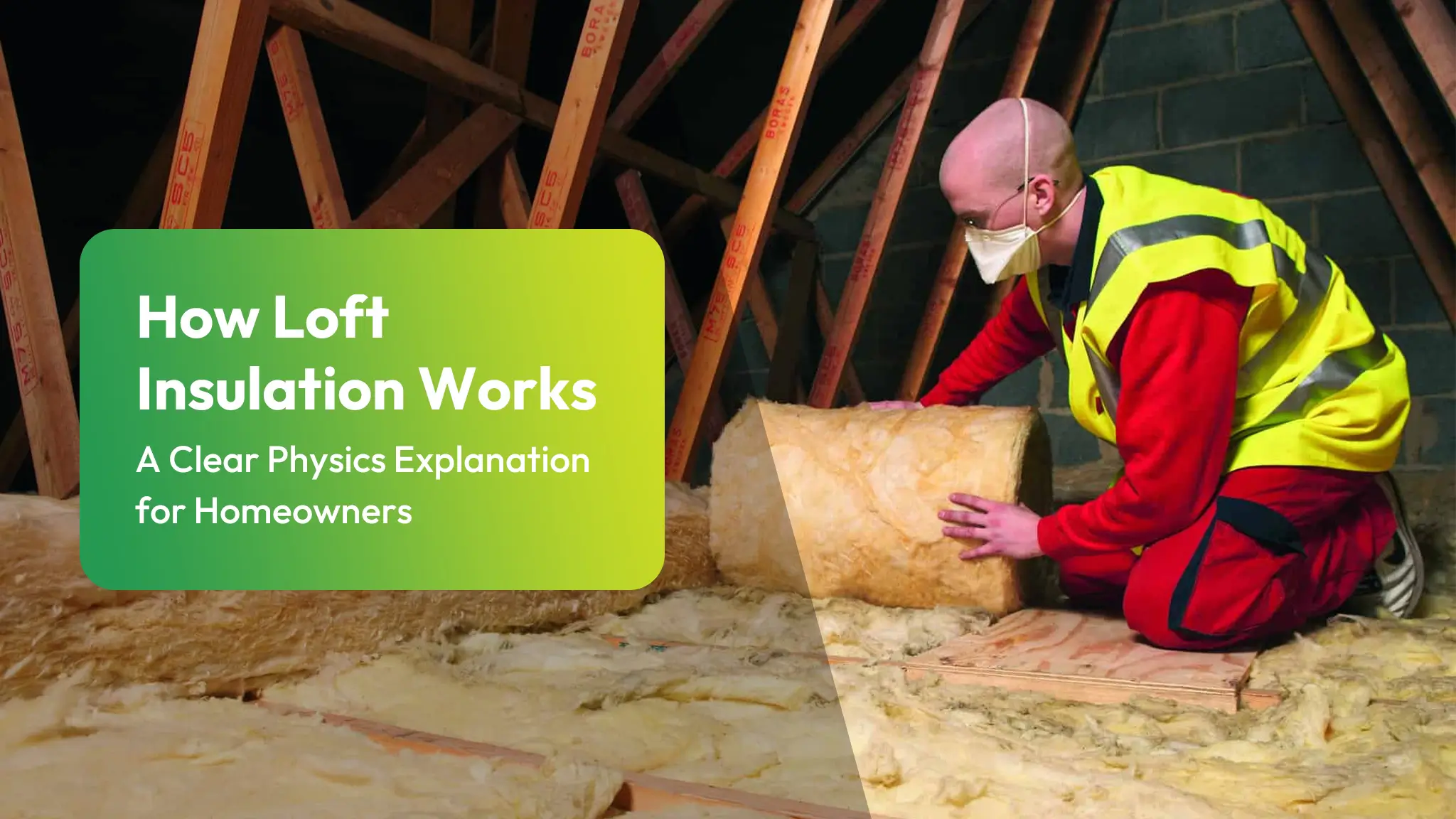
How loft insulation works? Loft insulation plays an essential role in a home’s energy efficiency. It reduces heat loss by employing various physical principles, primarily through conduction and convection, which explains how does loft insulation work physics in real-world homes. Understanding how insulation works can illuminate its importance in maintaining comfortable indoor temperatures and minimising energy bills. Homeowners often overlook these mechanisms, leading to unnecessary energy waste. Exploring the underlying physics reveals essential insights into optimising home efficiency and comfort. What specific factors contribute to its effectiveness?
Key Takeaways
- Loft insulation traps warm air, reducing heat loss by providing a barrier against conduction and convection that would otherwise carry it to cooler surfaces.
- The R-value measures insulation’s effectiveness; higher values indicate better thermal resistance, helping to minimise heat loss in winter and heat gain in summer.
- Insulation blocks radiant heat transfer by using reflective barriers, which redirect heat back to its source, enhancing overall energy efficiency in homes.
- Air gaps within insulation materials improve thermal performance; smaller, contained air pockets are more effective at reducing heat transfer than larger gaps.
- Effective loft insulation conserves energy, reducing utility bills, increasing home comfort, and lowering a home’s carbon footprint.
Table of Contents
How Physics Explains Heat Loss Through Roofs Without Proper Loft Insulation
Heat loss through roofs without adequate loft insulation exemplifies the principles of thermodynamics in action and helps explain how does loft insulation works physics in real homes. As warm air rises within a house, it encounters cooler surfaces, such as an uninsulated roof. This temperature difference drives heat transfer, causing the warm air to escape into the colder exterior environment.
This process, known as conduction, occurs as heat moves from areas of higher temperature to regions of lower temperature, resulting in increased energy consumption to maintain a comfortable indoor climate, which clearly demonstrates how does loft insulation work physics in everyday homes.
Moreover, convection occurs as air currents circulate, further facilitating heat loss. In the absence of proper insulation, these natural processes lead to a significant decrease in energy efficiency, compelling homeowners to expend more resources on heating.
Understanding this fundamental relationship between heat and insulation, and how loft insulation work physics, can empower homeowners to make informed decisions regarding energy efficiency improvements, ultimately enhancing comfort and reducing heating costs over time.
The Role of Thermal Resistance (R-Value) in Loft Insulation Performance
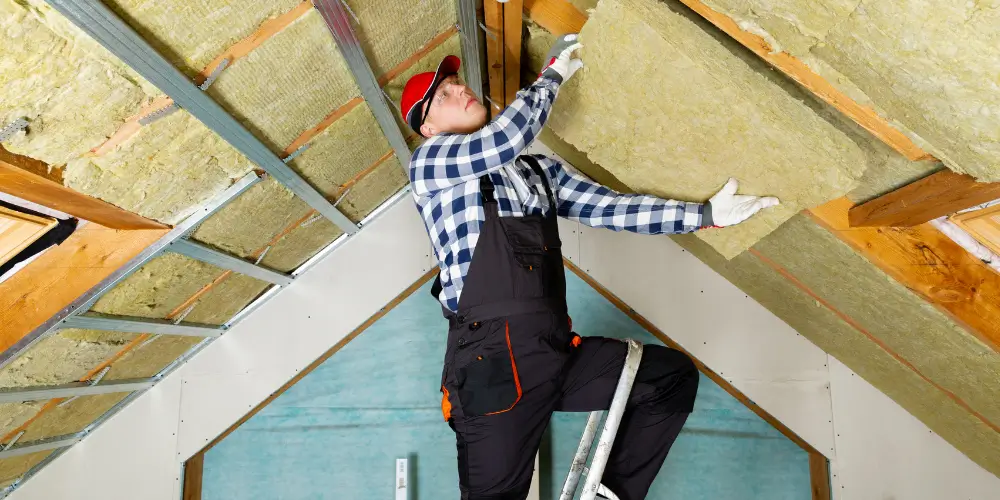
Effective thermal resistance, commonly measured by the R-value, plays a fundamental role in determining the performance of loft insulation and explains how does loft insulation work physics in practical terms. The R-value quantifies the insulation’s resistance to heat flow; higher values indicate better insulating properties.
For homeowners, understanding this concept is essential when selecting insulation materials, as it directly affects energy efficiency and home comfort.
Different types of insulation exhibit varying R-values, influenced by their material composition, thickness, and density. For instance, fibreglass batts typically have an R-value ranging from 2.9 to 4.3 per inch, while spray foam can reach R-values of 6 to 7 per inch.
By maximising R-value, homeowners can effectively minimise heat loss in winter and heat gain in summer, ultimately reducing energy bills.
To achieve optimal performance, it is essential to evaluate not only the R-value of the insulation material but also the overall installation quality, as gaps and compression can significantly reduce thermal resistance.
How Loft Insulation Disrupts Convection Currents Inside Your Home
While many homeowners focus on the R-value when considering loft insulation, it is equally important to understand how insulation disrupts convection currents within a home.
Convection currents occur when warm air rises, and cooler air descends, creating a cycle that can lead to heat loss. Loft insulation acts as a barrier, trapping warm air in the living areas and preventing it from escaping into the loft space.
This disruption minimises air movement, reducing overall heat transfer and maintaining a more stable indoor temperature.
Understanding Radiant Heat and Why Loft Insulation Blocks It
Loft insulation plays a significant role not only in disrupting convection currents but also in blocking radiant heat.
Radiant heat is the energy emitted by warm surfaces, such as roofs or walls, which can transfer heat to cooler areas, including living spaces. Unlike convection, which involves the movement of air, radiant heat travels in straight lines and can penetrate materials.
Effective loft insulation incorporates reflective barriers that minimise this heat transfer. These barriers reflect radiant heat towards its source, preventing it from entering living areas during summer while keeping heat in during winter.
This dual action increases energy efficiency, reducing the need for heating or cooling systems.
Understanding how loft insulation blocks radiant heat empowers homeowners to make informed decisions about energy efficiency improvements, ultimately leading to a more comfortable living environment and lower energy bills.
Why Air Gaps Matter: The Science Behind Insulation Materials in Lofts
Understanding the role of air gaps in insulation materials is essential for optimising energy efficiency in lofts. Air gaps act as barriers to heat transfer, greatly influencing the overall effectiveness of insulation. When air is trapped in these gaps, it reduces heat conduction, thereby enhancing the insulating properties of the material. This is due to air’s low thermal conductivity, which means it does not easily transfer heat.
In loft insulation, the arrangement and size of air gaps can vary, affecting their thermal performance. Small, contained air pockets are more effective than larger, uncontained ones. Additionally, the presence of air gaps can minimise convection currents, further limiting heat loss.
As a result, homeowners should consider the importance of air gaps in their insulation choices, as they play a key role in maintaining a comfortable indoor temperature and reducing energy costs, ultimately contributing to a more sustainable living environment.
How Density and Thickness Affect Loft Insulation Efficiency
When considering insulation efficiency, both density and thickness play essential roles in determining the overall performance of materials used in lofts.
Density refers to the mass of insulation material per unit volume, influencing its ability to resist heat flow and helping explain how does loft insulation works physics at a material level. Higher-density materials often offer better thermal performance because they contain more particles that impede heat transfer. Conversely, lower-density materials may be lighter and easier to handle but less effective at preventing heat loss.
Thickness, on the other hand, directly impacts the insulation’s thermal resistance, or R-value. Thicker layers of insulation create more barriers for heat flow, enhancing their effectiveness.
However, there is a balance; excessively thick insulation may lead to diminishing returns in efficiency. As a result, homeowners should consider both the density and thickness of insulation materials to optimise energy savings and comfort in their loft spaces, ensuring a well-insulated home environment and reinforcing how loft insulation works physics in practice.
The Physics of Seasonal Heat Control: Loft Insulation in Winter vs Summer
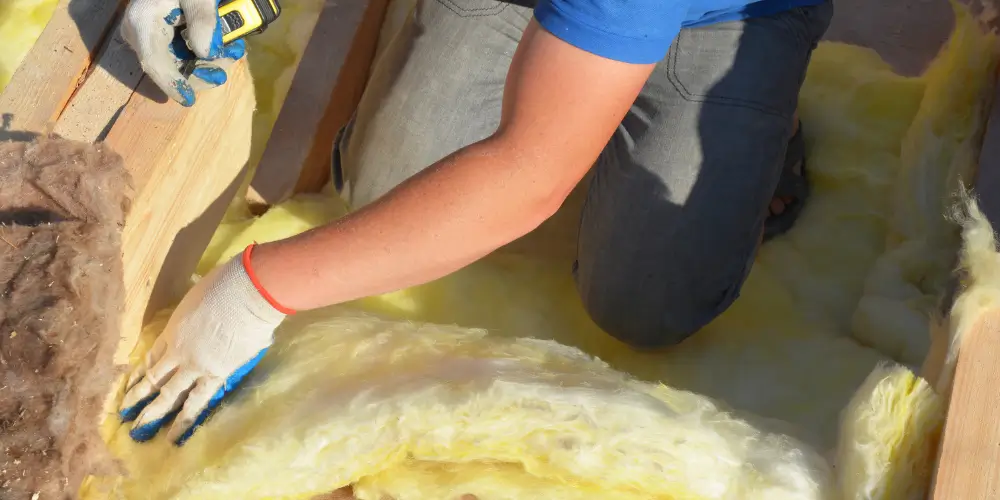
Although temperature fluctuations are a natural part of seasonal changes, effective loft insulation is essential for maintaining a comfortable indoor environment year-round.
In winter, it serves as a barrier, preventing heat generated by heating systems from escaping into the cold exterior. This retention of warmth not only increases comfort but also reduces heating costs.
Conversely, during the summer months, loft insulation helps to keep the heat out, ensuring that indoor temperatures remain cooler and more pleasant.
By minimising heat transfer, insulation helps stabilise indoor climates, making homes more energy-efficient. The materials used in loft insulation are specifically designed to resist heat flow, thereby regulating temperature extremes.
Homeowners can benefit significantly from understanding how loft insulation behaves differently across seasons, enabling improved year-round management of indoor comfort and energy consumption.
How Loft Insulation Minimises Energy Loss Using Heat Flow Principles
Loft insulation minimises energy loss by utilising fundamental heat-flow principles based on the laws of thermodynamics.
Heat naturally moves from warmer areas to cooler ones, seeking equilibrium. In homes, this means heat escapes through the roof during colder months and enters during warmer months.
Loft insulation acts as a barrier, slowing down this heat transfer and maintaining a stable indoor temperature.
The Science Behind Loft Insulation and Lower Energy Bills
Effective loft insulation plays an essential role in reducing energy bills by considerably decreasing heat loss in homes.
The science behind this process involves the principles of thermal resistance and conductivity. Insulating materials, such as fibreglass or foam, trap air within their structure, creating a barrier that slows heat transfer.
As warm air rises, it tends to escape through the loft; however, effective insulation minimises this upward heat flow, keeping homes warmer during colder months.
How Building Physics Links Loft Insulation to Long-Term Home Efficiency
When considering long-term home efficiency, the principles of building physics reveal that loft insulation substantially contributes to energy conservation. By minimising heat transfer between the interior of a home and the external environment, loft insulation effectively retains warmth during colder months and keeps spaces cooler during warmer periods.
This thermal resistance is quantified by the insulation’s R-value, which measures its effectiveness; higher R-values indicate better insulation performance.
Moreover, loft insulation reduces reliance on heating and cooling systems, leading to decreased energy consumption and lower utility bills, clearly illustrating how loft insulation works physics in everyday home performance. This sustainable method not only benefits homeowners financially but also reduces the overall carbon footprint of the property.
Over time, the cumulative savings from reduced energy use can offset the initial outlay in insulation materials. Ultimately, effective loft insulation, as understood through building physics, is a critical factor in achieving long-term energy efficiency and enhancing overall home comfort.
Frequently Asked Questions
How Do I Choose the Right Type of Loft Insulation?
To choose the right type of loft insulation, one should consider factors such as material type, thermal performance, cost, installation method, and environmental impact, ensuring it aligns with specific energy-efficiency goals and budgetary constraints.
Can I Install Loft Insulation Myself, or Should I Hire a Professional?
Individuals can install loft insulation themselves if they possess basic DIY skills and knowledge. However, hiring a professional ensures proper installation and compliance with safety standards, potentially resulting in more effective insulation and long-term energy savings.
What Are the Common Signs of Inadequate Loft Insulation?
Common signs of inadequate loft insulation include fluctuating indoor temperatures, higher energy bills, drafts, roof ice dams, and visible condensation or moisture in the loft. These indicators suggest insufficient thermal resistance and energy loss.
How Often Should I Replace or Upgrade My Loft Insulation?
Loft insulation should be replaced or upgraded approximately every 15 to 20 years, depending on its condition and effectiveness. Regular assessments guarantee peak energy efficiency and comfort, preventing unnecessary heat loss and enhancing overall home performance.
Does Loft Insulation Affect My Home’s Ventilation System?
Loft insulation can significantly impact a home’s ventilation system by reducing air leakage. Properly installed insulation helps maintain temperature and moisture balance, but inadequate ventilation can lead to issues such as condensation and mould growth if left unchecked.
Conclusion
To summarise, loft insulation serves as an essential barrier against heat loss, employing the principles of physics to increase home energy efficiency and clearly demonstrating how does loft insulation works physics in real living environments. By minimising conduction, disrupting convection currents, and blocking radiant heat transfer, it stabilises indoor temperatures year-round. The integration of effective insulation not only enhances comfort but also results in significant energy savings and lower utility bills. Ultimately, understanding these fundamental concepts empowers homeowners to make informed decisions that contribute to long-term sustainability and efficiency in their living spaces.