

Older UK homes can considerably cut heat loss and bills by starting with an EPC assessment to target the most effective upgrades. Key steps include loft, wall and floor insulation, plus hot water cylinder and pipe lagging, all balanced with good ventilation. Smart heating controls, modern radiators and appropriate boiler upgrades further improve efficiency. Adding heat pumps, biomass or solar PV with battery storage can reduce carbon use. The full guide explains how to choose and combine these improvements effectively.
Key Takeaways
- Start with an EPC assessment to identify tailored, high-impact upgrades and ensure improvements work together efficiently and legally.
- Improve insulation in lofts, walls, floors, hot water cylinders, and pipes to cut heat loss and lower heating demand.
- Combine insulation with effective ventilation—trickle vents, extractor fans, and clear air bricks—to prevent damp and maintain indoor air quality.
- Upgrade heating controls and radiators—using smart thermostats, TRVs, zoning, and balanced systems—to boost comfort and reduce boiler runtime.
- Add renewables like air-source heat pumps and solar PV, matched to the property’s fabric, orientation, and structural condition for long-term savings.
Table of Contents
Why Older UK Homes Waste So Much Energy
While they often possess architectural charm, older UK homes are typically inefficient because they were built long before modern energy standards existed. Walls are often solid masonry without cavities for insulation, allowing heat to pass through easily. Roofs, lofts, and suspended timber floors can be poorly insulated or entirely bare, creating substantial heat loss.
Single-glazed sash or casement windows, common in period properties, lose heat quickly and allow draughts. Gaps around doors, floorboards, and chimneys further increase uncontrolled air leakage, forcing heating systems to work harder. Many properties still rely on outdated boilers, radiators, and controls that operate inefficiently. Combined, these factors mean older homes require more energy to achieve comfortable temperatures, resulting in higher bills and greater carbon emissions. Here are the Common Reasons Homes Lose Heat in the UK and How to Fix Them.

Start With an EPC Assessment Before Making Improvements
Given how much energy older homes can waste by design, the logical first step before making any upgrades is to obtain an Energy Performance Certificate (EPC) assessment. An EPC is carried out by an accredited assessor who inspects the property’s fabric, heating systems, glazing, and controls, then rates efficiency from A to G.
This assessment does more than satisfy legal requirements; it provides a structured list of recommended improvements, their indicative costs, and potential bill savings. That helps owners avoid guesswork, focusing limited budgets where they have the greatest impact. An EPC also highlights interactions between measures, reducing the risk of expensive but poorly matched upgrades. In short, it offers a clear, evidence-based roadmap before committing to any work. Explore How To Improve EPC From D to C With Simple and Cost-Effective Upgrades.
Loft Insulation for Reducing Heat Loss Through the Roof
A significant share of heat in older UK properties escapes through the roof, making loft insulation one of the most cost‑effective upgrades available. By creating a continuous thermal barrier, insulation slows heat flow from the living space into the colder loft, reducing heating demand and improving comfort. Older homes often have thin, patchy, or compressed insulation, well below the commonly recommended depth of around 270 mm. Topping up or replacing existing material can deliver substantial energy savings with relatively low disruption.
Homeowners may consider materials such as mineral wool rolls laid between and over joists, or rigid boards for tighter spaces and loft conversions. Proper ventilation, maintained eaves airflow, and protection against damp are essential to avoid condensation and preserve performance over time. Understand the basics of How Loft Insulation Works: A Clear Physics Explanation for Homeowners.
Wall Insulation Options for Solid Wall and Cavity Wall Homes
Despite often being out of sight, external walls are the next major source of heat loss in older UK homes after the roof, and the type of wall construction strongly influences the best insulation approach. Many pre‑1920 properties have solid brick or stone walls, while later homes commonly have cavity walls with a gap between inner and outer leaves.
For solid walls, options include external wall insulation (EWI), which wraps the building, or internal wall insulation (IWI), which reduces room size slightly but preserves façades. Cavity walls can often be upgraded more simply by injecting insulation into the existing gap, provided the cavity is suitable and moisture risks are assessed. Here is the detailed difference and guidance on External Wall Insulation vs Internal Wall Insulation: UK Homeowners’ Guide to Energy Efficiency.
| Wall type | Typical solution | Key considerations |
| Solid wall | External wall insulation | Cost, appearance, planning |
| Solid wall | Internal wall insulation | Space loss, disruption |
| Cavity wall | Cavity fill | Damp risk, cavity condition |
| Any | Breathable materials | Moisture, long‑term durability |
Floor Insulation for Older Homes With Timber or Suspended Floors
While walls and roofs attract most attention, many older UK homes also lose substantial heat through uninsulated timber or suspended floors. Cold draughts often rise from gaps between floorboards, skirting, and around service pipes, making rooms feel chilly even when the thermostat is high.
For suspended timber floors, insulation is usually added between the joists. Common materials include mineral wool supported by netting, rigid boards, or natural options such as wood fibre. Maintaining underfloor ventilation is essential to prevent damp and rot; air bricks and vents must stay clear. Where access from below is impossible, lifting floorboards carefully may be necessary. Even simple measures, like sealing gaps and using well‑fitted rugs, can noticeably improve comfort and reduce heating demand.
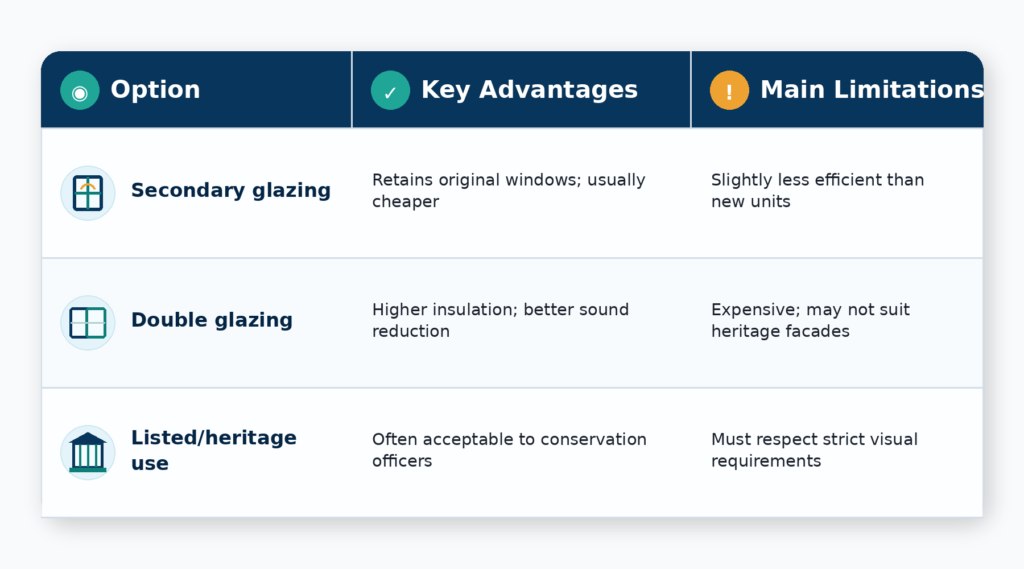
Secondary vs Double Glazing in Older Homes
Attention often then turns from floors to windows, which can be a major source of heat loss and discomfort in older UK properties. Owners usually compare secondary glazing with full double glazing. Double glazing replaces the whole window with new sealed units, improving thermal performance and often reducing noise, but at higher cost and with potential impact on original character. Secondary glazing adds a discreet internal pane, keeping existing frames while cutting heat loss and draughts.
Draught Proofing Around Doors, Windows and Floor Gaps
Draught proofing targets the uncontrolled air leaks that make many older UK homes cold, noisy, and expensive to heat. It focuses on gaps around doors, windows, skirting boards and floorboards, where warm air escapes and cold air enters. Simple materials such as self-adhesive foam strips, brush seals, and rubber thresholds are commonly used.
Well‑fitted front and back doors benefit from perimeter seals and brush strips at the bottom. For sash or casement windows, compressible seals can be added without preventing them from opening. Floorboard gaps and cracks at skirting level may be sealed with flexible fillers or dedicated gap‑sealing products. Care is taken not to block intentional ventilation, such as trickle vents or airbricks, which are essential for moisture control and combustion safety.
Hot Water Cylinder Insulation and Pipe Lagging
After reducing unwanted air leaks, attention can turn to heat lost from stored hot water and the pipes that carry it. In many older UK homes, hot water cylinders are poorly insulated or still rely on thin factory foam from decades ago. Fitting a modern British Standard cylinder jacket, typically 75–80 mm thick, can sharply reduce standing heat loss and noticeably cut gas or electricity use.
Pipe lagging complements this by insulating exposed hot water and heating pipes, especially in unheated lofts, basements, and cupboards. Foam lagging is inexpensive, simple to cut to length, and usually slips over pipes without specialist tools. Together, an upgraded cylinder jacket and well‑fitted lagging help hot water stay hotter for longer, reducing boiler run‑time and energy bills.
Ventilation Improvements to Prevent Damp and Condensation
While cutting heat loss is essential, older UK homes also need controlled ventilation to avoid damp, mould, and condensation. Many properties were built to “breathe” through chimneys, gaps, and leaky windows. Once these are sealed for energy efficiency, moisture from cooking, bathing, and drying clothes can build up, damaging plaster, timber, and décor.
Simple upgrades include fitting trickle vents in modern replacement windows and ensuring existing air bricks are clear of soil and debris. In kitchens and bathrooms, efficient, quiet extractor fans with humidity sensors help remove moist air at source. Loft spaces must also be ventilated so warm, moist air does not condense on cold roof timbers. Together, these measures protect the building fabric while supporting a healthier indoor climate.
Smarter Heating Controls for Older UK Homes
Often overlooked in older UK homes, smarter heating controls can greatly cut energy use without sacrificing comfort. They allow heat to be delivered only where and when it is genuinely needed, helping traditional buildings stay warm without wasting fuel.
- Programmable room thermostats let householders set different temperatures and schedules for weekdays and weekends, matching heating to daily routines.
- Smart thermostats add app control, remote adjustments, and learning features that refine schedules based on real use.
- Thermostatic radiator valves (TRVs) enable room‑by‑room temperature control, preventing overheated spare rooms or unused spaces.
- Zoned control systems divide a property into separate heating zones, such as living areas and bedrooms, allowing targeted warmth and reducing unnecessary boiler run time.
Heating Upgrades That Actually Suit Older UK Properties
Although many homeowners assume an entirely new heating system is needed, older UK properties usually benefit more from carefully chosen upgrades that respect their construction and quirks. The priority is often improving distribution and emitters rather than replacing the boiler immediately.
Larger, modern radiators sized for lower flow temperatures can deliver comfortable heat without overworking the boiler. Balancing the system and adding thermostatic radiator valves allows better room‑by‑room control, particularly useful in homes with unused spaces. Upgrading old single‑panel radiators or stubborn microbore pipework can reduce cold spots.
A modern condensing gas boiler, correctly specified and commissioned, may still be the most practical option in many traditional homes. Insulated pipework, a clean system with inhibitor, and a magnetic filter protect efficiency over the long term.
Renewable Heating Options for Older UK Properties
Many older UK properties can adopt renewable heating successfully, but only when the technology is matched carefully to the building’s fabric and heat‑loss characteristics. Thick masonry walls, limited insulation, and oversized radiators often favour systems that deliver steady, low‑temperature heat rather than quick bursts.
- Air‑source heat pumps can work well where insulation, windows, and draught‑proofing have been upgraded, and radiators or underfloor circuits are sized for lower flow temperatures.
- Ground‑source heat pumps suit rural homes with outside space and stable, moderate heat demand, especially where trenching or boreholes are feasible.
- Biomass boilers (wood pellets or logs) can replace oil in off‑gas areas, provided fuel storage, delivery access, and flue design are considered.
- Hybrid systems combine a heat pump with an existing boiler, useful where peak‑load demands remain high.

Solar Panels and Battery Storage for Older Homes
Despite their age and architectural quirks, older UK homes can usually host solar PV and, in some cases, battery storage with only modest adaptations. A structural survey typically confirms whether the roof can support panels and identifies any repairs needed beforehand. Orientation and shading are essential: south-facing, unshaded roofs deliver the best yield, but east–west layouts still offer worthwhile output.
Solar generation can cut electricity bills considerably, especially where daytime use is high. Adding a battery allows excess power to be stored for evening use, improving self-consumption and protection from rising tariffs. In compact or listed properties, homeowners may consider ground-mounted arrays or discreet panel types, subject to planning rules. Professional design guarantees safe wiring, correct inverter sizing, and compliance with UK regulations.
How HSSE Solutions Can Help Improve Your Property Efficiency
Installing solar panels, insulation upgrades, and smarter heating controls can only deliver their full benefit when they are correctly assessed, designed, and installed, which is where HSSE Solutions adds value for older UK properties. Our role is to translate technical options into a clear, sequenced plan that respects age, construction type, and budget.
We typically support owners in four key ways:
- Survey and diagnostics – Detailed fabric and services surveys, including thermal imaging and airflow checks.
- Design and specification – Matching measures to the building, avoiding damp risks or heritage conflicts.
- Project management – Coordinating trusted installers, timelines, and quality control on site.
- Performance verification – Post‑installation testing, bill analysis, and fine‑tuning controls to confirm real savings.
Frequently Asked Questions
How Do Energy Efficiency Improvements Affect the Value of a Listed or Conservation Property?
Energy efficiency improvements typically enhance a listed or conservation property’s value by reducing running costs, improving comfort, and appealing to eco‑conscious buyers, provided measures are sensitive, reversible, and fully compliant with heritage, planning, and building regulations.
Are There Grants or Local Council Schemes Specifically for Improving Older Homes’ Efficiency?
Yes. Homeowners may access ECO4, Great British Insulation Scheme, local authority grants, and council-run retrofit or hardship funds. Availability, criteria, and funding levels vary by council, property age, income, and benefits, so direct enquiry is essential.
What Payback Periods Can I Realistically Expect for Typical Upgrades in Older Properties?
They can expect roughly: loft insulation 2–5 years, cavity wall 3–7 years, floor insulation 8–15 years, double glazing 10–20 years, modern boiler 7–12 years, heat pump 12–25 years, LED lighting often under 2 years.
How Can I Prioritise Improvements on a Very Limited Budget for Maximum Impact?
They should prioritise low‑cost, high‑impact measures: draught‑proofing, loft insulation top‑ups, hot‑water tank jackets, LED lighting, and basic heating controls. Next, target single‑glazed windows and uninsulated floors or walls when funds, grants, or incentives become available.
Do I Need Planning Permission or Building Control Approval for Common Retrofit Measures?
They usually need building control approval for insulation, new windows, structural changes, or heating upgrades; planning permission only for external alterations, listed buildings, or conservation areas. They should check local authority guidance or planning portal before starting work.
Conclusion
By focusing on targeted upgrades insulation, heating improvements, and renewables owners of older UK homes can dramatically cut heat loss, reduce bills, and improve comfort without compromising character. An EPC assessment provides a data-led starting point, while measures like loft, wall and floor insulation, efficient boilers or heat pumps, and solar PV deliver long-term gains. With expert guidance from HSSE Solutions, even the draughtiest period property can be transformed into a much more efficient, future-ready home.