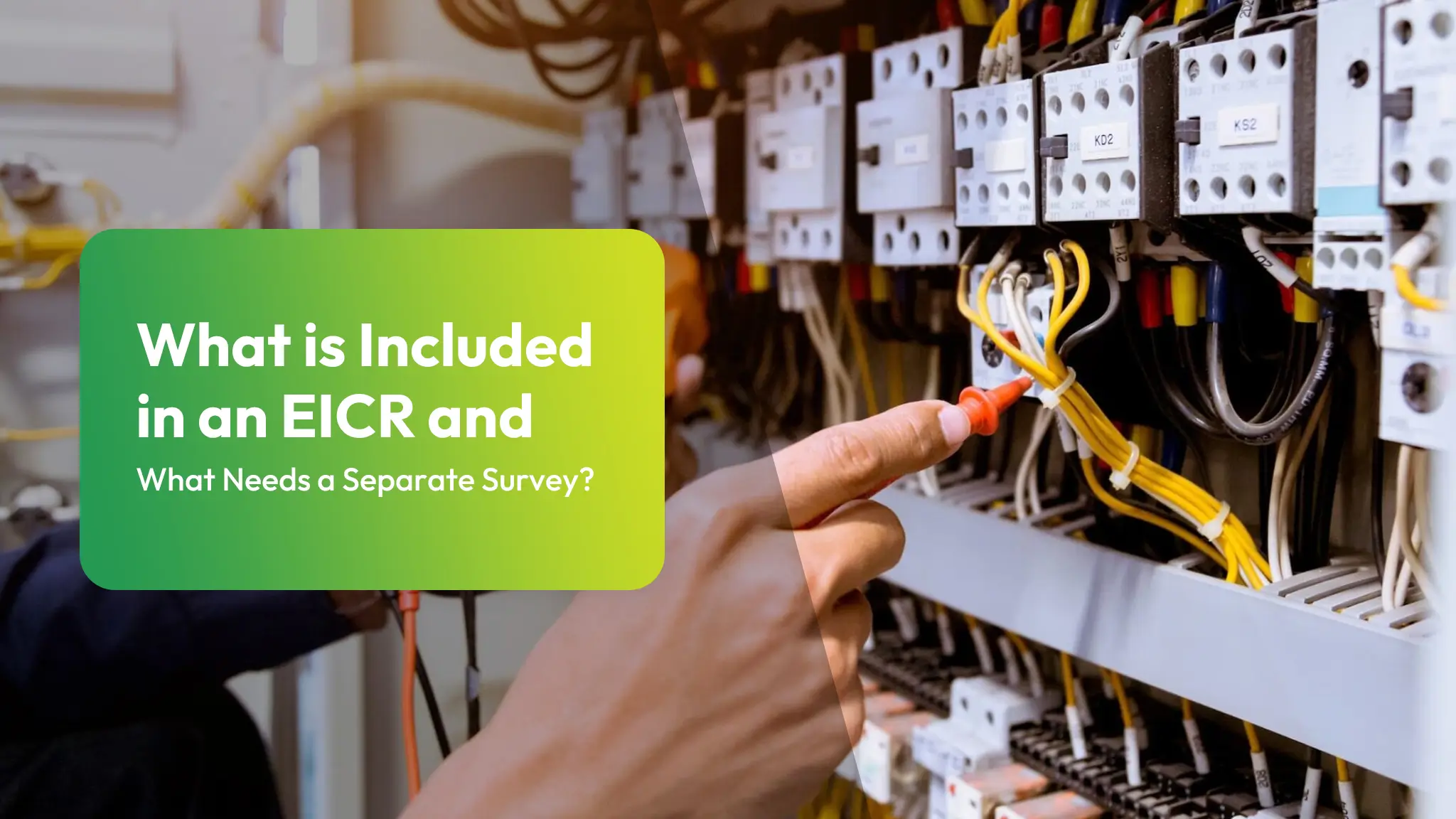
What is included in an EICR and what needs a separate survey? An EICR in the UK checks the fixed wiring, consumer unit, protective devices, and earthing/bonding to assess the safety of an electrical installation. It covers circuits, cabling, switches, sockets and records defects with risk codes. It does not include portable appliances, fire alarms, emergency lighting, solar PV or EV chargers, which all require separate specialist inspections. Understanding these boundaries helps owners choose the right tests and interpret what each inspection actually tells them.
Key Takeaways
- An EICR covers only the fixed electrical installation: consumer units, fixed wiring, protective devices, and earthing/bonding arrangements.
- Portable appliances (kettles, fridges, office equipment) are excluded from an EICR and require separate Portable Appliance Testing (PAT).
- Fire alarm systems are not part of an EICR; they need their own inspection to BS 5839 standards.
- Emergency lighting, including batteries, coverage and lux levels, requires a dedicated emergency lighting assessment, not a standard EICR.
- Solar PV systems and EV charge points fall outside normal EICR scope and need specialist inspections for their specific equipment and protections.
Table of Contents
What Does an EICR Inspection Cover?
An EICR inspection in the UK systematically assesses the condition and safety of a property’s fixed electrical installation, rather than portable appliances or everyday plug-in devices. It focuses on the infrastructure that people can’t easily see or change themselves, confirming whether it supports safe, unrestricted use of the space.
The report covers the main intake and distribution arrangements, including consumer units, main switches, and protective devices such as circuit breakers and RCDs. It examines fixed cabling routes, junctions, and terminations associated with the installation’s overall integrity. Protective bonding and earthing arrangements are checked to verify fault currents have a reliable path, preventing dangerous touch voltages.
Inspectors also review fixed accessories like sockets, fused connection units, and light fittings for damage, overheating, or incorrect configuration. Finally, the EICR records any non-compliances against current wiring regulations, assigns observation codes, and states whether the installation is “satisfactory” or requires remedial work. Find out EICR, Fixed Wire Testing and Electrical Safety Report: What Is the Difference?
Checking Electrical Circuits and Wiring
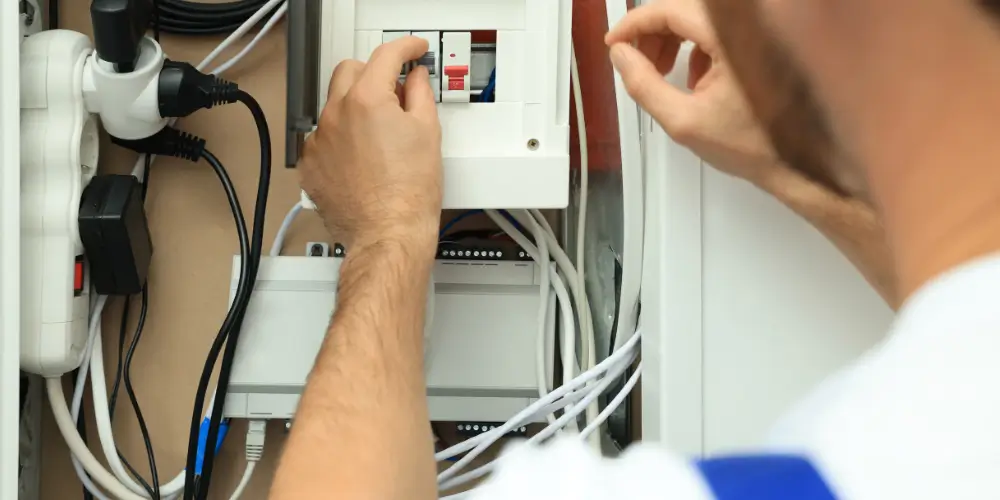
Checking electrical circuits and wiring during an EICR inspection involves a structured combination of visual inspection and instrument testing to verify that each circuit is safe, correctly configured, and fit for continued service. The electrician traces each circuit’s route, checking for damaged insulation, exposed conductors, and signs of overheating that could compromise a person’s freedom to use electricity confidently and without restriction.
Cables are assessed for correct type, sizing, and routing, including how they pass through walls, floors, and hidden voids. Junction boxes, terminations, and accessories are examined to confirm that connections are tight, enclosed, and accessible for future changes or upgrades.
Instrument tests typically include continuity, insulation resistance, and polarity checks, ensuring conductors are properly identified and separated. Where accessible, ring final circuits are tested to confirm that the ring is complete and balanced. Any defects are recorded with clear coding so that remedial work can restore safety and preserve flexible use of the installation.
Consumer Unit and Protection Device Checks
Thorough examination of the consumer unit and its protection devices during an EICR focuses on whether the system can safely detect and interrupt faults before they present a risk. The inspector reviews the unit’s overall condition, accessibility, and enclosure integrity, checking for signs of overheating, damage, or modification that could limit a person’s control over their installation.
They identify the type and rating of protective devices MCBs, fuses, RCBOs, and RCDs, and confirm they match the cable sizes and expected loads. Labelling is checked so circuits can be isolated quickly without guesswork. The arrangement of devices is assessed to see whether nuisance tripping can be minimised without compromising safety.
Operation of RCDs and other devices is verified using test instruments, not just by pressing test buttons. Any departures from current standards, such as obsolete devices or inadequate fault protection, are recorded with clear coding so owners can choose informed upgrades.
Testing Earthing and Bonding Systems
With protective devices confirmed as effective at interrupting faults, attention turns to whether fault currents and touch voltages are safely controlled through earthing and bonding. During an EICR, the electrician verifies the presence, continuity, and adequacy of the earthing conductor, confirming that any fault has a low-resistance route back to source so circuits disconnect rapidly, limiting shock risk and fire potential.
They measure earth fault loop impedance, comparing results with values in BS 7671 to guarantee disconnection times are fast enough to support flexible, independent use of the installation. Main protective bonding conductors to gas, water, and other services are identified, sized, and tested to confirm they equalise potential and prevent hazardous voltage differences.
Inspecting Switches, Sockets and Accessories
Attention then shifts to switches, sockets, and other accessories, as these are the components occupants interact with most frequently and where visible damage often first appears. During an EICR, the inspector methodically checks a representative sample, or all points where practicable, to see whether they remain safe for everyday use and flexible enough for changing lifestyles.
They look for cracked plates, discolouration from overheating, loose fixings, and outdated designs that may no longer offer the level of protection modern use demands. Socket fronts are checked for secure mounting, correct polarity, and the presence of shutters. Light switches are examined for firm operation, appropriate positioning, and signs of arcing.
Accessories in kitchens, bathrooms, and outside areas receive particular attention because people want confidence to use power freely near water and outdoors. The inspector also notes whether accessories suit the environment, including IP ratings where moisture or dust is present.
Identifying Electrical Defects and Classification Codes
Clarity in an EICR hinges on how electrical defects are identified and then categorised using standard classification codes. During the inspection, the electrician notes visible damage, test failures, outdated components and unsafe alterations, then assigns each issue a code that directly reflects risk and urgency.
The familiar BS 7671 codes guide action. C1 indicates immediate danger, requiring the installation to be made safe without delay. C2 highlights potentially dangerous conditions that demand urgent remedial work. C3 records non‑compliances that are not immediately unsafe but should be improved to enhance safety and reliability. FI (Further Investigation) is used where evidence suggests a problem but more detailed checking is needed before a conclusion can be reached.
These codes translate technical findings into clear priorities. They empower owners and occupiers to make informed choices, plan upgrades on their own terms, and remove guesswork from negotiating remedial work or future improvements.
What Is Not Included in an EICR?
An EICR focuses on the fixed wiring and does not typically cover several other safety checks. Portable appliances, fire alarms, emergency lighting, solar PV systems, and EV chargers usually require separate, specialised inspections. Understanding these exclusions helps duty holders arrange the additional testing needed for full electrical safety compliance.
PAT Testing and Portable Appliance Checks
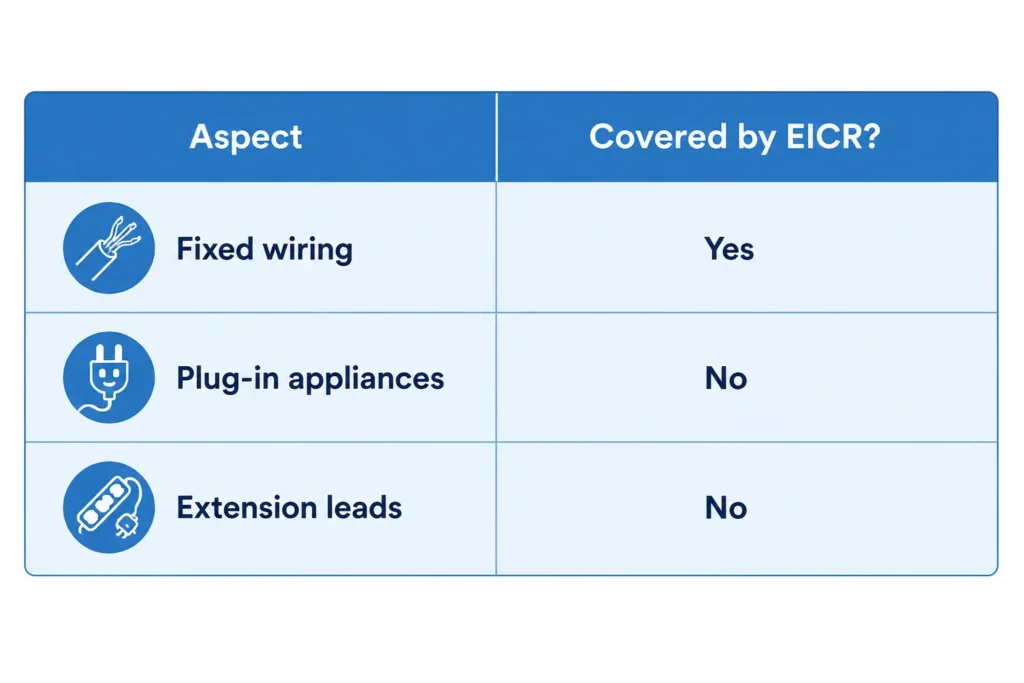
Unlike many assume, a standard EICR does not cover portable appliance testing (PAT) or checks on plug-in equipment. An EICR focuses on fixed wiring, not kettles, heaters, extension leads, or office devices that can be unplugged. Those items sit outside the report’s scope and require a separate PAT regime.
PAT testing offers flexible control. The duty holder decides frequency based on risk: heavy-use construction tools need more attention than a rarely used desk fan. This keeps oversight proportionate, avoiding blanket rules that restrict how people use their spaces.
Fire Alarm Inspection and Testing
Dedicated fire alarm inspection and testing is consequently required under separate standards, typically BS 5839. This includes checking detectors, sounders, call points, control panels, backup power, zoning, and labelling, along with verifying audibility and system integrity. Records in the logbook and test certificates are also reviewed.
Property owners who value autonomy over their environment often commission both an EICR and a formal fire alarm inspection. Doing so keeps the electrical infrastructure safe while ensuring the alarm system is ready to protect lives and support uninterrupted use of the space.
Emergency Lighting Assessment
Emergency lighting stands as another critical safety system that falls outside the remit of a standard EICR. While an EICR may confirm that emergency lighting circuits are safely wired and correctly protected, it does not verify whether escape routes are actually illuminated, signage is visible, or batteries provide the required duration during a power failure.
A separate emergency lighting assessment gives property owners the freedom to rely on more than paperwork. It checks lux levels, coverage of exits and corridors, system labelling, test switches, and the performance of batteries under simulated outage conditions. This survey also reviews logbooks and maintenance records, ensuring compliance with relevant life‑safety standards while supporting a building’s safe evacuation strategy during any loss of normal supply.

Solar PV System Inspections
Solar photovoltaic (PV) installations introduce their own electrical and structural risks that a standard EICR does not fully address. An EICR usually focuses on the building’s fixed wiring and may only note the PV connection point, not the performance or safety of the array itself.
A separate solar PV survey typically examines string voltages, inverter operation, DC isolators, and the integrity of generation and monitoring circuits. It also checks rooftop mounting systems, cable routing, and earthing arrangements specific to DC equipment. Fireman’s switches, labelling, and accessible shutdown methods are reviewed to confirm safe intervention if something goes wrong. Anyone wanting genuine energy independence should view PV as a distinct system requiring targeted inspection beyond the scope of a routine EICR.
EV Charger Safety Checks
Just as solar PV systems sit slightly outside the normal scope of an EICR, dedicated electric vehicle (EV) charge points also carry risks that a standard report only partly captures. An EICR may confirm that the circuit feeding the charger is correctly protected and that visible wiring is sound, but it does not amount to a full EV charger safety assessment.
Key elements usually needing a separate survey include verification of built‑in DC leakage protection, load‑management settings, earthing arrangements for outdoor chargers, and compatibility with the property’s existing earthing system. Functional testing of smart features, firmware, and safe isolation procedures for maintenance also sit beyond a routine EICR. Anyone relying on EV charging for daily mobility benefits from commissioning a targeted charger safety check.
Specialist Commercial Electrical Surveys
Many commercial properties require specialist electrical surveys that go beyond the remit of a standard EICR. An EICR focuses on fixed wiring; it does not deeply assess complex, business critical systems. Where owners want true operational freedom, additional surveys are essential.
Specialist commercial surveys typically cover emergency lighting design and lux‑level verification, fire alarm integrity and cause‑and‑effect testing, lightning protection systems, and power quality analysis for sensitive equipment. They may also include load monitoring, thermal imaging for high‑value panels, hazardous area (ATEX) compliance, and resilience assessments for data rooms or production lines.
Understanding Your EICR Findings
How should an EICR report be read once it lands in a homeowner’s hands? It should be treated as a practical roadmap, not a mystery document. The report explains how safely the installation can support the owner’s plans, from everyday living to more power‑hungry hobbies or home working.
A reader gains the most freedom from the report by understanding its structure:
- Itemised observations – Each circuit and accessory is checked; the notes show where reality diverges from modern safety expectations.
- Coding (C1, C2, C3, FI) – These codes rank risk, from immediate danger to advisory improvements, helping owners prioritise without guesswork.
- Test results – Measured values, such as insulation resistance and earth fault paths, confirm what can’t be seen; they underpin the inspector’s judgments.
- Overall assessment – A clear “satisfactory” or “unsatisfactory” conclusion shows whether the system currently supports safe, unconstrained use of the property.
Choosing the Right Electrical Inspection
When planning electrical checks, a homeowner first needs to match the type of inspection to the property’s age, use, and recent history. An older home with DIY alterations demands a deeper dive than a nearly new flat with certified installations. The choice shapes both cost and how much disruption they accept.
A person seeking maximum control over their space will weigh three main options:
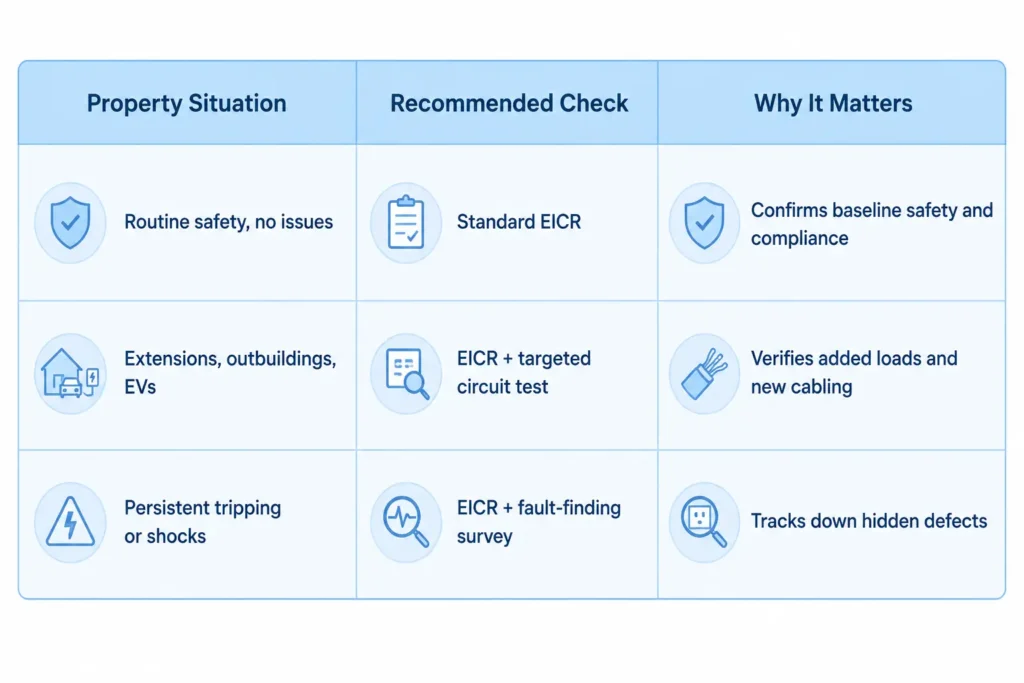
Landlords also consider legal duties and tenant turnover, often opting for more frequent EICRs. By aligning inspection type with risk, they keep their freedom to use power-intensive tech, adapt the property, and stay ahead of problems instead of reacting to failures. Check Who Is Competent to Carry Out Electrical Testing and Inspection?
Frequently Asked Questions
How Much Does an EICR Typically Cost for a Standard Three-Bedroom House?
An EICR for a standard three-bedroom house typically costs £150–£300, varying by region, electrician experience, and property condition. Freedom-minded homeowners often compare multiple quotes, confirm certification, and schedule inspections during flexible windows to minimise disruption.
How Often Should I Arrange an EICR for Rented Versus Owner-Occupied Properties?
Rented homes legally need an EICR at least every 5 years or at each new tenancy. Owner‑occupied properties aren’t bound by law, yet a safety‑conscious owner typically commissions one every 5–10 years or after major alterations.
Can I Stay in the Property While the EICR Inspection Is Carried Out?
Yes, they can usually stay. The electrician just needs clear access to sockets, consumer units and fixed wiring. Power may be off briefly in circuits, so they should expect some disruption but no enforced evacuation.
What Qualifications or Certifications Should My EICR Electrician Hold?
They should hold Level 3 electrical qualifications, specific training in inspection and testing, be competent with BS 7671, and ideally be registered with NICEIC, NAPIT, or similar schemes, providing up‑to‑date insurance and traceable certification.
How Long Does a Typical EICR Inspection Take From Start to Finish?
A typical EICR inspection usually takes 2–4 hours from first knock to final paperwork. Duration shifts with property size, accessibility, and number of circuits; older or altered installations often demand longer, more detailed testing.
Conclusion
Summarising “What is included in an EICR and what needs a separate survey”, the article clarifies that an EICR focuses on the safety and condition of a property’s fixed electrical installation, including circuits, wiring, consumer units, and protective devices. It explains how defects are identified and coded, helping owners prioritise repairs. By outlining what an EICR does not cover and when separate surveys are needed, it guides readers to commission the right inspections and choose qualified electricians for compliant, long‑term electrical safety.