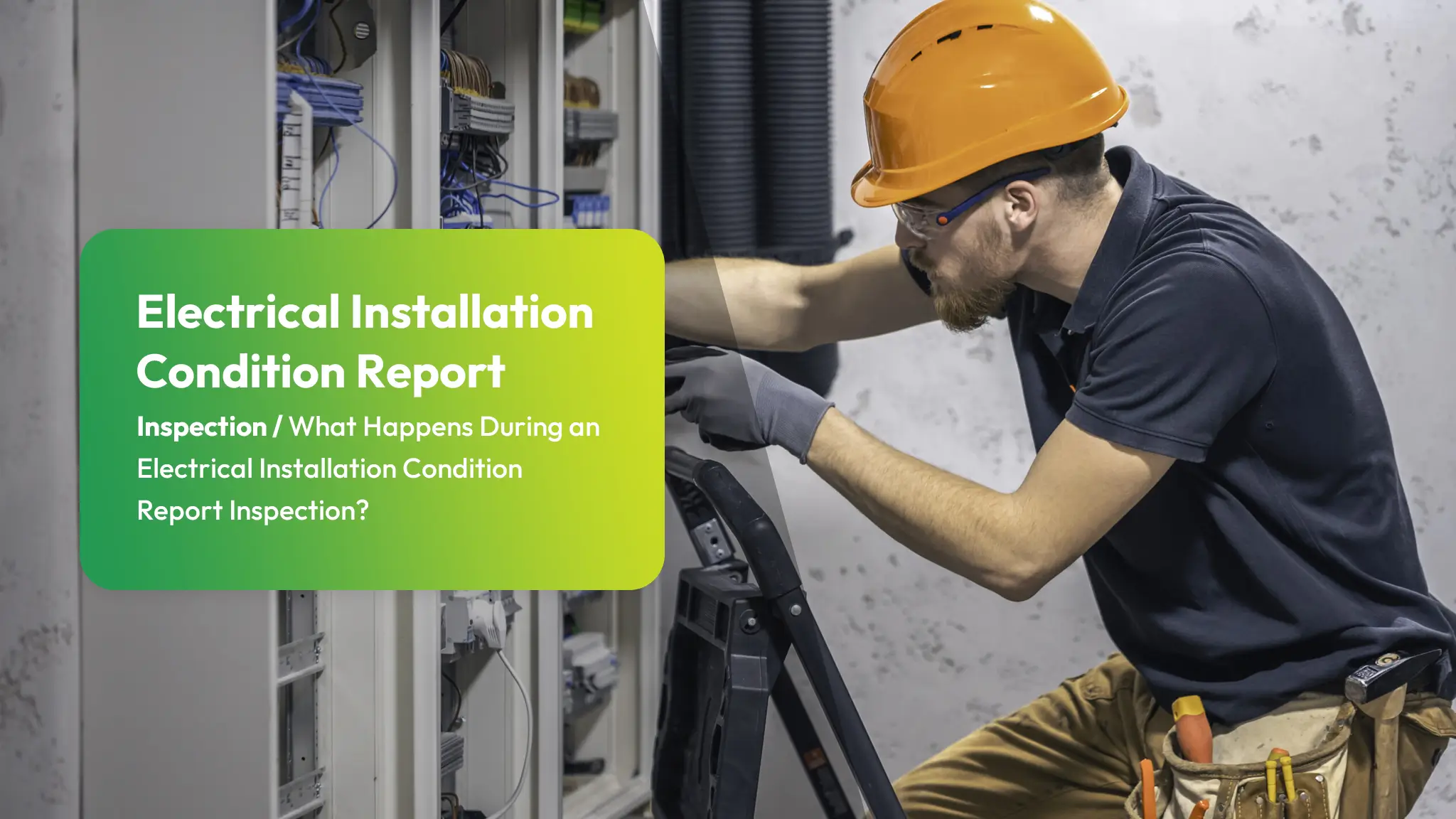
An Electrical Installation Condition Report (EICR) inspection is where a qualified electrician checks a property’s fixed wiring, consumer unit, circuits and protective devices for safety and compliance with UK standards. They carry out visual checks, dead tests and live tests to identify damage, wear, incorrect wiring and missing or faulty protection. Findings are recorded in a formal report with codes and an overall “satisfactory” or “unsatisfactory” rating, with further details explaining what happens at each stage.
Key Takeaways
- A qualified electrician visually inspects consumer units, wiring, and accessories for damage, wear, overloading, and signs of overheating or poor workmanship.
- They carry out “dead” tests on de‑energised circuits to confirm continuity, insulation resistance, earthing, and correct polarity before any live testing.
- Live tests then verify correct voltage, polarity, RCD trip times, and protective device performance under real operating conditions.
- The electrician records all findings in an Electrical Installation Condition Report, assigning observation codes and giving an overall satisfactory or unsatisfactory verdict.
- The report recommends remedial actions and future inspection intervals, helping owners, landlords, and businesses prove electrical safety and legal compliance.
Table of Contents
What Is an Electrical Installation Condition Report Inspection?
An Electrical Installation Condition Report (EICR) inspection is a formal assessment of a property’s fixed electrical wiring and associated components to determine their safety and compliance with current regulations BS 7671 (IET Wiring Regulations). It focuses on the condition of circuits, consumer units, protective devices, and visible accessories, not on portable appliances or cosmetic issues.
During this process, an electrician records the state of the installation at a specific moment in time, using test instruments and visual checks to identify defects, deterioration, and non‑compliant alterations. The outcome is a written report, not a repair visit. It lists observed issues and assigns classification codes that describe their level of concern. Property owners remain free to choose how, when, and by whom any remedial work is carried out.

Why EICR Inspections Matter for UK Properties
Because electrical installations deteriorate over time, EICR inspections play a critical role in protecting UK properties, occupants, and investments. They provide clear evidence that wiring, protective devices, and earthing arrangements are safe, allowing owners to enjoy their spaces without hidden electrical risks limiting their choices.
For homeowners, an EICR supports peace of mind, future‑proofs renovation plans, and can strengthen insurance or resale negotiations. For landlords, it helps demonstrate that legal responsibilities are being met while preserving flexibility to let property without unexpected compliance disputes. Businesses benefit from fewer disruptions, reduced fire risk, and more control over operational continuity. Across all property types, EICR inspections ultimately safeguard the freedom to live, work, and invest confidently in buildings that remain electrically safe.
What is Domestic EICR?
Domestic EICR refers to an Electrical Installation Condition Report carried out specifically in residential properties, such as houses, flats, and bungalows. It is a structured evaluation of the fixed electrical installation, designed to confirm whether the system is safe for continued use and free from defects that could restrict a person’s lifestyle or compromise their security.
During a domestic EICR, the electrician focuses on circuits, protective devices, earthing arrangements, and visible wiring, determining whether they still meet the required safety standards. Any deterioration, damage, or non‑compliance is recorded with clear coding so owners can decide how to act. A valid domestic EICR gives individuals confidence to use power as they choose, without hidden electrical hazards limiting their options.
What Is Residential EICR?
While a domestic EICR applies to individual homes, a residential EICR usually refers to electrical safety inspections across a broader range of residential settings, including apartment blocks, HMOs (houses in multiple occupation), and managed rental portfolios. It is designed to keep residents free from hidden electrical risks while giving landlords and managing agents clear evidence of safety and due diligence.
A residential EICR assesses fixed wiring, distribution boards, earthing, and protective devices against current wiring regulations. It highlights defects, deterioration, overloading, and non-compliance, then codes each issue by urgency so owners can prioritise remedial work and maintain legal and contractual obligations. Here you can find how EICR matters for property compliance.
Residents, landlords, and investors gain practical freedom from uncertainty through:
- Transparent reporting
- Predictable maintenance planning
- Reduced likelihood of disruptive breakdowns
- Stronger protection against enforcement action and disputes
What Is Commercial EICR?
Commercial EICR is the systematic inspection and testing of electrical installations in non‑domestic premises such as offices, shops, warehouses, schools, and industrial units. It verifies that circuits, distribution boards, protective devices, and earthing arrangements still meet current safety standards and can withstand real‑world demand. For duty‑holders who value autonomy, it offers documented proof that the workplace electrical system is not quietly limiting operations or exposing people to hidden danger.
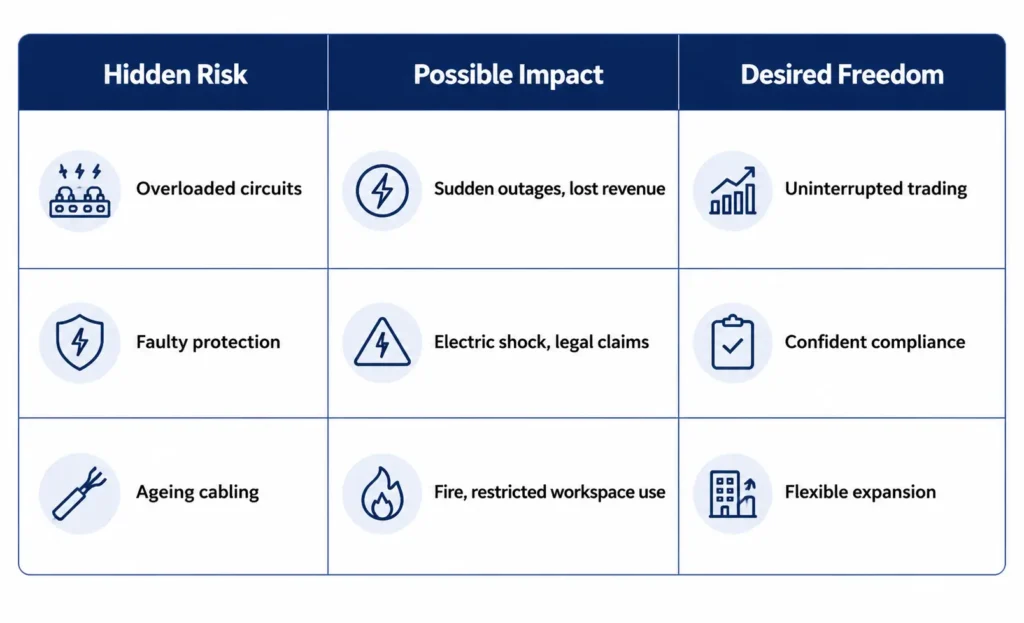
A commercial EICR concludes with a coded report highlighting defects and prioritised remedial actions.
How to Prepare Before the Electrician Arrives
Once the need for a commercial EICR is understood, attention turns to practical preparation before the electrician attends site. Good preparation keeps disruption low, protects business continuity, and lets the inspection move quickly so people can get back to work and life. The goal is simple: clear access, clear information, and clear expectations.
Key preparation steps typically include:
- Confirming when and how power will be isolated, so critical operations, servers, and security systems are not unexpectedly shut down.
- Gathering previous EICRs, installation certificates, and records of alterations for the electrician to review.
- Ensuring safe, unobstructed access to distribution boards, plant rooms, risers, and key control areas.
- Agreeing who on site can authorise decisions, answer questions, and coordinate temporary shutdowns.
Visual Checks of the Electrical Installation
The first stage of the on-site EICR is a methodical visual inspection of the electrical installation before any test instruments are connected. The electrician walks the property with clear eyes, checking that the system appears safe, accessible, and uncompromised. Consumer units are examined for damage, overheating marks, missing blanks, and clear labelling that lets occupants control their power with confidence.
Sockets, switches, and light fittings are checked for cracks, exposed conductors, loose fixings, and signs of water ingress. Cables are assessed where visible, confirming they are supported, not crushed, and suitably protected from casual contact or DIY interference. Bonding and earthing connections are visually confirmed, ensuring that metal pipework, structures, and key services are reliably connected to the earthing system.
Dead Testing of Circuits and Wiring
Moving beyond visual checks, dead testing examines the electrical installation with all circuits safely isolated from the supply, allowing faults to be identified without live voltage present. The inspector uses calibrated instruments to probe cables, accessories, and distribution boards methodically, without interrupting the client’s long‑term freedom to use the system safely and confidently.
Dead tests typically confirm that conductors are correctly connected, adequately insulated, and effectively earthed. This process detects hidden damage, poor workmanship, and age‑related deterioration before they become constraints or safety threats.
Key elements include:
- Verification of continuity in protective and circuit conductors
- Insulation resistance testing between live, neutral, and earth paths
- Polarity checks to verify switches and fuses are correctly placed
- Testing of circuit separation to prevent unwanted parallel paths
Live Testing and Safety Verification
Progressing from isolated checks to real‑world performance, live testing and safety verification evaluate how the installation behaves under normal operating voltage and load. The inspector energises circuits, confirming that power flows where it should and nowhere else. This stage reveals faults that dead tests alone cannot expose, such as loose terminations that only misbehave under strain.
They verify polarity so switches and protective paths operate as intended, ensuring the user’s control over their environment is not an illusion. Voltage measurements confirm that supplies remain within acceptable limits, guarding equipment and preserving choice in how it is used. Functional checks of switches, isolators, and accessories demonstrate that occupants can safely disconnect, redirect, and adapt their electrical system as their needs evolve.
Checking Consumer Units, RCDs and Protective Devices
Attention turns to the consumer unit, where protective devices quietly govern the safety of the entire installation. During an Electrical Installation Condition Report inspection, the electrician examines how this hub manages fault currents and overloads, ensuring occupants can use power freely without hidden risk. They confirm that circuits are correctly labelled, protective devices are properly rated, and residual current devices (RCDs) respond within prescribed times.
Key checks typically include:
- Verifying main switches, MCBs, and RCDs align with the installation’s demand and intended use
- Testing RCD trip times to confirm effective protection against electric shock
- Confirming separation of circuits to minimise inconvenience and enhance flexibility
- Reviewing consumer unit layout to support future alterations and secure, unconstrained use of electricity
Identifying Damage, Deterioration and Unsafe Installations
An Electrical Installation Condition Report inspection also probes for the physical tell‑tale signs of danger: damage, deterioration and clearly unsafe work. The inspector moves beyond paperwork and theory, focusing on visible evidence that an installation might fail when most needed. Burn marks, brittle insulation, loose terminations and overheated accessories are all seen as threats to personal freedom and safety.
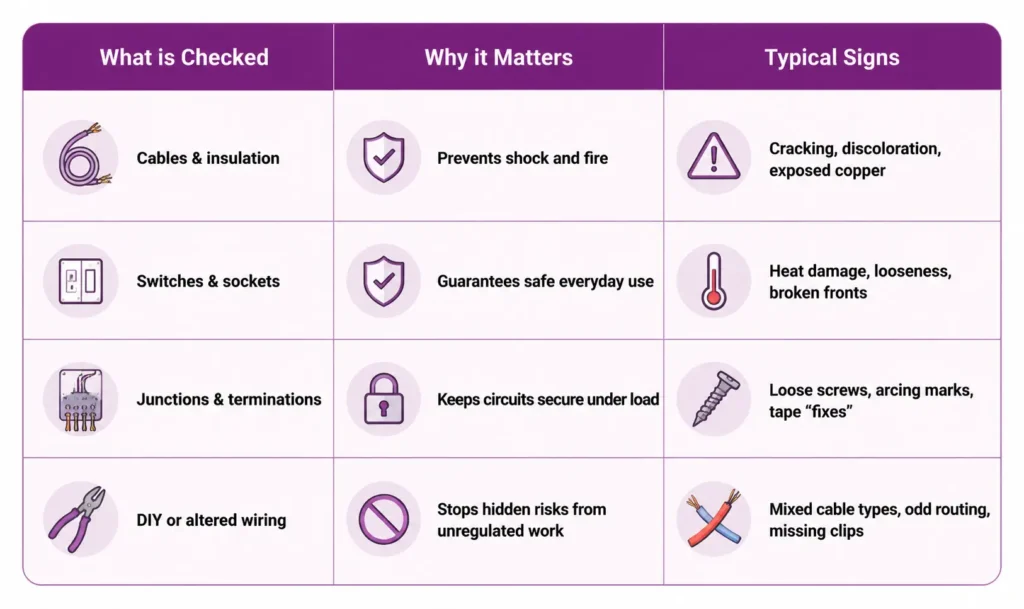
Where such conditions appear, the inspector notes that the installation is no longer reliably safe for free, confident use.
What Information Is Included in the Final EICR Report?
How does all of this inspection work translate into a document a property owner can actually use? The final Electrical Installation Condition Report (EICR) condenses technical findings into a structured record that shows how safely the system can support everyday freedom of use. It normally includes the installation’s overall condition rating (satisfactory or unsatisfactory), details of tested circuits, and any urgent or advisory observations.
Typically, an EICR will set out:
- Clear identification of the property, supply characteristics, and protective devices
- Test results for each circuit, proving how well the system resists faults and electric shock
- Coded observations (C1, C2, C3, FI) explaining safety issues and legal implications
- Prioritised recommendations, giving owners a practical roadmap to upgrade, improve resilience, and avoid restrictive failures

How Long an EICR Inspection Usually Takes
Under typical conditions, an Electrical Installation Condition Report inspection takes anywhere from a couple of hours to a full day, depending on the size, complexity, and accessibility of the installation. A small flat with a modern consumer unit and clear labelling may be completed in two to three hours, while a large house with extensions, outbuildings, or mixed wiring ages can demand most of the day.
Time increases when circuits are poorly labelled, access is obstructed by furniture or stored items, or when the electrician must trace alterations made over the years. Occupants who value flexibility often choose to clear key areas in advance, freeing the inspector to move quickly, test efficiently, and finish with minimal disruption to their daily rhythm.
How Often Electrical Installations Should Be Rechecked
Electrical installations should be rechecked at intervals that reflect both legal guidance and the specific risks of the property. Fixed wiring is not static; wear, DIY alterations, and heavier modern loads can all undermine safety. For most rented homes, an EICR at least every five years, or at change of tenancy, is typical. Owner‑occupied homes often follow a 10‑year maximum, but many choose shorter gaps i.e 5 years for peace of mind and flexibility. Here is detailed guidance on the frequency of EICR.
Key interval guidelines often suggested by professionals include:
- Domestic homes: every 10 years, or 5 if higher risk
- Rented properties: at least every 5 years, or each new tenancy
- Commercial premises: typically every 5 years, or by insurance requirement
- High‑risk environments: 1–3 years, depending on usage and conditions
Frequently Asked Questions
How Much Does an EICR Inspection Typically Cost for Different Property Types?
Costs usually range from £100–£180 for small flats, £150–£250 for typical houses, and higher for large or complex properties. Prices vary with circuit numbers, regional rates, access issues, and urgency of the visit.
Who Is Legally Responsible for Arranging and Paying for an EICR Inspection?
Landlords are generally legally responsible for arranging and paying for an EICR, though owner-occupiers choose freely to commission and fund inspections. Tenancy agreements cannot override statutory duties; costs are usually factored into rent or long-term maintenance planning.
Can I Remain in the Property While the EICR Inspection Is Carried Out?
Yes, they can usually stay in the property during an EICR. The electrician may switch power off briefly, limiting device use and access to some rooms, but occupants retain presence, movement, and choice throughout the inspection.
What Happens if My Property Fails the EICR Inspection?
If a property fails the EICR, the report lists unsatisfactory items. The owner remains free to choose an electrician, but dangerous faults must be rectified promptly, documented, and retested to restore compliance, safety, and legal peace of mind.
How Do I Verify My Electrician Is Qualified to Perform an EICR?
Conclusion
An Electrical Installation Condition Report inspection gives property owners clear insight into the safety and integrity of their electrical systems. By identifying damage, deterioration and non-compliant installations, an EICR helps prevent electrical faults, fires and accidents. Whether domestic or residential, timely inspections, accurate reporting and regular rechecks guarantee compliance with UK regulations and protect occupants. Ultimately, scheduling routine EICR inspections is a straightforward, proactive step toward maintaining a safe, reliable electrical installation in any property.