An Electrical Installation Condition Report (EICR) is a formal inspection of a property’s fixed wiring and electrical systems carried out by a qualified electrician. It identifies defects, deterioration, and non-compliance with UK safety standards. The EICR report and certificate together provide documented proof that electrical risks are being managed, which supports legal, insurance, and landlord obligations. It is essential for property compliance, and the sections below explain how it works, who needs it, and what happens next.
Key Takeaways
- An EICR (Electrical Installation Condition Report) is a formal safety inspection of a property’s fixed electrical installation by a qualified electrician.
- It assesses wiring, consumer units, protective devices, earthing and visible accessories for damage, deterioration, and non-compliance with BS 7671.
- The EICR report details observations and test results; the certificate summarises compliance status and confirms the inspection took place.
- For property compliance, especially rental and commercial, EICRs provide legal evidence that electrical risks are managed and safety duties are being met.
- Regular EICRs help prevent electrical fires and shocks, support insurance validity, and protect landlords, businesses and homeowners from legal and financial consequences.
Table of Contents
What Is an EICR?
An Electrical Installation Condition Report (EICR) is a formal assessment of a property’s fixed electrical wiring and components, carried out by a qualified electrician to verify safety and compliance with current regulations. It focuses on circuits, consumer units, protective devices, and fixed accessories, rather than portable appliances.
During an EICR, the electrician inspects and tests the installation to identify deterioration, damage, defects, and non-compliances that could present risks such as electric shock or fire. Observations are recorded using standard electrical coding to indicate severity and urgency of any remedial work.
The finished report provides a structured overview of the installation’s condition at the time of inspection, giving property owners and managers clear, technical evidence about electrical safety and areas needing attention.
Are the EICR Report And EICR Certificate the same?
With an understanding of what an Electrical Installation Condition Report involves, it is helpful to clarify how the terms “EICR report” and “EICR certificate” are used. In everyday conversation they are often used interchangeably, yet they describe slightly different aspects of the same documented outcome.
To visualise the distinction, consider:
- EICR report – the full written record of the inspection, including observations, test results, and coding of defects.
- EICR certificate – the formal document confirming that an EICR has been carried out and stating the overall assessment.
- The report provides technical depth; the certificate summarises key findings in an accessible format.
- Both are produced from the same inspection, and both may be requested as proof that the electrical installation has been professionally assessed.
Why EICR Matters for Property Compliance
EICR compliance is an important requirement for landlords, property owners, and managing agents who are responsible for maintaining safe electrical installations. An Electrical Installation Condition Report provides formal evidence that the fixed electrical system has been inspected and tested by a competent electrician.
For rental properties, an EICR helps show that the landlord has taken reasonable steps to meet electrical safety duties. The report confirms whether the installation is satisfactory or whether defects have been found that require attention. This makes it a key compliance document, especially for rented homes, HMOs, commercial premises, and managed properties.
Keeping EICR records up to date supports legal compliance, protects occupants, and helps avoid problems during tenancy changes, property audits, insurance checks, or local authority reviews.
Who Needs an EICR Report?
When considering who needs an EICR report, the answer spans far beyond just large commercial sites. Any setting where people live, work, or visit can benefit from a structured check of electrical safety and compliance. An EICR helps identify hidden faults, ageing installations, and non‑compliant work that could lead to shock, fire, or costly downtime.
Typical situations include:
- Homeowners preparing to sell, buy, or greatly renovate a property.
- Business operators responsible for offices, shops, warehouses, or hospitality venues.
- Managers of high‑risk environments, such as workshops, medical facilities, or venues with heavy electrical loads.
- Duty holders in public or communal buildings, including schools, community centres, and shared residential blocks, where many occupants rely on safe installations.
Landlord Duties for Electrical Safety
Landlords in the UK carry clear legal duties to guarantee the electrical installations in their rental properties are safe at the start of a tenancy and remain so throughout. They must confirm fixed wiring, sockets, light fittings, and consumer units are suitable for continued use, installed correctly, and not deteriorating to a dangerous condition.
They are required to arrange periodic checks by a competent person often enough to identify risks before they cause harm, and to act promptly on any dangers found. Records of checks and remedial work must be kept and, where relevant, shared with tenants and enforcing authorities.
Failure to meet these duties can lead to enforcement notices, financial penalties, potential criminal liability, and invalidation of insurance.
What an EICR Inspection Covers
Meeting these legal duties in practice depends on what is actually inspected and tested during an Electrical Installation Condition Report (EICR). An EICR focuses on whether the electrical system is safe to use, reasonably robust against foreseeable damage, and compliant with current wiring regulations.
To make this clearer, an EICR typically examines:
- Main supply and consumer unit – layout, protection devices, and overall condition.
- Protection measures – presence and effectiveness of RCDs, earthing, and bonding arrangements.
- Visible accessories and terminations – sockets, switches, light fittings, spurs, and fused connection units.
- Environmental and usage factors – signs of overheating, overloading, mechanical damage, or deterioration linked to how the property is occupied and used.
Fixed Wiring and Electrical Installation Checks
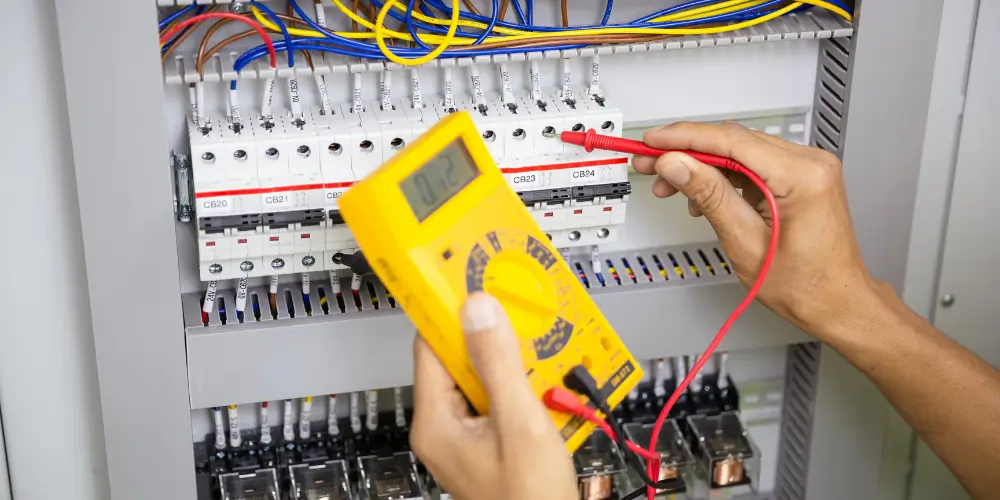
Although an EICR covers the installation as a whole, the core of the inspection lies in detailed checks of the fixed wiring and associated equipment. The electrician focuses on circuits built into the property: cables in walls and ceilings, consumer units, distribution boards, fixed switches, and sockets.
They visually inspect for damage, overheating, incorrect cable types, and signs of poor workmanship or alteration. Connections are checked for tightness and appropriate terminations. Earthing and bonding arrangements are confirmed to guarantee fault currents can safely dissipate.
Specialist test instruments are then used to measure insulation resistance, continuity of protective conductors, and loop impedance. Functional tests verify that protective devices operate correctly, ensuring that, under fault conditions, disconnection occurs quickly enough to reduce risk of electric shock or fire.
How EICR Codes Affect Compliance
Once the fixed wiring and protective measures have been tested, the findings are recorded using EICR codes that indicate the severity of each issue and what action is required. These codes directly shape a property’s compliance position by clarifying risk levels and guiding remedial priorities.
Typical EICR observations are grouped as:
- Code C1 – A present danger needing immediate attention, as people are at risk right now.
- Code C2 – A potentially dangerous issue likely to become hazardous if left unresolved.
- Code C3 – An area that does not meet current standards but is not considered unsafe.
- Code FI – A situation requiring further investigation before risk can be properly assessed.
Understanding these codes helps owners plan timely, proportionate responses aligned with safety duties.
When an EICR Is Classed Unsatisfactory
An EICR is classed as “Unsatisfactory” when defects are identified that compromise electrical safety and require corrective work before the installation can be considered compliant. This outcome usually arises when C1, C2, or FI codes are recorded. A C1 code indicates an immediate danger, such as exposed live parts; a C2 highlights a potentially dangerous defect, like the absence of essential bonding. An FI code shows that further investigation is required to determine risk.
An Unsatisfactory report means the electrical installation does not meet current safety standards. For landlords and duty holders, this status typically triggers a legal obligation to arrange remedial works. Once defects are rectified, a new or updated report is needed to demonstrate that the installation is now safe and compliant.
How Often Should an EICR Be Renewed?
How frequently an EICR should be renewed depends on the type and use of the property, guided by statutory requirements and industry standards such as BS 7671. While specific intervals can be set by legislation or insurers, typical practice follows clear patterns that reflect differing risk levels and occupancy types.
In broad terms, common recommended maximum intervals are:
- Owner-occupied homes: usually every 10 years, or at change of ownership.
- Rented residential properties: at least every 5 years, or at change of tenancy if recommended sooner.
- Commercial premises: commonly every 5 years, though high‑risk environments may need shorter cycles.
- Special locations (e.g. industrial, leisure, public venues): intervals vary, often between 1–3 years, depending on use and risk profile.
Why Qualified Electricians Matter
Although an Electrical Installation Condition Report might appear to be a simple checklist, its reliability depends entirely on the competence of the person carrying it out. A qualified electrician understands how electrical systems are designed to work, how they age, and where faults typically arise. This expertise allows accurate identification of hidden risks, such as overloaded circuits or deteriorated insulation, that an untrained eye could miss.
Qualified electricians are also familiar with the latest Wiring Regulations (BS 7671) and relevant UK safety standards. They know how to apply coding correctly (C1, C2, C3, FI), which directly affects whether a property is considered safe or requires urgent work. Inaccurate coding can lead to unnecessary expense or, more seriously, unsafe assumptions.
EICR Records Landlords Should Keep
Beyond simply commissioning the inspection, a landlord must retain clear, organised EICR documentation to demonstrate ongoing electrical safety compliance. Keeping accurate records allows them to evidence due diligence to tenants, insurers, and enforcement bodies.
Key records typically include:
- Current EICR certificate – the full report, including test results, codes (C1, C2, FI), and overall assessment of “satisfactory” or “unsatisfactory”.
- Previous EICR reports – retained for comparison, showing how issues have been addressed over time.
- Remedial work invoices and certificates – documents from electricians confirming that recommended repairs or upgrades have been completed.
- Inspection and review schedule – a simple log noting inspection dates, expiry dates, and planned future assessments.
Together, these records form a clear audit trail of electrical safety management.
Risks of Ignoring EICR Compliance
When EICR obligations are ignored, a landlord exposes both occupants and the property to significant and avoidable risk. Faulty or ageing electrical systems can overheat, arc, or short-circuit, leading to electric shock, serious burns, or fatal electrocution. Undetected defects also raise the likelihood of electrical fires, which can spread quickly and cause extensive damage or total loss of the building.
Beyond physical danger, non-compliance creates legal and financial exposure. Authorities may impose enforcement action, including improvement or prohibition notices, civil penalties, or prosecution. Insurance cover may be reduced or refused if a claim arises from neglected electrical safety. Reputational damage can follow, making it harder to attract reliable tenants and potentially reducing the long-term value and marketability of the property.

What Happens After an EICR Report?
After an EICR has been completed, the report becomes the starting point for any required action on the property’s electrical installation. Its outcome typically falls into two paths: a “satisfactory” result, or “unsatisfactory” with coded observations (C1, C2, C3, FI) indicating levels of risk and urgency.
Property owners or managers then interpret and act on the findings:
- Review the report, noting each observation code and recommended remedial action.
- Prioritise urgent issues, especially C1 and C2 items, which indicate immediate or potentially dangerous defects.
- Instruct a qualified electrician to carry out remedial work and obtain evidence of completion.
- Arrange a follow-up EICR or minor works certificates, keeping all documentation as proof of ongoing electrical safety compliance.
How HSSE Solutions Supports Compliance
Rather than leaving landlords and duty holders to interpret EICR findings alone, HSSE Solutions provides structured, end‑to‑end support to achieve and maintain electrical compliance. It begins with a clear explanation of the EICR report, translating technical codes into practical risks and legal implications, so clients understand what must be done and by when.
HSSE Solutions then prioritises remedial actions, organises qualified electricians, and schedules work in a way that minimises disruption to tenants or business operations. Documentation is handled systematically, with updated certificates and evidence of corrective work stored and shared for audits or inspections. Ongoing, HSSE Solutions can set up reminder schedules for re‑testing and periodic checks, helping duty holders remain compliant as regulations, occupancy, or installation conditions change.
Frequently Asked Questions
How Much Does an EICR Typically Cost for Different Property Types?
EICR costs vary by property: small flats often £120–£180, larger houses £180–£300, HMOs and multi‑let properties £250–£450+, and commercial premises from about £250 to several thousand, depending on size, circuits, and complexity.
Can I Use an EICR From a Previous Owner After Buying a Property?
Yes, the report can technically transfer, but buyers should not rely solely on a previous owner’s EICR. Conditions may have changed; best practice is commissioning a fresh, independent EICR to confirm current electrical safety and compliance.
How Can I Check if an Electrician Is Qualified to Issue EICRS?
They should verify the electrician is a qualified person by checking registration with bodies like NICEIC, NAPIT or ELECSA, confirming City & Guilds 2391/2395 inspection-testing qualifications, valid insurance, and recent, traceable EICR experience.
Are There Government Grants or Schemes to Help Pay for EICR Remedial Works?
Government help for EICR remedial costs is limited, but some support exists via local council grants, ECO4/Great British Insulation Scheme, disabled facilities grants, and occasional landlord or energy‑supplier schemes; eligibility, property type, and income criteria all apply.
Does an EICR Affect Home Insurance Premiums or Claims Decisions?
An EICR can indirectly influence UK home insurance. Insurers may require a satisfactory, current report; lack of one could complicate claims or increase scrutiny, especially after electrical fires, though it does not automatically change premiums alone.
Conclusion
In conclusion, an EICR is an essential part of electrical safety and legal compliance for UK properties. It helps identify faults, reduce risk, and demonstrate that landlords and duty-holders have taken reasonable steps to protect occupants. Keeping accurate records and acting promptly on remedial recommendations are central to ongoing compliance. With evolving regulations and responsibilities, partnering with a specialist like HSSE Solutions can streamline the process and provide confidence that electrical safety obligations are consistently met.