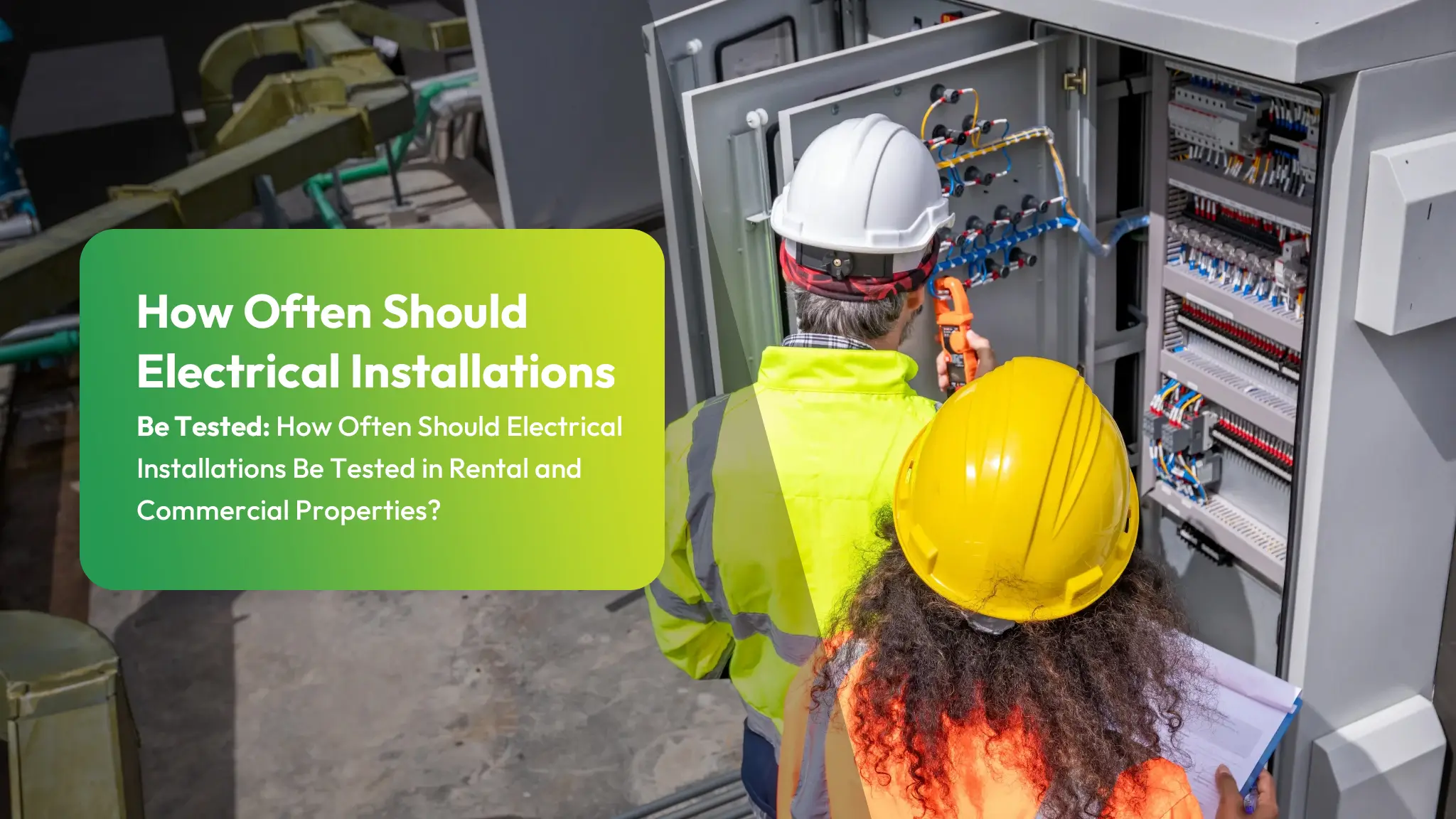
How often should electrical installations be tested? In the UK, most rental and commercial properties should have a formal Electrical Installation Condition Report (EICR) at least every five years. Shorter intervals are sensible where there is higher risk, such as kitchens, workshops, public areas, or harsh environments. Landlords must keep written evidence and act quickly on urgent faults. Many businesses also add annual visual checks. The exact interval should be based on use, risk, and what the latest EICR recommends, which is explained further.
Key Takeaways
- Rental properties must have an Electrical Installation Condition Report (EICR) at least every 5 years, or sooner if the previous report specifies.
- Most commercial premises, including offices, shops, and factories, should have a full EICR at least every 5 years.
- Higher-risk environments (workshops, food businesses, warehouses, public areas, or places with moisture/heat/vibration) often justify shorter EICR intervals, typically around 3 years.
- Visual checks should be carried out more frequently, often annually, to spot damage or overloading between formal inspection and testing cycles.
- Earlier testing is needed after significant electrical work, major layout changes, or when inspection reports identify “C1,” “C2,” or “unsatisfactory” findings.
Table of Contents
Electrical Testing Rules for Rental Properties
In rental properties, electrical testing rules are designed to guarantee that fixed installations remain safe for tenants throughout a tenancy. In England, most private landlords must arrange an Electrical Installation Condition Report (EICR) at least every five years, or sooner if the previous report specifies a shorter interval. Similar expectations apply across the UK, guided by BS 7671 and local regulations.
Landlords remain free to choose any competent, qualified electrician, but they must keep written evidence of inspections and act on any “C1” or “C2” codes without delay. Copies of the latest report must usually be provided to existing tenants within 28 days and to new tenants before they move in. If serious defects are identified, follow-up work and, where required, a confirmation of remedial action should be completed quickly, protecting both personal safety and the right to enjoy a secure, functioning home.

Electrical Testing Rules for Commercial Premises
Beyond rented homes, similar safety expectations apply to offices, shops, factories, and other workplaces, where electrical testing rules are shaped not only by BS 7671 but also by health and safety legislation. Duty holders remain free to run their business as they choose, but only if they can demonstrate that risks from electricity are controlled and installations are maintained in a safe condition.
In practice, this means understanding and acting on three core responsibilities:
- Commission competent inspections by qualified electricians to carry out periodic inspection and testing of fixed wiring and issue an Electrical Installation Condition Report (EICR).
- Keep evidence of testing, remedial work, and ongoing maintenance to show regulators, insurers, or employees that electrical safety is actively managed.
- Respond quickly to “unsatisfactory” findings, prioritising remedial work so that circuits are made safe without unnecessary disruption to day‑to‑day operations.
Why Testing Frequency Depends on Property Use
Although the Wiring Regulations provide indicative timeframes, the appropriate testing interval for an electrical installation ultimately hinges on how the property is used and the risks that use creates. A quiet office with modern IT equipment experiences lighter electrical stress than a metal workshop full of welders and compressors. The first may safely follow longer intervals, while the second justifies more frequent testing.
Public access also changes the picture. Installations in bars, clubs, venues, and shops face higher wear, accidental damage, and unpredictable behaviour from occupants, so shorter intervals help preserve safety without restricting activity. Likewise, properties exposed to moisture, heat, vibration, or outdoor conditions typically demand tighter testing cycles.
The level of user control matters too. Where people can freely plug in powerful equipment or modify layouts, the risk of overloading or damaging circuits rises. Tailoring testing frequency to actual use allows people to enjoy flexible spaces without unnecessary constraints.
How Often Landlords Need an EICR
Because landlords have distinct legal duties around electrical safety, the timing of Electrical Installation Condition Reports (EICRs) is more tightly defined than for many other property owners. In most rented homes in England, an EICR is required at least every five years, or sooner if the previous report specifies a shorter interval. This framework aims to protect tenants while giving landlords predictable, manageable obligations. Understand why EICR matters for property compliance.
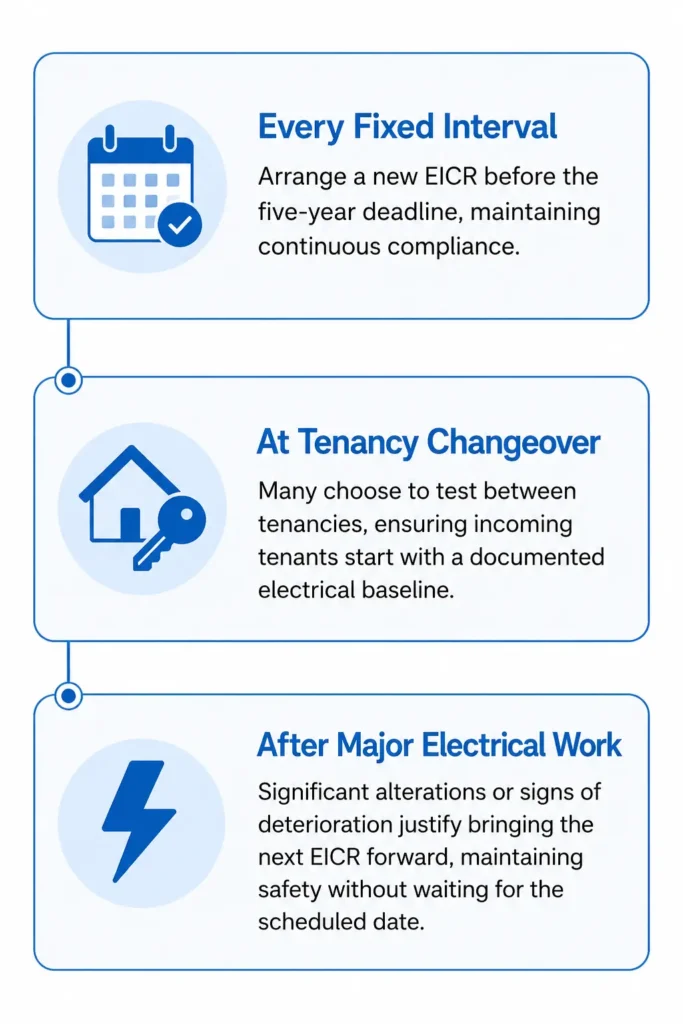
In practice, responsible landlords often align testing with key shifts, using EICRs to keep control, minimise disputes, and preserve flexibility:
How Often Businesses Need Electrical Testing
How often should a business test its electrical systems to stay safe, legal, and operationally resilient? In the UK, most commercial installations are advised to have a formal Electrical Installation Condition Report (EICR) at least every five years. Many insurers, safety professionals, and risk‑aware owners treat this five‑year interval as the baseline for ordinary offices, shops, and low‑risk workplaces.
Higher electrical demand, complex machinery, or public access often justify shorter intervals set by risk assessment, but the statutory expectation for commercial premises generally aligns with that five‑year cycle, supported by routine visual checks and prompt remedial work.
For owners who value independence and continuity, periodic testing is less about ticking boxes and more about controlling risk on their own terms: preventing fires, avoiding enforced shutdowns, and keeping regulators and insurers off their backs. Documented test results demonstrate that management has taken reasonable steps to safeguard people, property, and operations.
When Commercial Premises Need Earlier Testing
While a five‑year EICR interval suits many ordinary workplaces, some commercial premises need testing considerably sooner. Where electrical risk is higher, owners who value autonomy quickly realise that more frequent inspection is the only way to keep operations flowing without sudden shutdowns, injury, or enforcement action.
Earlier testing is typically justified where:
- High load or harsh environments – Warehouses with heavy machinery, laundries, kitchens, breweries, or workshops experience heat, vibration, moisture, and corrosive agents that accelerate wear on cables, distribution boards, and accessories.
- Public‑facing, high‑footfall venues – Bars, clubs, gyms, events spaces, and indoor leisure facilities depend on uninterrupted power and clear safety evidence, especially where lighting, sound, or access systems are mission‑critical.
- Frequent layout or equipment changes – Premises that regularly move production lines, add circuits, or install temporary supplies face a rising chance of hidden faults; shorter intervals keep modifications under control and compliant.
Testing Intervals for Restaurants and Cafes
Compared with typical offices and shops, restaurants and cafés present higher and more variable electrical risks, so EICR intervals are often shorter. Constant heat, steam, grease, frequent cleaning, and heavy‑duty kitchen equipment all stress wiring and accessories, increasing the chance of hidden faults. Owners who value operational freedom and uninterrupted trading usually treat regular testing as a practical safeguard rather than a burden.
Typical guidance suggests a maximum of 5 years between EICRs, but many food‑led sites choose tighter cycles. A pragmatic approach is:
- High‑intensity kitchens (deep‑fat fryers, electric grills, long hours): full EICR every 3 years, with visual checks yearly.
- Mixed‑use cafés with lighter cooking: full EICR every 5 years, plus interim inspections if load increases.
- After major changes—new equipment, layout alterations, or recurring tripping: immediate targeted testing, regardless of schedule.
Documented inspections support insurance compliance and reduce the risk of enforced closures.
Testing Intervals for Warehouses and Units
Warehouses and industrial units typically require more frequent electrical testing than low‑risk offices because of higher loads, large distribution boards, and the use of machinery or handling equipment. In many UK scenarios, a full fixed‑wire inspection and test (EICR) every three years is considered a sensible benchmark, with annual visual checks in between to keep risk under control without tying operations in red tape.
Where there is heavy plant, high racking with powered systems, or significant forklift traffic, insurers or landlords may push for more frequent checks on specific circuits, especially those feeding three‑phase equipment or external yards. Shorter intervals are often adopted where dust, moisture, vibration, or temperature swings can accelerate wear.
For warehouse operators keen to avoid unnecessary restrictions, a risk‑based approach is key: clearly documented use, maintenance, and any changes to the layout can justify intervals while still demonstrating due diligence and legal compliance.
What Happens During Electrical Installation Testing?
Electrical installation testing follows a structured process designed to verify that wiring, protection devices, and accessories are safe and compliant. A qualified electrician methodically checks the system so owners and occupiers can use their spaces confidently, without unseen electrical risks limiting how they live or work.
The process usually includes:
- Initial visual inspection – The electrician looks for obvious damage, poor workmanship, overheating, or unsafe alterations. They confirm that circuits are clearly identified, accessible, and not overloaded by restrictive add‑ons or ad‑hoc extensions.
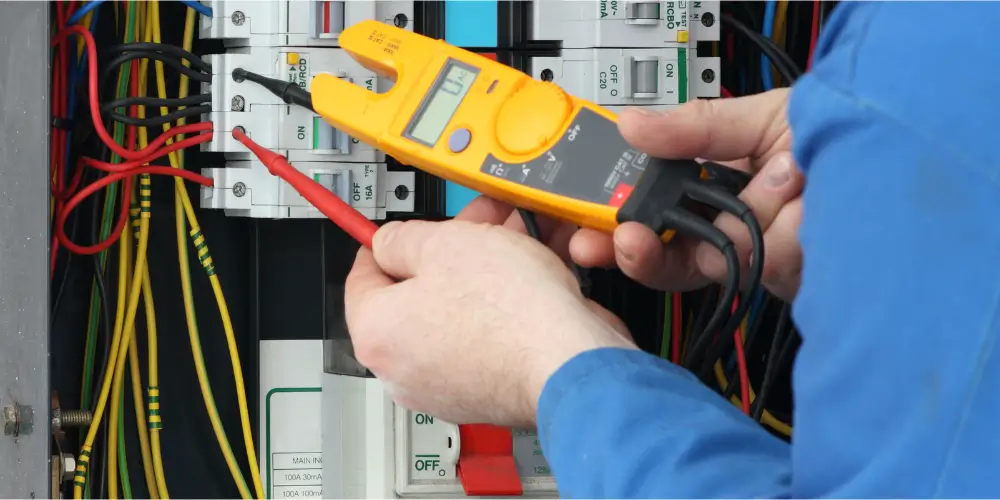
- Instrument testing – Specialist test equipment is used to verify continuity of protective conductors, insulation resistance, polarity, and loop impedance. Protective devices, such as RCDs and breakers, are tested to guarantee they disconnect quickly enough to prevent electric shock or fire.
- Documentation and recommendations – Results are recorded, circuits are assessed as satisfactory or requiring attention, and clear remedial actions are outlined so the installation can safely support flexible, future use.
What Your Previous EICR Report Says
Once the testing process is understood, attention naturally turns to what past reports already reveal about an installation’s condition. A previous Electrical Installation Condition Report (EICR) is more than paperwork; it is a snapshot of risk, resilience and how close a building is to operating without unnecessary constraints or surprises.
The coding system (C1, C2, C3, FI) shows how urgent any corrective work was, and whether it limited how freely the electrical system could be used. Persistent C2 or FI items across successive reports suggest unresolved danger that can lead to enforced shutdowns, insurance issues, or legal intervention, all of which restrict choice.
Date stamps and the inspector’s recommended retest interval indicate how long the current “permission to operate” realistically lasts. Observations about wear, loading, or alterations signal whether the installation can support future expansion without triggering more frequent or intrusive testing.
Records to Keep After Electrical Testing
A well-organised set of post‑test records turns a one‑off inspection into a long‑term risk management tool. For owners and managers who value autonomy, clear documentation proves that they have met their legal duties while keeping options open for future changes, upgrades, or new tenants.
At minimum, they should maintain:
- The full EICR and certificates – including test results, codes, limitations, and the electrician’s details. These documents guide future testing intervals and evidence due diligence during disputes or insurance claims.
- Remedial work records – invoices, completion certificates, and before‑and‑after photos show that defects were actually resolved, not just noted.
- A simple testing log – dates of inspections, key findings, and next‑due dates for each installation or building.
Keeping these records together digitally and backed up lets a landlord or business move quickly: switching insurers, refinancing, or re‑letting space without being slowed by missing paperwork.
Frequently Asked Questions
Can I Stay in the Property While an EICR Is Being Carried Out?
Yes, they can usually stay, moving between rooms as needed. Power may be switched off temporarily, limiting appliance use. They retain freedom to observe, ask questions, or leave, provided they don’t obstruct the electrician’s safe access and testing.
How Much Does an Electrical Installation Condition Report Typically Cost in the UK?
An Electrical Installation Condition Report in the UK typically costs £120–£300, depending on property size, region, and circuit complexity. Freedom‑minded customers often compare independent electricians, request itemised quotes, and avoid long‑term restrictive maintenance contracts.
What Qualifications Should an Electrician Have to Carry Out EICR Testing?
They should hold Level 3 electrical qualifications, be fully qualified electricians, and be competent in inspection and testing, typically with City & Guilds 2391 or equivalent, plus registration with NICEIC, NAPIT, or similar competent person scheme.
Do New Electrical Installations Also Need Periodic Testing, and When Should They Start?
Yes. New installations need periodic testing from the date of initial verification. They typically start at the first recommended interval on the certificate, then follow ongoing EICR schedules, or sooner if usage or regulations demand.
How Can I Tell if My Existing Wiring Is Too Old and Needs Urgent Testing?
They can spot ageing wiring through frequent tripping, burning smells, hot switch plates, brittle or cloth insulation, exposed conductors, missing RCD protection, or pre‑2000 fuse boxes; any of these signs demands urgent inspection by a qualified electrician.
Conclusion
To conclude, “how often should electrical installations be tested” regular electrical installation testing is essential for both rental and commercial properties in the UK. By following EICR intervals, considering how each building is used and referring to previous reports, landlords and business owners can plan inspections effectively. Keeping accurate records and understanding what happens during testing helps demonstrate compliance, manage risk and protect occupants. Ultimately, consistent, documented testing supports safety, legal obligations and the long-term reliability of every electrical installation.