
Looking into the EICR vs EPC, an EICR (Electrical Installation Condition Report) checks the safety of a property’s fixed electrical system, identifying defects and risks of fire or electric shock. An EPC (Energy Performance Certificate) measures how energy efficient a property is, rating it from A to G and suggesting ways to cut energy use and bills. They are separate legal requirements for landlords, with different renewal cycles and purposes. Understanding how they work together helps owners stay compliant and make better property decisions.
Key Takeaways
- An EICR checks the safety and condition of a property’s electrical installation, while an EPC measures its energy efficiency performance from A to G.
- EICR involves physical testing of wiring, circuits, and consumer units; EPC relies on visual inspection and software modelling of insulation, heating, and building fabric.
- EICR protects occupants from electric shock and fire risks; EPC helps estimate running costs and carbon emissions but doesn’t assess electrical safety.
- Landlords usually need an EICR at least every five years and an EPC every ten years, with both required at key rental or sale stages.
- Having a valid EICR does not improve an EPC rating, and a good EPC does not mean the electrics are safe, both certificates are separately required.
Table of Contents
What Is an EICR Certificate?
An Electrical Installation Condition Report (EICR) certificate is an official document that records the condition and safety of a property’s fixed electrical installation after inspection and testing. It confirms whether the electrical system is satisfactory for continued use or whether any defects require attention.
The report provides property owners, landlords, and tenants with a clear record of the electrical installation’s condition, including any safety concerns, observations, and recommended remedial work. It is commonly used to demonstrate that electrical safety checks have been completed and that any identified issues are being managed appropriately.

What an EICR Inspection Covers
Electrical Installation Condition Reports (EICRs) provide a detailed assessment of a property’s fixed electrical systems to verify they are safe and compliant with current regulations. An inspection examines circuits, protective devices, consumer units, earthing, bonding, and visible wiring, highlighting risks that could limit a person’s ability to use their space freely and confidently.
Inspectors test how installations perform under realistic fault conditions, checking that disconnection times, RCD operation, and circuit integrity meet BS 7671 standards. They also identify aging components, DIY alterations, and overloaded circuits that might threaten safety or future flexibility. Read our blog post to ceck the details on What Happens During an Electrical Installation Condition Report Inspection?
| Area Checked | Purpose | Typical Outcome |
| Consumer unit & MCBs | Verify protection and isolation | Codes C1–C3, FI if required |
| Wiring & accessories | Detect damage or wear | Recommendations for upgrades |
| Earthing & bonding | Validate fault paths are effective | Immediate or scheduled remedial |
What Is an EPC Certificate?
An Energy Performance Certificate (EPC) is an official document that shows the energy efficiency rating of a property. It provides information about how much energy the building is likely to use, its estimated running costs, and recommendations for improving energy performance.
The certificate gives the property an energy rating from A (most efficient) to G (least efficient) and includes suggested improvements that could help reduce energy use, lower costs, and improve the overall efficiency of the building. EPCs are commonly required when properties are built, sold, or rented in the UK.
What an EPC Assessment Covers
An EPC assessment focuses on how a building uses and loses energy, not on electrical safety or legal compliance. Assessors survey key features that influence running costs and carbon impact, giving owners and tenants clear options to cut bills and reduce dependence on wasteful systems.
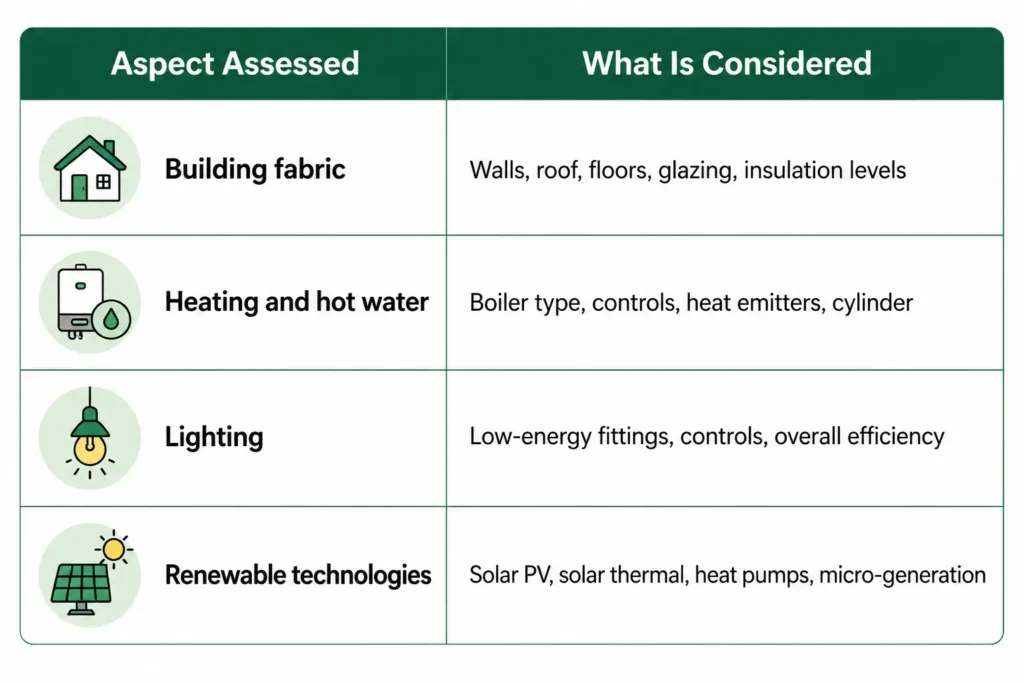
The final report ranks performance and suggests practical upgrades, enabling informed, unconstrained choices. Explore EPC Assessment UK Explained: Legal Requirements, Ratings, and Improvement Options.
EICR vs EPC: Key Differences
Understanding the key differences between an Electrical Installation Condition Report (EICR) and an Energy Performance Certificate (EPC) helps clarify their distinct roles in property compliance. An EICR focuses on electrical safety, examining wiring, circuits, consumer units, and protective devices to identify risks of fire or electric shock. It answers a simple question: is the installation safe to use?
An EPC, by contrast, evaluates how efficiently a property uses energy, rating the building’s fabric, heating systems, insulation, and lighting. It highlights where energy, and money, is being wasted, offering routes to lower running costs and reduce dependence on utilities. Check out How to Improve EPC Rating With Insulation and Heating Upgrades: Complete UK Guide.
The EICR is grounded in the Wiring Regulations (BS 7671) and typically involves hands-on testing. The EPC uses modelling and visual inspection. One protects occupants from immediate physical harm; the other guides informed choices about consumption, environmental impact, and long‑term operating freedom.
Why an EPC Does Not Replace an EICR
Recognising these differences makes clear why an EPC can never stand in for an EICR. An Energy Performance Certificate focuses on how efficiently a property uses energy, not on whether the electrics are safe to touch, use, or live with. The EPC survey is visual and limited; it does not involve opening consumer units, testing circuits, or verifying protective devices.
An EICR, by contrast, is an in‑depth electrical safety inspection and testing process. It measures whether wiring, earthing, and protective systems can actually protect people from electric shock and fire. Someone who values autonomy in how they use their property needs both pieces of information: how much energy the building wastes, and whether the electrical installation might fail dangerously. A landlord or homeowner relying on an EPC alone is effectively blind to hidden electrical risks. Only an EICR confronts those risks directly and documents them in a usable, actionable form.
Why an EICR Does Not Improve EPC Ratings
Curiously, an EICR has no direct effect on a property’s EPC score. An EICR simply confirms that the wiring and fixed electrical installations are safe for continued use. It assesses risk of shock, fire, or failure, not how efficiently electricity is used. Someone could have a totally compliant, recently tested installation feeding old storage heaters, halogen spotlights, and a power‑hungry immersion cylinder, and still receive a poor EPC.
EPC methodology focuses on energy demand, insulation levels, heating systems, and carbon impact. It measures how much energy a building is likely to consume, not whether the circuits are in perfect condition. Upgrading a consumer unit or replacing damaged cabling might enhance safety and peace of mind, but it does not change the building’s thermal performance or system efficiencies that drive the EPC rating. In practice, safety certification and energy optimisation move on separate, parallel tracks.
Different Compliance Requirements for Landlords
For landlords, electrical safety and energy performance sit under distinct legal regimes, each with its own triggers, documents, and enforcement. An Electrical Installation Condition Report (EICR) focuses on whether wiring, consumer units and fixed accessories are safe to use. It is tied to electrical regulations and usually follows fixed inspection intervals or specific events such as major alterations. Enforcement is driven by safety authorities, with penalties targeting immediate risk to occupants.
By contrast, an Energy Performance Certificate (EPC) arises from energy efficiency legislation. It is triggered mainly by market activity: building, selling, or letting a property. The certificate ranks the building’s energy efficiency and must be produced at legally defined points in a transaction.
These frameworks can overlap in time but not in purpose. One protects people from electrical harm; the other shapes market behaviour by exposing energy performance, so individuals can make more informed, independent choices.

EICR and EPC Requirements for Rental Properties
Although both documents often appear together in tenancy packs, EICR and EPC obligations apply to rental properties in different ways and at different times. An Electrical Installation Condition Report (EICR) is a safety mandate: in most private rentals, fixed wiring must be inspected at least every five years, or sooner if the report recommends. Landlords must act on “unsatisfactory” codes within set time limits, or risk enforcement that can restrict how freely they let the property. Here is the breakdown of How Long Is an Electrical Installation Condition Report Valid For?
When You Need Both Certificates
In many rental scenarios, an EICR and an EPC are required at the same time because they serve complementary legal purposes: safety and energy performance. When a landlord plans to let a property, both documents are typically needed before tenants move in and before advertising the property. The EICR verifies that electrical systems do not present unnecessary risk, while the EPC reveals how efficiently the building uses energy, influencing running costs and climate impact.
A clear overview helps owners act without delay:
| Situation | EICR Needed | EPC Needed |
| New tenancy | Before tenants occupy | Before marketing the property |
| Renewing an existing tenancy | On or before EICR expiry (usually 5y) | If EPC has expired (10-year validity) |
| Major refurbishment or conversion | After electrical alterations are done | After works changing energy features |
Common Confusion Between EICR and EPC
Many landlords and property buyers understandably confuse EICRs and EPCs because both are formal certificates linked to legal duties, inspections, and property condition. On the surface, they appear similar: an assessor visits, issues a report, and the document influences whether a tenancy or sale can proceed. This sameness leads some people to treat them as interchangeable “tick-box” requirements.
The confusion often deepens because both certificates are frequently requested together by agents, lenders, and councils. As a result, individuals may assume one document covers all compliance, risking gaps in either electrical safety or energy standards. Some online listings and adverts blur the lines further, referring vaguely to “up‑to‑date certificates” without naming which.This mix‑up can restrict choice and create anxiety about fines or enforcement. Clear separation of purpose, EICR for safety, EPC for efficiency, helps owners protect occupants, control costs, and keep regulatory pressure from undermining their freedom to use or let property.
Frequently Asked Questions
How Much Do EICR and EPC Certificates Typically Cost for a Standard Flat?
EICR for a standard flat usually costs £120–£200, while an EPC typically costs £50–£100. Prices vary by region, property size, and assessor, so independent comparison and direct negotiation keep owners in control.
Can I Check My Property’s Existing EPC or EICR Records Online?
Yes, they can. EPCs are freely searchable on the UK government’s online register by address or certificate number. EICR records aren’t centrally stored; they must be requested from the landlord, agent, or electrician directly.
Who Is Legally Allowed to Carry Out EICR and EPC Assessments?
Only qualified, appropriately registered professionals may legally perform them: EICRs by competent electricians meeting BS 7671 and scheme requirements; EPCs by accredited domestic or non‑domestic energy assessors listed on the government register, independent of landlord or agent.
How Long Does an EICR or EPC Inspection Usually Take?
An EICR typically takes 2–4 hours, depending on property size and wiring complexity. An EPC usually takes 30–90 minutes. Times vary with access, documentation readiness, and how thoroughly occupants allow the assessor to explore.
What Happens if a Tenant Refuses Access for EICR or EPC Inspections?
If a tenant refuses access, the landlord must show reasonable efforts: give written notice, propose flexible times, document refusals, and avoid forcing entry. Ultimately, enforcement or penalties usually target the landlord, so communication and negotiation remain essential.
Conclusion
In conclusion, “EICR vs EPC” Both certificates serve distinctly different purposes in UK property management. An EICR focuses on electrical safety, while an EPC measures energy efficiency and performance. Neither can replace the other, and both may be legally required, especially for landlords. Understanding the difference helps avoid compliance mistakes, protects tenants, and supports responsible property management. Recognising when each certificate is needed guarantees both safe and energy-efficient homes across the rental and wider housing market.