
This is a detailed guide for landlords if they have lost an electrical safety report. If an electrical safety report is lost in the UK, the owner should seek a replacement EICR or arrange a new inspection. They should then keep digital and paper copies of all EICRs, past inspection reports, installation and minor works certificates, remedial work records, invoices, and contractor details. Clear labelling, secure digital backup, and organised physical files help prove compliance to insurers and authorities and make future safety checks and decisions far easier to manage.
Key Takeaways
- Confirm the report is genuinely lost, then contact the original electrician or inspection company to obtain a replacement copy of the EICR.
- If a replacement isn’t available, arrange a fresh EICR from a qualified UK-registered electrician (e.g., NICEIC, NAPIT, ELECSA).
- Keep organized copies of all EICRs, previous inspection reports, and installation or minor works certificates, both digitally and in physical form.
- Retain invoices, remedial work records, contractor details, and dates, showing what faults were fixed and confirming compliance with current standards.
- Store documents securely in a clearly labeled, digital-first system, with backups, to demonstrate ongoing electrical safety and support insurance or regulatory checks.
Table of Contents
What to Do If You Lose an Electrical Safety Report
Misplacing an electrical safety report requires prompt, methodical action to limit risk and keep records compliant. A property owner should first confirm whether the report is genuinely lost by checking email accounts, online portals, and any digital filing systems used by their electrician or letting agent. If it cannot be located, they should contact the original electrician or inspection company and request a replacement copy, providing the property address, inspection date, and any invoice details.
If the contractor no longer trades, the owner may need a fresh inspection to obtain an up‑to‑date report. While arranging this, they should review any known electrical issues and verify urgent defects are not ignored. Maintaining this discipline supports legal compliance and safeguards occupants’ autonomy and safety. Explore Can Property Owners Be Penalised for Ignoring Electrical Safety?

Keeping Copies of EICR Certificates
Although an EICR is often treated as a one‑off document, keeping organised copies is essential for long‑term safety and compliance management. A property owner retains control by keeping at least two copies: a signed digital PDF and a clean physical printout. Digital versions can be stored securely in encrypted cloud storage or a password‑protected drive, providing quick access for new tenants, insurers, or contractors. Physical copies can be filed with other core property documents. Clear labelling of property, date, and outcome allows the owner to demonstrate compliance instantly and avoid unnecessary repeat inspections.
Store Previous Electrical Inspection Reports
Maintaining a structured archive of previous electrical inspection reports allows a property owner to track the full safety history of an installation, not just the latest snapshot. By retaining earlier reports, an owner can demonstrate a consistent pattern of diligence, rather than scrambling whenever an authority, insurer, or tenant raises a concern.
These records reveal recurring observations, emerging risks, and how the electrical system has aged over time. They also help an owner decide when it is reasonable to question a recommendation or seek a second opinion, supporting more independent decision‑making. Storing reports both digital and paper under clear filenames and dates guarantees rapid access, enabling the owner to respond confidently to enquiries without relying on the memory or availability of past contractors.
Keep Records of Completed Remedial Work
A crucial counterpart to storing inspection reports is keeping clear records of every piece of remedial work carried out in response to them. Property owners who value independence need proof that, once defects are identified, they have been properly resolved. For each remedial task, they should keep the electrician’s invoice, a brief description of faults rectified, dates of work, parts or circuits affected, and confirmation that the installation now complies with relevant standards. Where applicable, they should retain minor works certificates or updated EICRs that reference the completed actions. Organised records allow owners to move, rent, or refinance without being trapped by uncertainty or suspicion. They show a clear trail from problem to solution, reducing disputes and supporting quick, confident decisions.
Maintain Electrical Repair and Maintenance Records
Effective electrical safety depends not only on inspections and remedial work, but also on systematic records of everyday repairs and routine maintenance. Property owners who value autonomy over their buildings recognise that small, routine interventions often prevent disruptive, high‑cost failures later. They typically keep a simple log noting the date, location, and nature of each repair or maintenance task, together with any parts replaced and test results carried out afterwards. This can be a spreadsheet, digital notebook, or bound logbook, provided entries are dated and stored securely.
Retain Contractor and Electrician Details
Some of the most valuable information in an electrical safety file is a clear record of who worked on the system and how they can be contacted. Property owners who want real freedom to act quickly in a fault or dispute need names, company details, and proof of competence for every contractor and electrician.
At minimum, they should retain full contact details, trade association or Part P/NICEIC registration numbers, insurance information, and copies of quotations and invoices. Notes of what each contractor actually did, plus dates and locations within the property, give owners leverage if work is questioned. Keeping this information together with certificates and test results lets owners choose any future contractor confidently, without being tied to a single firm.
How Long Should Electrical Safety Records Be Kept?
With contractor and electrician details recorded, the next question is how long those documents should be kept. In the UK, landlords must retain Electrical Installation Condition Reports (EICRs) and related records until the next inspection, typically every five years, and for at least one full tenancy cycle. Many owners choose to keep them for a minimum of six years to align with limitation periods for potential claims and to avoid being trapped by gaps in proof.
For significant works, retaining certificates for the life of the installation offers maximum flexibility supporting future upgrades, sales, or disputes. Even when legal minimums are met, longer retention preserves choice, allowing owners to evidence diligence without relying on third parties or imperfect recollection. Check out the details of How Long Is an Electrical Installation Condition Report Valid For?
Where to Find a Lost Electrical Safety Report
Often the quickest route to a “lost” electrical safety report is to retrace where official copies should exist. A property owner who wants maximum control over their building should first map out every point where documentation naturally flows and may have been stored, duplicated, or archived.
A focused search typically starts with:
- Personal and digital files – home office folders, email attachments, cloud storage, scanned PDFs.
- Letting or managing agents – their compliance folders, tenant onboarding packs, and property management portals.
- Previous sale or remortgage paperwork – conveyancing bundles, lender documents, or surveyor packs often include electrical reports.
- Maintenance and refurbishment records – invoices, quotes, or job sheets from electricians may be stapled to, or reference, the original report.
Requesting a Replacement Electrical Report
If thorough checks of personal files, agents’ records, and past transaction paperwork still fail to locate the original document, the next step is to arrange a replacement electrical safety report. A property owner is free to approach any suitably qualified electrician or electrical contractor who is registered with a recognised UK scheme (such as NICEIC, NAPIT, or ELECSA). They should request a new Electrical Installation Condition Report (EICR), making clear it is needed to evidence safety and legal compliance.
The electrician will usually need full access to the property and existing consumer unit, plus any previous test results if available. Once testing is complete, the owner should guarantee the report is provided in both digital and hard-copy formats and stored securely.
What If the Original Electrician Cannot Be Contacted?
Sometimes the original electrician cannot be reached because they have moved, retired, changed contact details, or ceased trading altogether, but this does not prevent a landlord from meeting legal duties. The law focuses on the safety and documentation in place now, not on preserving a particular contractor.
Landlords retain full freedom to choose how to move forward, provided they can prove that installations are safe and inspected within required timescales. A practical response usually involves:
- Instructing a new qualified electrician registered with a recognised UK scheme (NICEIC, NAPIT, ELECSA, or similar).
- Requesting a fresh Electrical Installation Condition Report (EICR) rather than chasing old paperwork.
- Keeping all new certificates, invoices, and correspondence securely.
- Updating internal records so future checks are independent of any single contractor.
Risks of Missing Electrical Safety Records
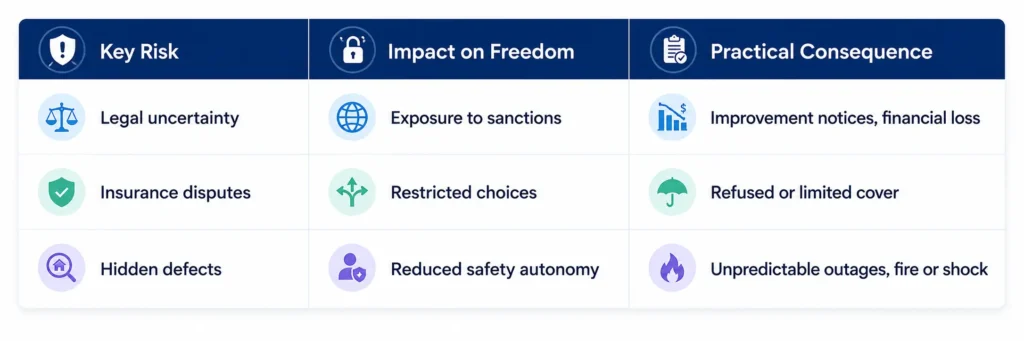
Without current and traceable electrical safety records, a landlord operates with limited evidence that an installation is safe and compliant. The main risk is loss of control: they cannot confidently show that the system has been inspected, tested, or kept in a condition that respects occupants’ right to a safe home.
Insurers may question claims, local authorities may doubt due diligence, and tenants may challenge the landlord’s management of risk. Missing records can also slow fault‑finding, leaving dangerous defects energised for longer than necessary. No Electrical Safety Report: What Happens if a Property Has No Electrical Safety Report?
Do I need Reinspection?
When an electrical safety report goes missing, the central question is whether the installation now needs to be reinspected or simply re‑documented. In the UK, the answer depends less on paperwork and more on the actual condition and age of the wiring, plus the legal context of the property’s use.
Key triggers for reinspection typically include:
- Expired or unknown inspection date – if no one can prove when the last EICR was done.
- Change of tenancy or ownership – especially for rented properties subject to strict intervals.
- Visible defects or past DIY alterations – any doubt about safety favours a fresh EICR.
- Major renovations or new circuits – significant changes justify reinspection, not just replacement paperwork.
Organising Electrical Documents for Compliance
Whether a fresh inspection is needed or not, a property owner’s ability to prove compliance ultimately rests on how well electrical documents are organised and retained. Order gives them freedom from panic when regulators, insurers, or tenants request proof.
A simple digital‑first system works well: scanned copies stored in cloud folders, backed up, and clearly labelled by property, date, and contractor. Physical originals are filed, but the digital trail protects mobility and independence.
| Document Type | Purpose for the Owner’s Freedom |
| EICR and previous inspection reports | Evidence that systems were safe when tested |
| Installation and minor works certificates | Show lawful, competent alterations |
| Invoices and contractor details | Prove who did the work and when |
| Remedial work records and photos | Demonstrate swift action on identified risks |
Regular reviews keep everything current.
Frequently Asked Questions
Does My Home Insurance Require Evidence of Up-To-Date Electrical Safety Reports?
Home insurance may require current electrical safety evidence, but it varies by insurer and policy. The policyholder should check policy wording, ask the insurer directly, and keep inspection reports, certificates, invoices, and correspondence as protective documentation.
Are Digital-Only Copies of Electrical Reports Legally Acceptable for Landlords?
Yes, digital-only copies are legally acceptable if they’re clear, complete, securely stored, and can be shared with tenants or authorities on request. Landlords simply must guarantee authenticity, traceability, and availability format itself is not restricted.
Do I Need Electrical Safety Records When Selling or Remortgaging My Property?
They are not strictly required by law to sell or remortgage, but buyers and lenders increasingly expect them. Providing recent electrical safety records smooths surveys, strengthens bargaining power, and helps avoid delays, extra inspections, or price reductions.
Who Is Responsible for Record-Keeping in a Block of Flats: Freeholder or Leaseholder?
Responsibility usually sits with the freeholder or managing agent for communal areas, while each leaseholder keeps records for their own flat. The lease, management agreement, and any residents’ company rules ultimately dictate who must hold which documents.
How Do Electrical Safety Records Interact With Fire Risk Assessment Documentation?
They interlock as complementary proof of safety: electrical inspection reports feed into the fire risk assessment’s hazards, controls and review dates. Together, they evidence compliance, justify mitigation choices, and empower residents to challenge neglect or demand remedial action.
Conclusion
Concluding, “lost electrical safety report” need not leave a property owner exposed. By keeping duplicate EICR certificates, storing historic reports, and logging all remedial and maintenance work, owners can demonstrate ongoing compliance. Where original inspectors are unavailable, a new inspection may be necessary to re-establish a clear safety record. Systematic organisation of documentation not only supports legal and insurance obligations, but also provides reassurance that a property’s electrical systems remain safe and well managed.