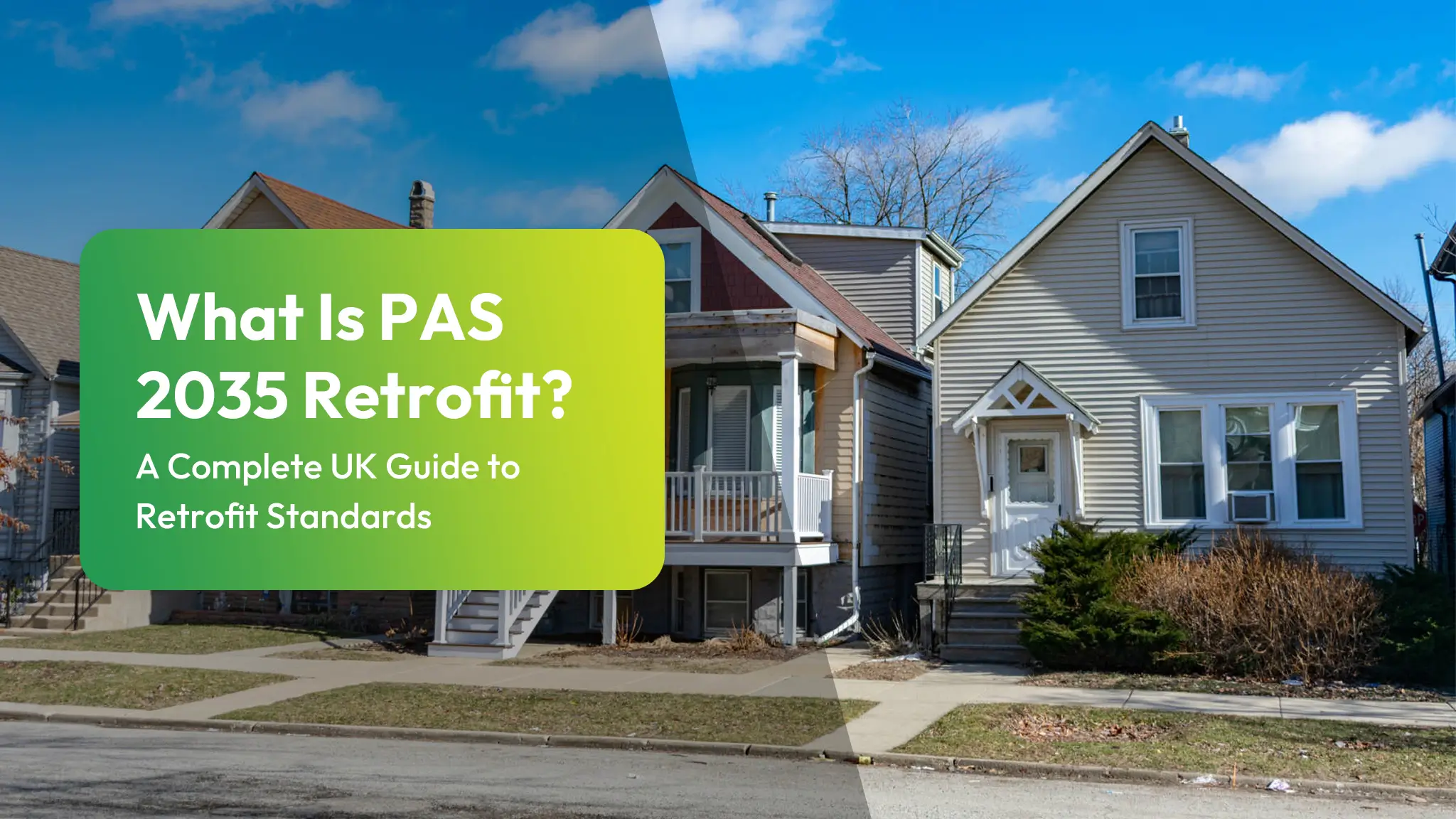
What is PAS 2035 retrofit? PAS 2035 retrofit is the UK’s official standard for planning and managing energy efficiency upgrades in existing homes. It sets out a whole-house process, from initial assessment through design, installation and monitoring, to avoid issues like damp or poor ventilation. The standard defines key roles, risk pathways and documentation requirements to improve quality and homeowner confidence. It works alongside PAS 2030, and understanding both explains how compliant, low-risk retrofits should be carried out in practice.
Key Takeaways
- PAS 2035 is the UK’s standard for managing domestic retrofit projects using a whole-house, whole-life, risk-based approach.
- It sets out a structured process from assessment, design and installation through to monitoring and evaluation of energy-efficiency improvements.
- Defined roles, Retrofit Assessor, Designer, Coordinator and Installer, ensure accountability, quality control and consistent project delivery.
- The standard classifies projects into risk pathways (A, B or C), determining the level of analysis, moisture risk management and specialist involvement required.
- PAS 2035 works alongside PAS 2030, which governs how individual energy-efficiency measures must be installed to meet quality and performance requirements.
Table of Contents
What Is PAS 2035 Retrofit?
PAS 2035 retrofit is a structured, standardised approach to improving the energy efficiency of existing buildings in the UK. It defines how retrofit projects should be assessed, designed, installed and evaluated, so upgrades work together rather than fighting each other. Instead of focusing on single measures, PAS 2035 treats the home as a whole system, considering the building fabric, heating, ventilation and how people actually live in the space.
At its core, PAS 2035 sets out clear roles, processes and documentation for domestic retrofit. It introduces competence requirements for professionals, risk pathways for different project types and a consistent method for planning upgrades over time. Homeowners remain free to choose measures and suppliers, but within a framework that reduces technical mistakes and hidden trade‑offs. PAS 2035 is not a specific product or technology; it is the agreed method for doing retrofit properly in the UK.
Why Was PAS 2035 Introduced?
Before the introduction of this standard, domestic retrofit in the UK was often fragmented, inconsistent and prone to unintended consequences such as damp, poor air quality and underperforming insulation. PAS 2035 was introduced to bring order to this landscape, giving householders the confidence to improve homes without sacrificing comfort or control over how work is done.
Fundamentally, the standard exists to protect people’s homes, health and long‑term freedom to choose how they use energy.
| Reason for PAS 2035 | Why It Matters to Householders |
| Improve retrofit quality | Reduces defects and costly rework |
| Manage moisture and damp | Protects building fabric and indoor comfort |
| Safeguard indoor air quality | Supports healthier, freer living environments |
| Guarantee whole‑house thinking | Avoids measures that limit future choices |
| Build trust in retrofit | Encourages people to upgrade homes on their own terms |
What Does PAS 2035 Require?
Although it is often described as a “standard,” PAS 2035 functions more as a structured process that any funded domestic retrofit must follow from initial assessment through to post‑installation monitoring. It requires that every project is overseen by clearly defined roles: a Retrofit Assessor, Retrofit Designer, Retrofit Coordinator and Installer, each with specific competencies and responsibilities. This reduces the chance of box‑ticking work and guards the householder’s freedom to choose meaningful improvements rather than cosmetic fixes.
PAS 2035 also requires a “whole‑house, whole‑life” approach. Measures cannot be bolted on in isolation; they must be designed as a coherent package that considers moisture, ventilation, thermal comfort, energy use and future adaptability. Risk‑based pathways (A, B or C) determine how rigorous the process must be. Documentation, design decisions and installation details must be recorded, creating a traceable audit trail that supports accountability, quality assurance and long‑term performance.
What Happens During a Retrofit Assessment?
At the heart of the PAS 2035 process is the retrofit assessment, where the “whole‑house, whole‑life” approach becomes a detailed evidence‑gathering exercise. An accredited retrofit assessor visits the home, documents its construction, age, and extensions, and records floor areas, window types, and insulation levels. They capture photographs, plans, and notes that reveal how the building really behaves, rather than how it was meant to perform on paper.
They then survey ventilation routes, heating systems, controls, and hot‑water provision, identifying where energy is wasted and where occupants might feel constrained by cold rooms, drafts, or damp. Moisture risks, condensation, and visible mould are logged carefully, alongside any structural defects that could limit future choices.
Finally, the assessor collects fuel‑bill data and talks with occupants about comfort, health concerns, and how they actually use the space, establishing the baseline conditions that any credible, freedom‑enhancing retrofit must respect. Do You Need a Retrofit Assessment Before Insulation? What You Must Know.
How Is a Whole House Retrofit Plan Created?
Translating the assessment into a whole house retrofit plan begins with the retrofit coordinator, who interprets the collected data and risk level of the project. From there, the home is treated as a single, interconnected system. Each proposed measure insulation, ventilation, glazing, heating, renewables, is tested on paper for how it affects comfort, moisture, energy use, and future flexibility, not just today’s bills.
The plan sequences upgrades so they build on each other instead of clashing. For example, it avoids installing an oversized boiler before fabric improvements, or creating airtightness without secure ventilation. It also sets performance targets, cost estimates, and indicative timescales, giving the homeowner a roadmap rather than a rigid script. Crucially, the plan preserves choice. It outlines “no‑regrets” works to prioritise now, plus optional future steps, so the homeowner can move at their own pace while still heading toward a coherent, efficient, low‑carbon home.
What Does a Retrofit Coordinator Do?
While many people think of builders and installers when they hear “retrofit”, the retrofit coordinator is the person who holds the whole process together under PAS 2035. Acting as project guardian, they manage risk, documentation, and compliance so the homeowner is not trapped between conflicting trades or unclear promises.
They commission surveys, review the assessment, and guarantee the chosen measures align with the whole-house plan and the client’s long‑term freedom to use the home as they wish. They also verify that installers are competent and that work follows the agreed pathway.
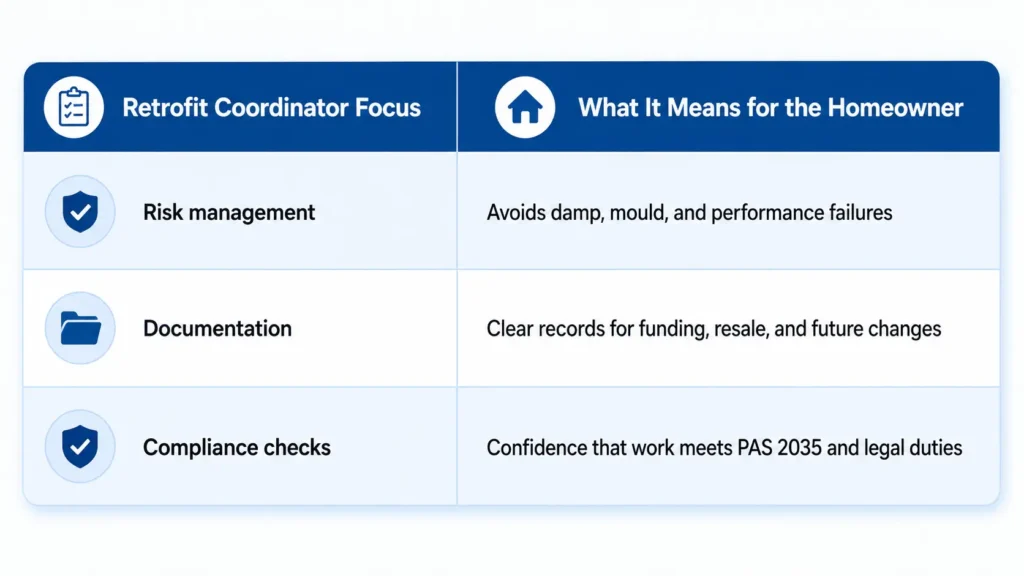
Finally, they handle handover information, performance monitoring, and complaints, providing a single accountable point of contact.
What Role Does the Retrofit Designer Have?
Serving as the technical architect of a PAS 2035 project, the retrofit designer turns survey data and the coordinator’s whole‑house plan into detailed, buildable solutions. Their work translates intent into drawings, specifications, and performance targets that installers can follow without guesswork, while still allowing householders to keep control over how their home evolves.
They balance energy performance with comfort, aesthetics, and practical living. Instead of pushing a single “approved” answer, the designer evaluates options and assembles a package of measures that can be phased, upgraded, or adapted over time.
Key contributions include:
- Developing coordinated fabric, services, and ventilation designs that work together rather than compete.
- Selecting products and details that preserve usability, daylight, and personal space, not just kilowatt‑hours.
- Documenting clear installation requirements so contractors deliver predictable outcomes, enabling occupants to enjoy a more efficient home without sacrificing autonomy or future flexibility.
How Are Retrofit Risks Managed?
Every PAS 2035 project must confront a range of risks from moisture and overheating to fire safety, poor indoor air quality, and unintended cost overruns, and manage them in a structured way. The standard requires a formal risk assessment early in the process, classifying each dwelling into a risk pathway (A, B, or C). This classification shapes how deep the analysis must go and how much specialist input is needed.
Risk management under PAS 2035 is about informed choice, not rigid prescription. The Retrofit Coordinator documents identified risks, their likelihood and impact, and the agreed mitigation strategy, allowing clients to weigh performance gains against disruption, cost, and long‑term obligations. Measures prone to moisture or ventilation problems must be supported by hygrothermal thinking and adequate airflow strategies. Ongoing monitoring is encouraged where risks are higher or the building is complex, ensuring that residents retain comfort, safety, and agency over their living space.

How Is Quality Controlled Under PAS 2035?
PAS 2035 controls quality by embedding checks and accountability at each stage of the retrofit process, rather than relying on a single final inspection. It structures responsibility across defined roles, so no single party can dominate decisions that affect a homeowner’s comfort, health, or long‑term costs. Quality becomes a continuous thread from assessment through design, installation, and post‑evaluation.
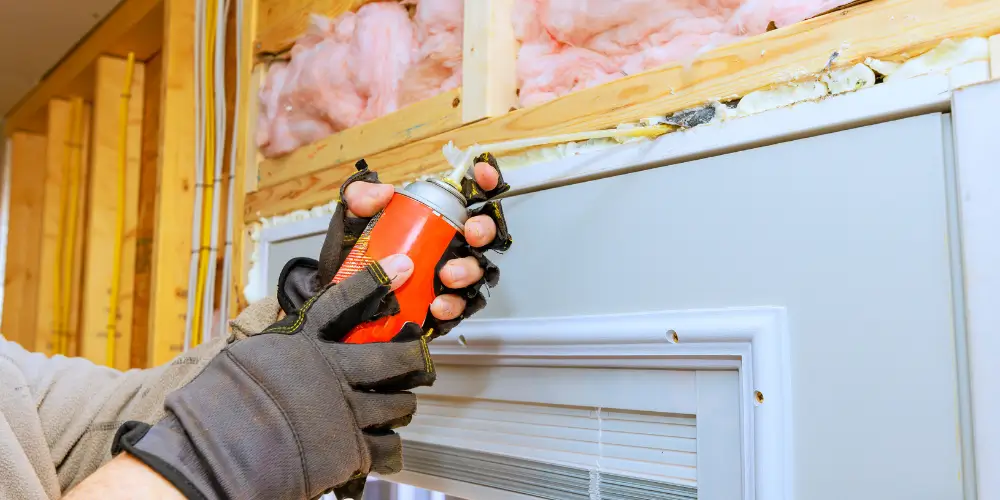
Independent oversight is built in. Retrofit Coordinators review designs, verify that risks are addressed, and guarantee that measures work together rather than fighting each other. Installations are checked against the agreed specification, with photographic and documentary evidence required.
To safeguard performance and occupant choice, PAS 2035 emphasises:
- Transparent records of decisions, products, and assumptions.
- Feedback loops from monitoring and soft landings, enabling learning and adjustment.
- Clear avenues for dispute resolution, so residents can challenge poor work and assert their rights.
PAS 2035 and PAS 2030: What Is the Difference?
While quality control defines how retrofits are managed in practice, it sits within a paired standards framework made up of PAS 2035 and PAS 2030. These two standards work together: PAS 2035 governs the whole-house, risk-based process; PAS 2030 specifies how each energy-efficiency measure is physically installed. For anyone wanting choice and control over their retrofit, understanding the split is essential.
PAS 2035 focuses on assessment, design, coordination, and monitoring, ensuring that measures are not imposed in isolation but planned as part of a long‑term pathway. PAS 2030 then locks in workmanship standards so that installers deliver what the plan promises.
| Aspect | PAS 2035 vs PAS 2030 |
| Core focus | Process (assessment to evaluation) |
| Main users | Retrofit coordinators, designers, assessors |
| Installation requirements | Defined in PAS 2030, referenced by PAS 2035 |
| Role in resident freedom | PAS 2035 shapes options; PAS 2030 secures quality |
Frequently Asked Questions
How Much Does PAS 2035 Compliance Typically Add to Project Costs?
PAS 2035 compliance typically adds around 5–15% to project costs. This covers assessment, design, coordination, and quality assurance, but can access subsidies, reduce long‑term energy bills, and protect occupants’ freedom from damp, draughts, and fuel‑poverty constraints.
How Long Does a PAS 2035 Retrofit Project Usually Take, Start to Finish?
A PAS 2035 retrofit usually takes 3–12 months, from assessment to handover. Timelines depend on property size, measures installed, coordination of trades, funding approvals, resident consent, and monitoring, with staged works allowing occupants to remain relatively unrestricted.
Can Homeowners Partially Opt Out of Recommendations in a PAS 2035 Plan?
Yes. Homeowners can usually decline specific PAS 2035 recommendations, but must accept any minimum safety or compliance measures. Opt‑outs may affect guarantees, funding, or performance outcomes, so informed consent and clear documentation are essential.
Does PAS 2035 Apply to Listed Buildings or Conservation Areas?
PAS 2035 can apply to listed buildings and conservation areas, but heritage law overrides it. Designers must adapt or omit measures to protect character, often needing consent, specialist input, and more flexible, bespoke retrofit strategies.
What Grants or Funding Schemes Require PAS 2035-Compliant Retrofit Work?
Several UK schemes demand PAS 2035 compliance, including ECO4, Great British Insulation Scheme (GBIS), Social Housing Decarbonisation Fund, Local Authority Delivery/Home Upgrade Grant, and many council‑run programmes, whenever they fund energy‑efficiency upgrades in existing domestic properties.
Conclusion
In conclusion, PAS 2035 provides a structured, whole-house approach to domestic retrofit in the UK, ensuring energy efficiency improvements are safe, effective and long-lasting. By defining clear roles, robust assessment methods and risk-based design, it reduces common retrofit failures and performance gaps. Together with PAS 2030, it sets a consistent quality framework for installers and professionals, helping homeowners gain confidence that their retrofit investments will deliver genuine comfort, carbon and cost savings.