
Do you need a retrofit assessment before insulation? A retrofit assessment before insulation is strongly advised. It shows how a property truly performs, where heat is lost, and whether issues like damp or poor ventilation are present. Assessors use tools such as blower-door tests and infrared imaging to uncover hidden problems. This prevents insulation from trapping moisture, worsening air quality, or wasting money. It also helps prioritise measures, plan budgets, and choose suitable materials. The key points below explain what a proper assessment should cover.
Key Takeaways
- A retrofit assessment isn’t always required, but it helps prevent damp, mould, and ventilation issues.
- Assessments use tools such as blower-door tests and infrared imaging to identify heat loss, leaks, and moisture risks.
- Spray foam, blown-in, rigid boards, and foil insulation can trap moisture or block ventilation without proper assessment.
- Older or mixed-construction homes need assessments to avoid hidden defects, making standard insulation risky.
- An independent retrofit report sets priorities, estimates savings, and outlines phased upgrades to control costs.
Table of Contents
What Does a Retrofit Assessment Involve?
A retrofit assessment systematically evaluates a property’s current condition to determine the most effective insulation and energy efficiency upgrades. It begins with a walk-through survey, where an assessor records construction details, age, and visible defects. They note drafty areas, cold spots, and signs of moisture or mould that might limit future options or require remedial work.
Next, diagnostic testing may be carried out to reveal how air and heat move through the building. This can include blower door tests to measure air leakage and infrared scanning to highlight thermal weaknesses. The assessor may also examine ventilation routes, window performance, and roof and floor build-ups. Finally, the findings are translated into a clear report. It outlines priority measures, estimated impact on comfort and running costs, and any risks that must be handled first. This empowers the owner to choose upgrades that actually deliver control, comfort, and long-term flexibility.
Types of Insulation that may Require an Assessment
Not all insulation types carry the same risk when added to a property. Some interact more strongly with moisture, airflow, and existing building materials, making a retrofit assessment a practical safeguard. Assessing beforehand helps prevent damp, condensation, blocked ventilation, or hidden defects that could reduce energy efficiency or cause damage.
For example:
- Spray foam can change how a building breathes, so assessors check ventilation paths and hidden moisture.
- Blown-in insulation may conceal wiring or structural issues, requiring cavity checks.
- Rigid boards alter vapour diffusion and drying potential.
- Reflective foils rely on air gaps and can affect condensation patterns.
- Even traditional batts deserve review in older or previously altered buildings.
Here’s a quick reference table:
| Insulation Type | Why Assessment Matters |
| Spray foam | Can trap moisture and affect ventilation paths |
| Blown-in cellulose | May hide wiring, voids, or damp in cavities |
| Loose-fill mineral | Adds load to ceilings and affects airflow paths |
| Rigid foam boards | Alters the vapour control and drying potential |
| Reflective foil | Condensation and ventilation interactions |
| Traditional batts | Needs review in older or altered buildings |
Benefits of Completing an Assessment Before Insulation
Before any new insulation is installed, a structured retrofit assessment delivers clarity on risks, costs, and performance, rather than relying on assumptions about the existing building. It allows property owners to see where energy is truly being lost, what is causing discomfort, and which interventions will actually move the needle, rather than unthinkingly following generic insulation advice.
By mapping the building fabric, ventilation, moisture pathways, and existing services, an assessment helps avoid unintended consequences such as trapped damp, poor air quality, or expensive rework. It supports informed choice: owners can compare options, stage improvements over time, and invest only in measures that genuinely support their lifestyle and budget. The process also sharpens financial control.
Signs Your Property Definitely Needs a Retrofit Assessment
Recurring issues after basic repairs usually mean the property needs a retrofit assessment rather than another quick fix. Persistent cold spots, draughts, or rooms that never quite reach a comfortable temperature suggest deeper fabric or air‑leakage problems. Noticeably uneven heating bills compared with similar homes, or sudden unexplained spikes in energy use, also point to hidden inefficiencies.
Visible moisture damage is another clear sign: black mould on external walls, condensation on windows even with regular ventilation, or peeling paint and crumbling plaster signal that the building envelope is struggling. Aging or mixed‑era construction extensions, loft conversions, or previous DIY upgrades often leave a patchwork of materials and gaps that undermine performance. Finally, occupants who feel forced to restrict how they use certain rooms due to cold, damp, or noise are typically living in a building that is crying out for a thorough retrofit assessment.
Retrofit Assessment Checklist: What Professionals Look For
Once recurring problems point toward deeper issues, a retrofit assessment sets out to pinpoint exactly what is going on. Professionals follow a focused checklist, beginning with the building envelope: they examine walls, roofs, and foundations for air leakage paths, gaps, and failed seals that steal comfort and control. Windows and doors are inspected for drafts, damaged frames, and weak locking hardware that compromises both efficiency and autonomy.
Next, they review existing insulation levels and materials, checking for compression, voids, moisture, pests, and unsafe installations. Mechanical systems come under scrutiny as well: heating, cooling, and ventilation equipment are evaluated for age, efficiency, duct leakage, and distribution balance. Moisture and air quality are non‑negotiables. Assessors look for condensation, mold risk, and inadequate ventilation that could trap pollutants. Finally, they document electrical loads, lighting, and control systems, ensuring any future insulation upgrades align with safe wiring and flexible energy use.
Retrofit Assessment for Older Homes: Special Considerations
Older homes introduce variables that make a retrofit assessment both more complex and more critical. Construction methods, materials, and layouts often predate modern standards, so assumptions that work in newer buildings can backfire. An assessor must read the house’s history: its era, prior renovations, and how it currently behaves in different seasons.
Layered upgrades old insulation over even older finishes, mixed wiring, or partially updated heating systems can limit options or require staged improvements. Original features such as plaster walls, brick nogging, or balloon framing may require alternative insulation strategies to help the owner achieve comfort and lower bills without sacrificing character or safety.
Older windows, chimneys, and unsealed additions also influence where air moves and how the home responds to insulation. A tailored retrofit assessment lets the homeowner choose upgrades that respect the building’s individuality while reclaiming control over energy use, indoor climate, and ongoing costs.
How a Retrofit Assessment Identifies Hidden Moisture or Structural Issues
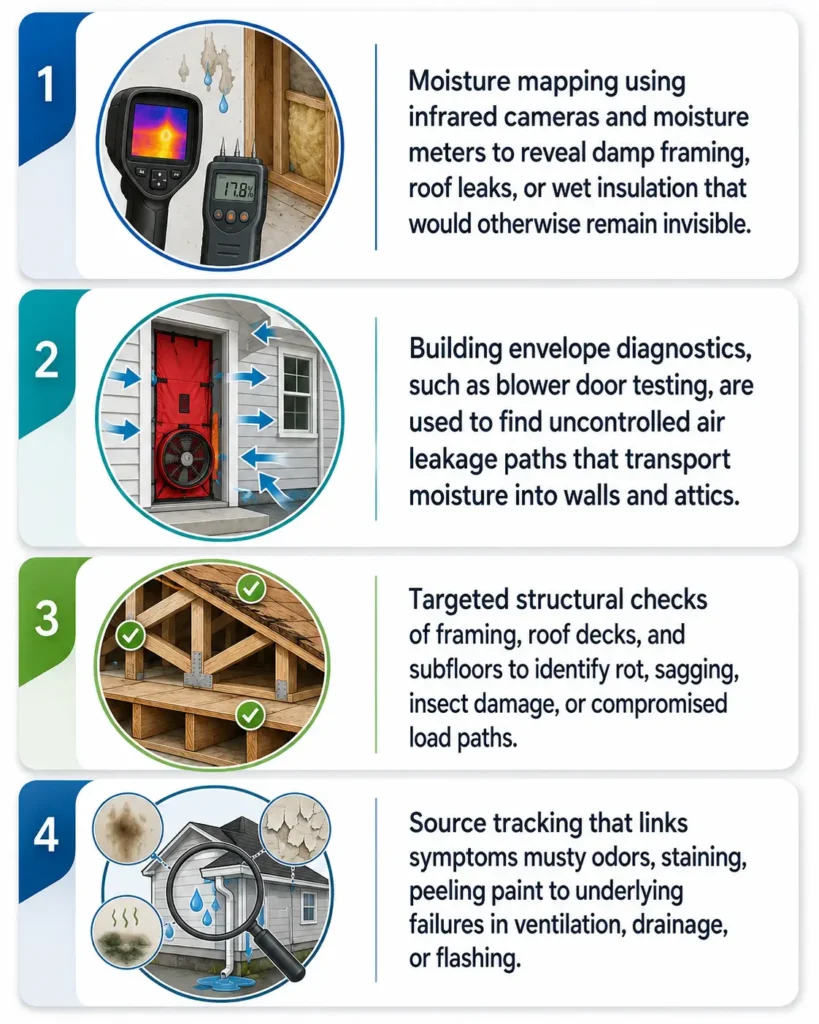
A thorough retrofit assessment looks beyond drafts and energy bills to uncover hidden moisture and structural concerns that could be made worse by added insulation. Instead of guessing, the assessor traces how air, vapor, and heat actually move through the building, so problems are exposed before they are sealed in and amplified.
Key investigative steps often include:
Why Choose HSSE Solutions
Confidence in a retrofit partner is essential when insulation affects how a building breathes and handles moisture. At HSSE Solutions, we act as a guide, helping property owners upgrade safely without risking hidden problems. We start with data, not guesses. Using blower-door tests, infrared imaging, and moisture checks, we identify what must be fixed versus what is optional, helping owners protect their budget while achieving energy and comfort goals.
Our assessors question assumptions about ventilation, vapor control, and airtightness, so clients aren’t locked into systems that limit future choices. We provide clear reports that present multiple retrofit options rather than a single rigid plan. Because we focus on assessments rather than specific products, our advice is independent. Owners can compare contractors, phase work on their own schedule, and choose insulation solutions that suit their home and long-term plans.
Frequently Asked Questions
How Much Does a Retrofit Assessment Typically Cost for an Average-Sized Home?
A retrofit assessment for an average-sized home typically costs $300–$600. Prices shift with region, assessor credentials, and testing complexity. Homeowners seeking independence value clear, upfront quotes, itemized findings, and the freedom to choose upgrades at their own pace.
How Long Does a Standard Retrofit Assessment Appointment Usually Take?
A standard retrofit assessment usually takes 2–3 hours. The assessor roams freely through the property, testing systems, recording data, and discussing upgrade options, giving the homeowner space to question, challenge, and choose their own path to efficiency.
Is a Retrofit Assessment Required by Building Regulations or Just Recommended?
A retrofit assessment is generally recommended rather than universally required; however, in many jurisdictions, it becomes effectively mandatory when claiming grants, meeting specific energy‑efficiency standards, or undertaking regulated works, so individuals must check local building control rules.
Can I Receive Grants or Financing to Help Pay for a Retrofit Assessment?
Yes, grants or low‑cost financing are often available, typically through government energy‑efficiency schemes, local authorities, or utility programs. Eligibility, amounts, and application steps vary, so individuals must check current regional incentives and required assessment standards.
Do I Need to Vacate My Home While the Retrofit Assessment Is Carried Out?
No, usually don’t need to leave. Assessors move through rooms with tools, cameras, and questionnaires, but disruption is minimal. Doors, lofts, and meters must be accessible, yet occupants can continue their daily lives freely during the visit.
Conclusion
To conclude, “Do you need a retrofit assessment before insulation?” The simple answer is yes, recommended. A retrofit assessment before insulation helps guarantee the work is safe, effective, and tailored to the property’s unique needs. By identifying existing defects, moisture risks, and structural issues, it prevents costly mistakes and future damage. This is especially important for older homes, where hidden problems often exist. With a thorough, professional assessment from HSSE Solutions, homeowners can proceed with confidence, knowing their insulation investment will deliver maximum comfort, efficiency, and long‑term protection.