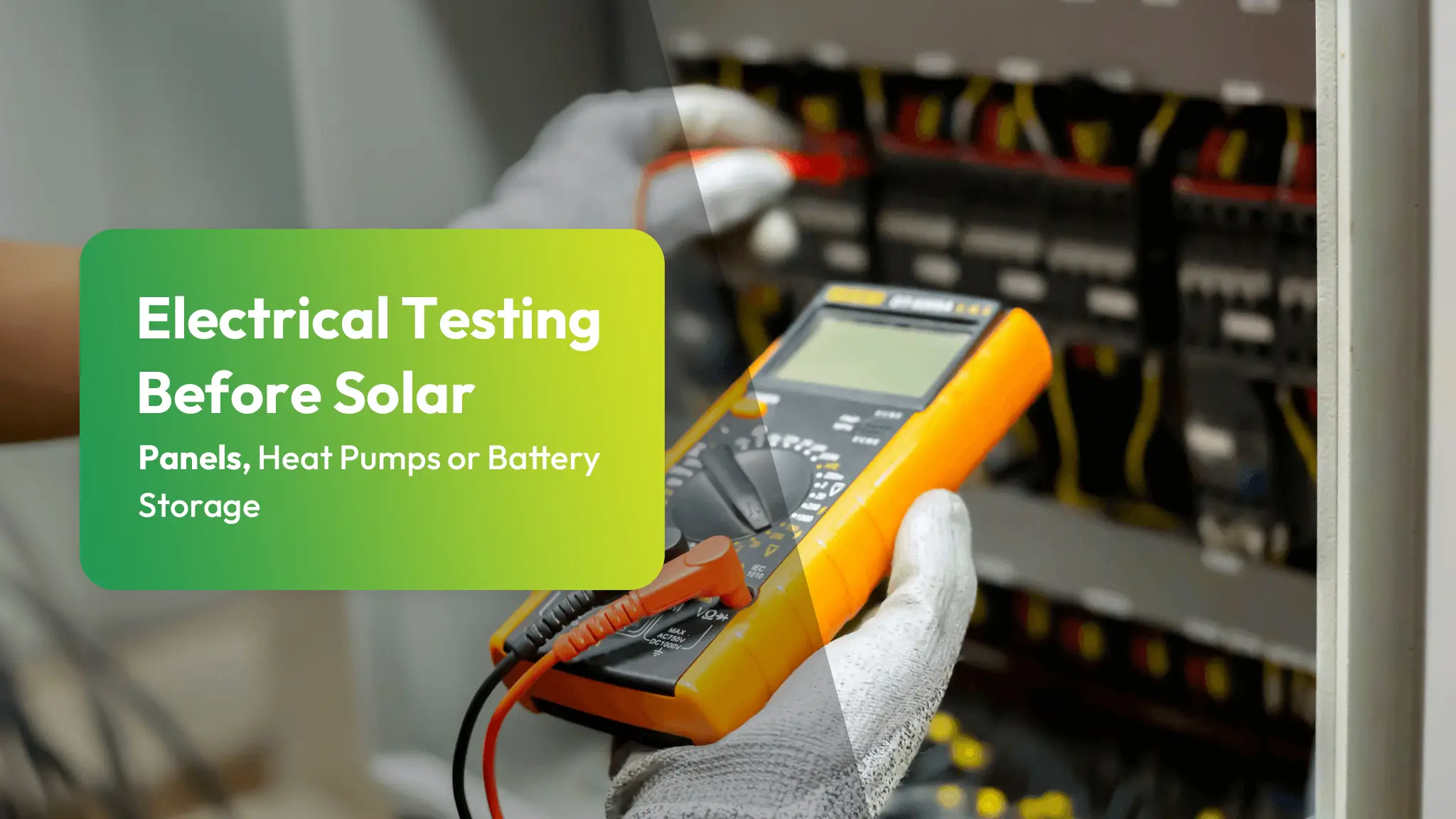
Electrical testing before fitting solar panels, heat pumps or battery storage in the UK checks if the existing wiring, consumer unit, earthing and supply capacity are safe, compliant and sized for the extra load. It identifies faults, overloaded circuits and inadequate boards that could cause tripping, damage or costly rework. Testing also confirms whether upgrades or DNO involvement are needed so low carbon systems run reliably, and the next sections explain how this is assessed in practice.
Key Takeaways
- Confirm your consumer unit, earthing and bonding meet current BS 7671 standards and have spare capacity for new solar, heat pump or battery circuits.
- Test supply capacity, service head rating and meter tails, using diversity calculations to ensure your existing supply can safely handle extra electrical loads.
- Inspect and test existing circuits for insulation faults, nuisance tripping, high earth loop impedance, borrowed neutrals and incorrect breakers before adding low‑carbon technologies.
- Verify RCD/RCBO protection, disconnection times, and safe isolation arrangements to protect users and equipment under fault or grid‑export conditions.
- Document all test results and any required upgrades with certification, supporting DNO notifications, manufacturer warranties and future system expansions.
Table of Contents
Why Electrical Testing Comes First
Before any mechanical installation proceeds, electrical testing establishes whether a property’s existing infrastructure can safely and efficiently support solar panels or heat pumps. It is the decisive first move because it confirms that the wiring, protective devices, and supply characteristics will not restrict performance or compromise safety. Without this knowledge, adding new technology simply stacks risk on uncertainty.
Electrical testing quantifies capacity and limitation instead of leaving them to guesswork. It exposes weak circuits, overloaded boards, and hidden faults that could trip systems, damage equipment, or force unnecessary dependence on the grid. By identifying constraints early, it allows people to design systems that genuinely cut bills and carbon without surrendering reliability. Starting with testing also protects future flexibility. Once the baseline is proven, owners can add storage, expand arrays, or adapt to tariffs with confidence, knowing the electrical backbone is strong enough to support evolving choices.

Is Your Property Ready for Low Carbon Technology?
Once baseline testing has revealed the strengths and weaknesses of an existing electrical system, the next question is whether the property can actually host low carbon technologies without expensive rework or safety compromises. At this stage, the focus shifts from pass/fail test results to practical readiness: can the building support extra electrical demand, new control equipment and future upgrades without locking the owner into costly dependency on a single solution?
A property ready for solar, heat pumps or batteries typically has a modern consumer unit with capacity for additional circuits, space for protective devices, and wiring in sound condition. Equally important are clear cable routes, suitable locations for new equipment and adequate ventilation. Homeowners seeking greater energy independence also benefit from understanding how existing appliances, insulation levels and heating systems interact with new technologies, so that any investment genuinely increases autonomy rather than simply swapping one form of dependence for another.
Electrical Requirements and assessment for Solar Panels
Many key electrical factors must be evaluated before a solar PV system can be safely and efficiently installed. A thorough assessment allows the homeowner to harvest their own power without compromising safety or breaching UK regulations. The electrician will review the existing installation against current BS 7671 standards and the Distribution Network Operator (DNO) requirements for grid‑connected generation.
Key checks typically cover:
- Condition and capacity of the consumer unit, including availability of spare ways, suitability of RCD protection, and adequacy of main switch rating.
- Incoming supply characteristics: earthing arrangement, service head condition, main protective bonding, and the maximum permitted export capacity to the grid.
- Circuit design for the PV system: cable sizing, overcurrent protection, DC isolation, inverter location, and provision for safe isolation and labelling.
These steps guarantee the future PV array genuinely empowers the occupier, rather than introducing hidden electrical risks.
Electrical Requirements and assessment for Heat Pumps
Although a heat pump is primarily viewed as a heating appliance, it is fundamentally a significant electrical load that must be carefully evaluated before installation. Before anyone commits, the existing supply capacity, protective devices and cable routes must be checked so the system runs reliably without unwanted trips or restrictions. A full heat pump assessment confirms that start‑up currents, continuous running loads and diversity with other appliances stay within safe limits.
A competent electrician will verify circuit integrity, earthing arrangements and RCD protection, following BS 7671 and relevant MCS guidance. Voltage drop calculations and prospective short‑circuit current measurements help determine whether upgrades are needed, giving the homeowner clear choices rather than surprises.
Electrical Requirements and assessment for Battery Storage Systems
In addition to heat pumps, battery storage systems place their own demands on a property’s electrical infrastructure and must be appraised with equal rigour. They introduce bi‑directional power flows, rapid charge and discharge cycles, and fault currents that differ from conventional loads, all of which must be understood before installation.
A competent assessment considers how the battery interacts with the grid, on‑site generation, and critical circuits that the occupant may wish to keep energised during outages. Key technical questions include:
- Can the proposed system’s maximum charge/discharge current be supported without overloading existing circuits or protective devices?
- Does the earthing and bonding arrangement safely accommodate inverter operation under both grid‑connected and island modes?
- Are protection settings, changeover arrangements and isolation points specified to prevent back‑feed and guarantee safe maintenance?
This disciplined electrical assessment underpins reliable storage, enabling occupants to control when and how they use their own power.
Assessing the Existing Electrical Installation
A thorough appraisal of the existing electrical installation forms the foundation of any safe and compliant solar panel or heat pump project. Before new generation or demand is added, an electrician examines in the electrical fault finding service how the present system actually behaves under load, not just how it looks on paper. This protects the homeowner’s freedom to expand later without expensive rework or unexpected limitations.
Visual inspection, circuit identification, and continuity checks reveal damaged accessories, loose terminations, and historic DIY alterations. Measured tests then verify that fault paths are effective, disconnection times are acceptable, and insulation resistance is sound enough for additional kit.
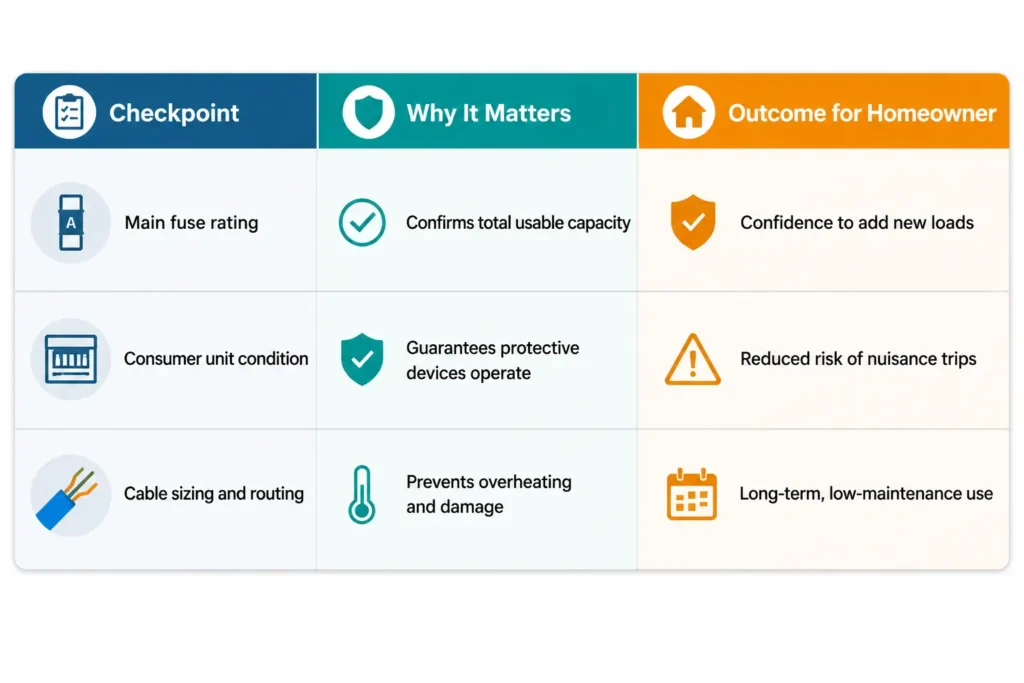
| Key Check | Why It Matters |
| Earthing and bonding | Enables safe fault clearance |
| Circuit loading | Confirms spare capacity for new systems |
| Protective device ratings | Guarantees fault currents are safely interrupted |
| RCD performance | Reduces electric shock and fire risk |
| Record comparison | Highlights ageing or altered wiring since last report |
Is Your Consumer Unit Suitable?
Once the existing wiring and protective measures have been assessed, attention turns to the consumer unit that must control and protect the new solar or heat pump circuits. At this point, the electrician evaluates whether the current unit can safely accommodate extra loads, new circuit breakers, and any specialist devices required for generation or storage systems.
They typically review:
- Spare ways and busbar capacity for additional MCBs or RCBOs, ensuring new circuits are not crammed into undersized or improvised positions.
- Presence and type of RCD or RCBO protection, confirming disconnection times and selectivity will not restrict the homeowner’s right to use high‑demand appliances simultaneously.
- Construction, age, and certification of the unit, checking it is a modern, non‑combustible, type‑tested assembly that aligns with current UK regulations.
If the consumer unit falls short, replacement or an auxiliary board is usually advised before any freedom‑enhancing technology is installed. Here you get the consumer unit (fuse box) replacement and repair service.
Checking Earthing and Bonding Arrangements
Before any solar or heat pump circuits are energised, the electrician must confirm that the property’s earthing and bonding are robust enough to manage faults safely. This is non‑negotiable: reliable earthing allows fault currents to clear rapidly, preventing metalwork from becoming live and limiting the risk of shock or fire. Without this foundation, adding generation or storage simply amplifies danger.
They will first identify the earthing arrangement (TN‑S, TN‑C‑S, or TT) and verify it complies with UK requirements. Earth fault loop impedance tests confirm that protective devices will trip quickly if something goes wrong. Main protective bonding to gas, water, and other services is checked for presence, size, and continuity, ensuring all exposed conductive parts rise to the same potential under fault conditions. Where results fall short, upgrades are specified and completed before any low‑carbon technologies are connected, preserving both safety and long‑term energy independence.
Can the Existing Electrical Supply Handle the Load?
How can an electrician be sure a home’s existing supply can cope with the extra demand from solar inverters or heat pumps? The starting point is the main service rating and how close everyday use already comes to that limit. In the UK, many homes still rely on 60A or 80A fuses, which can be marginal once a heat pump, EV charger, or large inverter is added.
To protect the homeowner’s freedom to use energy when they choose, not only when the grid is quiet, the electrician will typically review:
- The service head rating, meter tails, and consumer unit capacity
- Diversity calculations for existing and proposed loads, including inrush currents
- Prospects for load management or a DNO upgrade where demand is high
This analysis confirms whether the supply can safely handle simultaneous operation or needs reinforcing, allowing low‑carbon technology to be used confidently without arbitrary restrictions.
Common Electrical Problems That Delay Installation
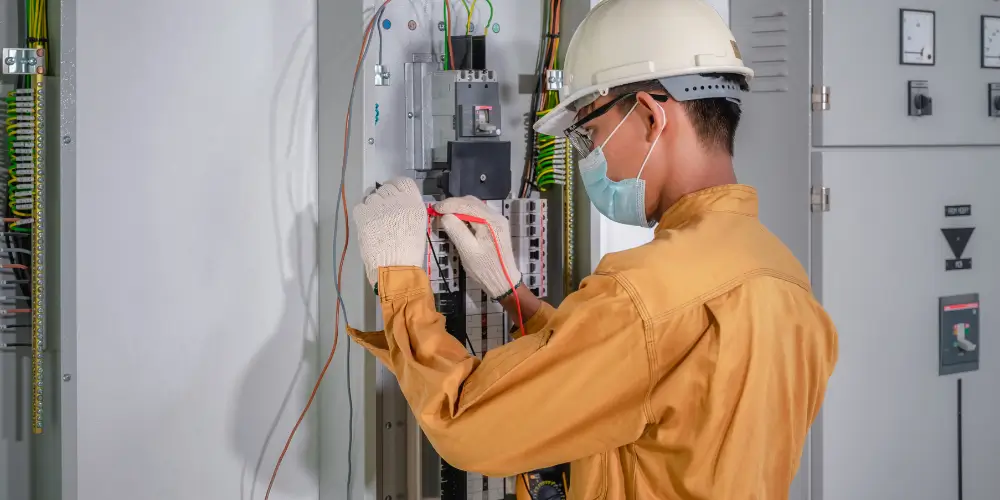
Hidden electrical issues often surface only when a solar or heat pump project reaches the survey or commissioning stage, stalling an otherwise straightforward installation. Installers frequently uncover problems that have been quietly limiting a property’s electrical freedom for years. These findings do not always mean major works, but they do demand attention before any new generation or heating technology is connected.
Typical delay‑causing faults include damaged insulation resistance on aging cables, borrowed neutrals on lighting circuits, and circuits lacking effective earth continuity. RCDs that trip under modest test currents are another red flag, signalling deeper wiring defects or accumulated DIY alterations.
| Problem type | How it shows up during testing | Why it delays installation |
| Insulation faults | Low megger readings, nuisance tripping | Risk of shocks and overheating |
| Borrowed neutrals | RCDs tripping when lights are tested | Circuits cannot be reliably protected |
| Poor or missing earthing | High earth loop values | Disconnection times cannot be guaranteed |
| Incorrect breakers | Mismatched ratings or types | Protection won’t operate as required by BS 7671 |
Upgrades Needed Before Installation
Once electrical testing exposes underlying weaknesses, many properties require targeted upgrades to create a safe and compliant platform for solar panels or heat pumps. These changes are not about bureaucracy; they are about giving the system enough strength and resilience to support long‑term energy independence.
Typical electrical upgrades in UK homes include:
- Replacing outdated consumer units with modern boards that incorporate RCD/RCBO protection and spare capacity for new renewable circuits.
- Strengthening earthing and bonding arrangements so fault currents clear quickly, protecting occupants and equipment from dangerous touch voltages.
- Increasing circuit capacity with suitably rated cabling, protective devices, and dedicated ways for inverters, heat pumps, or battery storage.
Some properties also need meter tails, main switches, or service heads reviewed with the Distribution Network Operator. By addressing these upgrades early, households create an electrical backbone ready to carry higher loads and bi‑directional flows without limiting future choices.
Frequently Asked Questions
How Much Does Pre-Installation Electrical Testing Typically Cost for a Domestic Property?
Pre-installation electrical testing for a UK domestic property typically costs £120–£250. Price depends on property size, existing wiring condition, and report detail. Freedom-seeking homeowners often obtain multiple quotes and insist on clear, itemized findings before committing.
How Long Does the Electrical Testing Process Take Before Installation Can Start?
It typically takes 1–3 hours for pre‑installation electrical testing in a UK home. Duration depends on property size, circuit complexity, and existing issues. Once complete, installers can proceed confidently without unexpected constraints limiting future system expansion.
Do I Need to Be at Home While the Electrical Testing Is Carried Out?
They usually don’t need to be home, provided access is arranged and circuits can be isolated. However, being present offers more control, immediate decisions on remedial work, and freedom to question assumptions in the electrician’s proposed solutions.
Will Electrical Testing or Upgrades Affect My Home Insurance or Warranties?
Electrical testing or upgrades usually don’t harm home insurance or warranties; they often support them. Insurers and manufacturers may even require certified work. The homeowner should keep certificates and notify insurers to stay fully protected and free from disputes.
How Often Should Electrical Testing Be Repeated After Low-Carbon Systems Are Installed?
They’re typically advised every 5–10 years, but after installing low‑carbon systems, many manufacturers and UK insurers expect checks every 3–5 years, plus extra inspections after major upgrades, visible damage, repeated tripping, or performance issues.
Conclusion
Thorough electrical testing is the essential first step before installing solar panels, heat pumps or battery storage systems in the UK. By confirming the property’s capacity, identifying faults and ensuring compliance with current regulations, homeowners avoid delays, additional costs and safety risks. Addressing required upgrades in advance enables low carbon technologies to perform efficiently and reliably, protecting both the installation investment and the household, while supporting a smooth shift to cleaner, more sustainable energy use.